
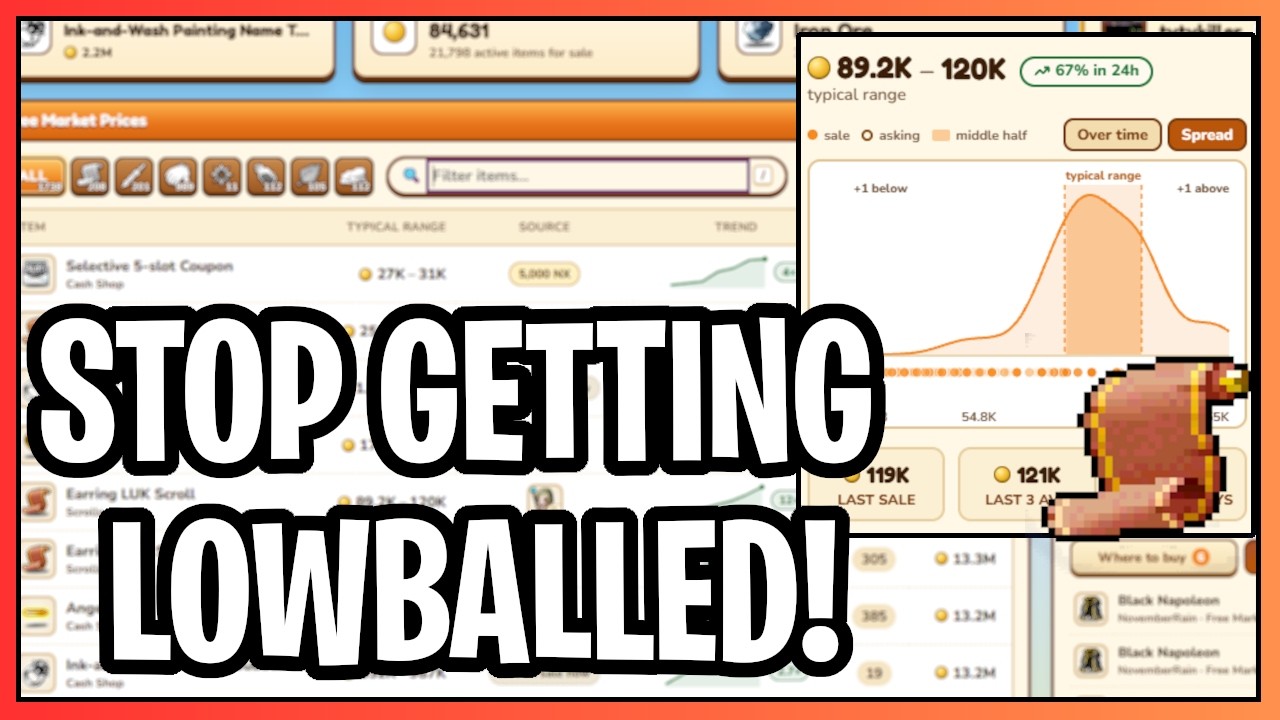

To accurately price items and avoid losing mesos in Classic MapleStory, cross-reference two external resources before selling your loot: a live Free Market price tracker and a comprehensive retro item database.
Because vintage MapleStory lacks a modern auction house, trade is decentralized across dozens of channels and physical shop stalls. Using external databases lets you bypass inflated merchant stalls, evaluate randomized equipment rolls, and identify high-value monster drops.
Evaluating Market Listings and Price Spreads
Market price trackers aggregate active stall listings, recent sales, and trade forum data. When checking the value of an item, focus on settled transaction history rather than active merchant asking prices.
High-traffic Free Market rooms frequently list items at steep markups to catch impatient buyers. To find a realistic valuation:
- Search the specific item: Look up the exact item name, noting variations in scroll success rates or item requirements.
- Identify settled medians: Look at completed sales over the past few days rather than the lowest buy offer or highest listing. If a scroll has multiple active listings at 2,000,000 mesos but recent completed sales sit around 1,600,000 mesos, set your price near 1.6M to ensure liquidity.
- Assess market volume: Check how frequently the item changes hands. High-volume consumables move quickly near the median, while niche equipment can take days to sell even at a discount.
| Item Category | Primary Valuation Factor | Common Market Pitfall |
|---|---|---|
| Attack Scrolls (10%, 60%, 100%) | Class meta demand and level milestones | Underselling staple scrolls early in progression |
| Clean Equipment (Hats, Tops, Bottoms) | Stat variances from base shop rolls | Selling above-average rolls at default vendor rates |
| Refined Ores & Quest Items | Crafting recipe prerequisites | Dumping rare quest minerals to NPC shopkeepers |
| Gachapon Exclusives | Cosmetic rarity and weapon reach | Mistaking inactive outlier listings for real demand |
Checking Stat Variance on Equipment Drops
In pre-Big Bang mechanics, equipment dropped by monsters features randomized stat variance that deviates from baseline shop values. A piece of clean gear that drops with two or three points above average in primary stats (such as Strength, Dexterity, Weapon Attack, or upgrade slots) holds significantly higher value than an average roll.
Before setting a price on dropped equipment:
- Look up the item in a classic reference database to identify its standard base stats.
- Compare your item's stats to the documented baseline.
- Search the market tracker specifically for similar above-average stat rolls rather than base clean copies.
Verifying Drop Tables and Planning Farming Routes
A monster and item database is essential for planning efficient hunting routes. Because drop tables vary across classic versions, reference compendiums prevent wasted hours farming the wrong targets.
Use drop compendiums to:
- Target dual-purpose mobs: Identify training monsters that combine good experience rates with valuable secondary drop tables, such as high-demand 60% scrolls or popular clean equipment.
- Track crafting components: Check which mobs drop specific ores, seeds, or quest items required for key equipment crafting recipes before buying them at inflated Free Market prices.
- Plan job gear transitions: Review stat requirements and level thresholds for upcoming job advancements so you can buy or farm needed gear before reaching the level requirement.
Avoiding Common Free Market Scams
External pricing knowledge also protects you during direct player-to-player trade window transactions. Merchants frequently exploit unverified valuations and interface tricks:
- Meso string swaps: A buyer enters an agreed sum, cancels the trade, and quickly re-enters the sum missing a zero (such as 100,000 instead of 1,000,000 mesos). Always verify the full digit count before pressing accept.
- Scroll icon substitution: Many scroll icons share identical art across different stat types and success rates. Scammers often substitute an inexpensive Defense or Accuracy scroll for a valuable Attack scroll. Double-check the text name on the trade window against your database.
- Inflated item-for-item trades: Buyers may offer bundles of obscure quest items or unrolled gear, claiming high market value. Decline item swaps unless you independently look up every offered piece on a tracker.
Recommended Market Workflow
To handle trading efficiently without disrupting character leveling:
- Keep your market tracker and drop database open in a secondary browser window while playing.
- Check unfamiliar scrolls, throwing stars, and equipment before selling anything to an NPC vendor.
- Create a secondary "market mule" character parked permanently in the Free Market entrance.
- Transfer tradeable items to your mule using town storage, allowing your main character to farm while you batch price checks and shop sales during dedicated trading sessions.

Sarah Williams
Sarah specializes in RPG and collection games, explaining team building, character growth, and beginner-friendly ways to avoid expensive early mistakes.
COMMUNITY
Player Comments
25 players commented on this guide.
The explanation is clear, especially for beginners.
This guide answered the exact question I had.
Nice guide. I am checking the other HOT articles next.
This saved me time in the early game.