
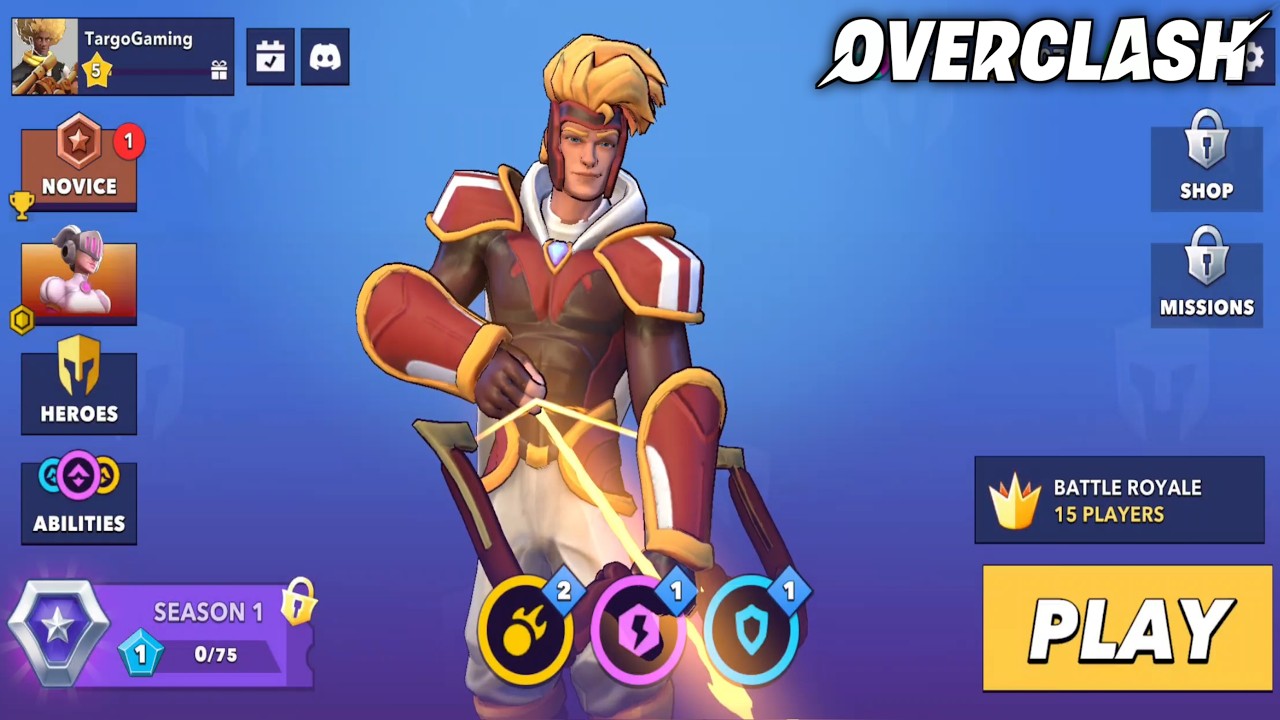

In Overclash, you are not restricted by traditional class archetypes. Instead, the core progression revolves around assembling custom champion builds by pairing heroes with specific skills. By ignoring static class roles, you can optimize your character for niche playstyles, such as adding defensive invisibility to a tank or high-mobility stuns to an assassin. This guide explains how to leverage the game's expansive build system to dominate the arena and dictate the meta.
Breaking Free from Hero Class Restrictions
The most critical realization for a new player is that Overclash does not force you into pre-defined combat roles. While other arena shooters lock characters into "Support," "Tank," or "DPS" categories, this title allows you to equip any hero with any of the 50+ available skills. This system is designed to reward experimentation rather than adherence to traditional archetypes.
To succeed, stop viewing your heroes as fixed units and start viewing them as blank canvases for your preferred combat style. If you enjoy aggressive play but find your current hero lacks survivability, you can patch that weakness by equipping a defensive skill. This level of customization means that "the meta" is constantly shifting, as players are encouraged to find unconventional combinations that surprise opponents who expect standard behavior.
Mastering Verticality for Tactical Advantage
Overclash distinguishes itself from flat-plane shooters by incorporating verticality directly into its level design. Every map serves as a 3D environment where elevation acts as a primary weapon. You should never engage in combat without first considering your relative height to the opponent. High ground is not just a vantage point; it is a mechanical advantage that allows you to control the flow of the brawl.
When navigating these arenas, look for opportunities to displace your enemies using this verticality:
- Ambush Positioning: Use height differences to drop behind snipers or ranged users before they can track your movement.
- Environmental Kills: Attempt to knock opponents into environmental hazards like lava, which serves as an instant-lethal consequence of poor positioning.
- Dodge Evasion: Utilize jumps and drops to avoid incoming projectiles, such as fireballs, that are difficult to dodge on a flat surface.
Adapting to Diverse Match Objectives
Because Overclash features a rotating variety of game modes—including Battle Royale, Team Deathmatch, 1v1, 2v2, Gold Rush, and Zone Control—your build should be flexible enough to handle different win conditions. A build that dominates in a 1v1 duel may struggle to provide the necessary utility for a Team Deathmatch or a long-term Zone Control objective.
Before entering a match, check the active mode and adjust your skill loadout accordingly. For instance, prioritize crowd control or zoning skills when playing objective-based modes like Gold Rush, where holding a specific area is paramount. Conversely, in a Battle Royale format, focus on mobility and self-sustain skills to ensure you can survive encounters while rotating across the shrinking map zones.
Climbing the Competitive Leaderboards
Competitive play in Overclash is centered around weekly tournaments and climbing the global leaderboards. To excel, you must transition from casual experimentation to refining your most effective "meta-breaking" builds. Consistent participation in these events is the primary way to earn exclusive rewards and gain recognition within the community, making it the most important endgame objective for dedicated players.
When preparing for tournaments, track which loadouts consistently net you wins against top-tier opponents. Since the game offers over one million possible combinations, the community is constantly identifying which skill sets perform best under competitive pressure. Focus your resource acquisition on upgrading the specific skills that define your most successful build, ensuring that your hero's power level remains high enough to compete for top prizes in the weekly circuits.

Sarah Williams
Sarah specializes in RPG and collection games, explaining team building, character growth, and beginner-friendly ways to avoid expensive early mistakes.
COMMUNITY
Player Comments
59 players commented on this guide.
The tips are practical and easy to follow.
Can you add more details about heroes in a future update?
This saved me time in the early game.
I tried this today and it worked better than my old setup.