
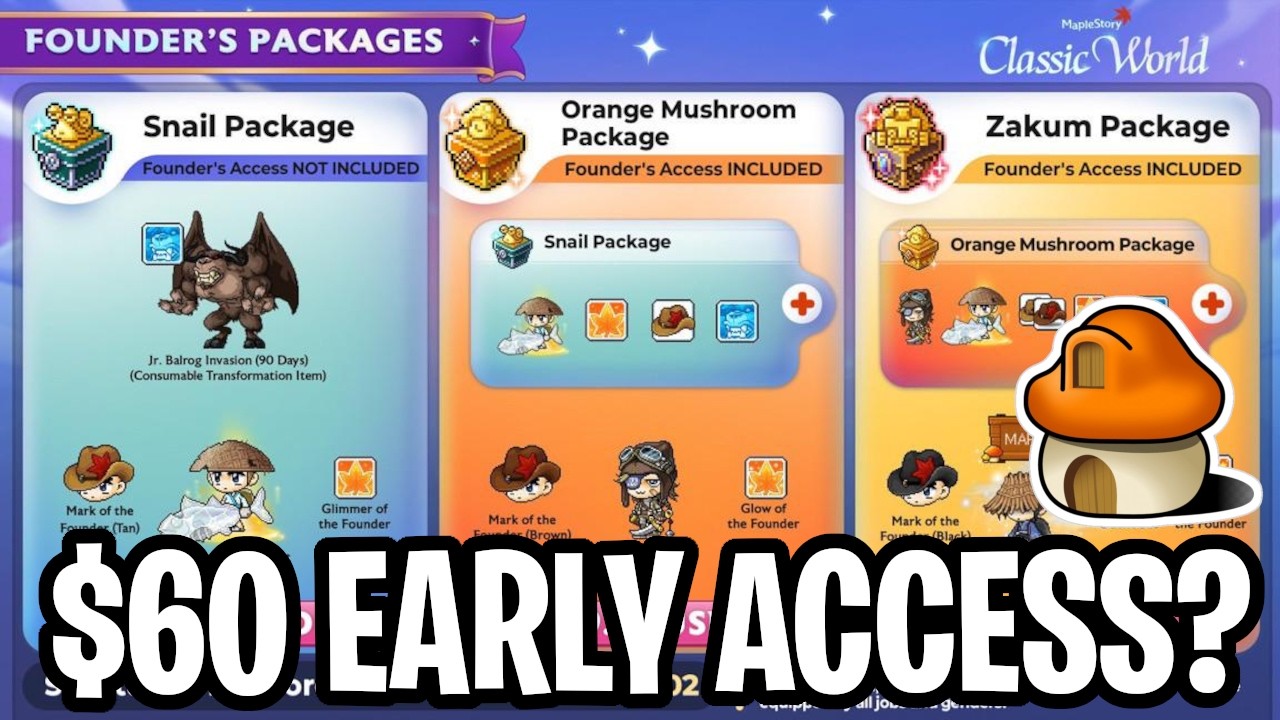

If you are considering jumping into the highly anticipated return of the iconic 2D MMORPG, you’ve likely seen the controversy surrounding the MapleStory Classic founder packs. With the developers proposing a $60 price tag for 15 days of early access, the gaming community is rightfully divided. Before you open your wallet, it is essential to look past the nostalgia and evaluate the risks, the value proposition, and the long-term health of this project.
The Reality of the $60 Early Access Barrier
The most immediate red flag regarding MapleStory Classic is the steep $60 entry fee for a mere 15-day head start. In the current landscape of MMORPGs and private server revivals, this pricing structure is highly unconventional.
Typically, early access serves two purposes: to reward the most dedicated supporters and to provide a "stress test" environment for developers. However, charging a full AAA-game price for early access to a retro title creates an immediate barrier that separates the community. When a project asks for a premium fee simply for the "privilege" of playing early, it sets an expectation of high-polish and AAA service—standards that are incredibly difficult for smaller, community-led projects to meet.
Assessing the Value: What Do You Actually Get?
Founder packs succeed when they offer a mix of immediate utility, long-term cosmetics, and a sense of belonging to the community. When evaluating the MapleStory Classic packs, ask yourself if the current offering provides enough tangible value to justify the cost:
- Temporary vs. Permanent Gains: Is the 15-day head start the only benefit, or are there exclusive cosmetics, permanent currency, or account-wide bonuses? If the pack is essentially a "rent-to-play" model for two weeks, the value proposition is objectively low.
- The "Pay-to-Win" Risk: In a game built on progression, an early start can lead to a significant power gap. If early access players gain a head start in economy, levels, or gear acquisition, it can permanently skew the game’s balance, creating a "pay-to-win" environment that ruins the experience for the general public once the servers officially open.
- The Sunk Cost Fallacy: Many players feel that if they pay $60, they must enjoy the game, even if the experience is buggy or unoptimized. Do not let the price tag cloud your judgment regarding the actual quality of the gameplay.
The Technical Risks of Unpolished Launches
Private servers and community-run revivals are notorious for technical hurdles. By paying for early access, you are effectively volunteering to be an unpaid beta tester. Before committing, consider the following technical variables:
- Server Stability: Can the infrastructure handle the load? If the server crashes every hour during the first 15 days, your "early access" is essentially a wait-and-see lobby.
- Rollback Risks: In the early days of any server, database issues often lead to rollbacks. If your progress from those first 15 days is wiped, you have essentially paid $60 for nothing.
- Exploit Management: Classic versions of games are often susceptible to legacy exploits. If the developers have not adequately prepared, early access players may inadvertently or intentionally break the game economy, rendering your investment moot.
Why the "Wait and See" Strategy Wins
The safest and most responsible strategy for any player is to wait for the public, free-to-play launch. The goal of a classic revival is to recapture the magic of the original experience, not to stress over whether your $60 investment was "worth it" while dealing with server lag.
By waiting, you leverage the collective intelligence of the community. Before you commit, observe these key metrics during the early access period:
- Developer Responsiveness: Watch how quickly bugs are patched. A team that communicates transparently and fixes issues in real-time is a sign of a healthy project.
- Economy Health: Check forums and Discord channels. Are the servers inflated? Is the economy functioning as intended, or is it already dominated by a small group of high-level early access players?
- The "Fun" Factor: Does the game still feel like the MapleStory you remember? Sometimes, the nostalgia of a classic game is better served by keeping the memory pure rather than playing a modern, potentially flawed iteration.
The Verdict: Proceed with Caution
MapleStory Classic represents a dream for many, but the current monetization model is a significant departure from community expectations. Charging $60 for early access is a gamble that puts the burden of financial risk on the player rather than the developer.
If you are a die-hard fan, you may feel compelled to buy in to support the project. However, from an objective standpoint, there is very little reason to pay for early access unless you are guaranteed long-term, exclusive value that justifies the high price.
Our Recommendation: Save your money until the official, free-to-play public launch. If the game is truly stable and well-managed, it will still be there in two weeks. If the project falters during its early access phase, you will be thankful that you kept your $60 in your pocket. Always prioritize the health of the community and the stability of the server over the temporary hype of being first in line. True classic experiences are built on longevity, not on the amount of money spent during the first two weeks of launch.

Emily Johnson
Emily writes practical mobile strategy guides with a focus on resource planning, base progression, and the early decisions that shape a long-term account.
COMMUNITY
Player Comments
28 players commented on this guide.
This saved me time in the early game.
The tips are practical and easy to follow.
I wish I had read this before upgrading the wrong thing.
Can you add more details about strategy in a future update?