
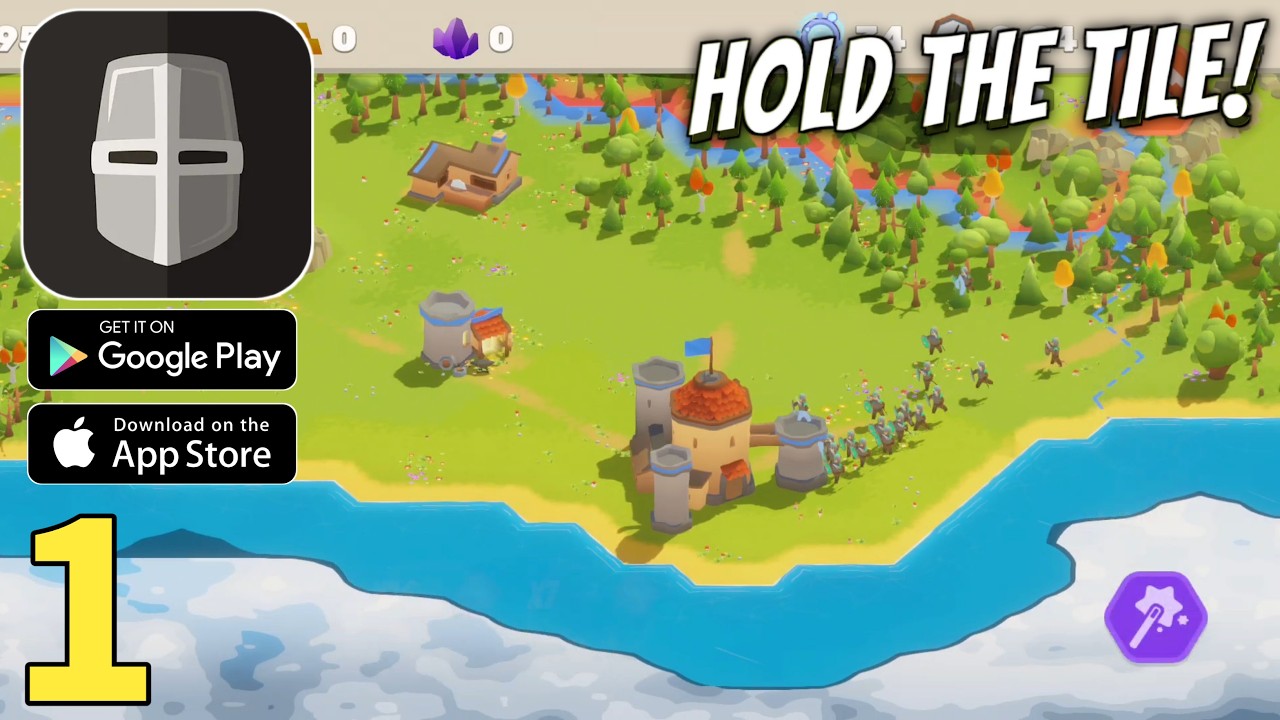

To win 1v1 real-time strategy battles in Hold the Tile!, consolidate a continuous network of tiles around your primary base before overextending into enemy territory. Your physical tile placement dictates where your forces can spawn and maneuver, making structured early territory control the single most critical factor in protecting your base and securing resource generation.
Building a Defensible Tile Network
Tiles serve as your primary pipeline for map presence and deployment. Spreading your expansion too thin leaves structural gaps that allow opposing forces to bypass your front line and attack your primary structures directly.
- Maintain Network Connectivity: Connect every new tile to your existing network. A continuous chain ensures unit mobility and prevents the opponent from isolating your forward troops.
- Consolidate Around Primary Structures: Secure a compact core of territory near your main base during the opening minutes. Avoid rushing toward distant sectors until your core perimeter is established.
- Target Strategic Nodes: When expanding outward, direct your placement toward key tactical areas such as natural chokepoints or high-ground zones to narrow the path an enemy must take to reach you.
- Monitor Resource Levels: Match your expansion speed to your available resources so every placed tile provides immediate defensive value or sets up a clear avenue of attack.
Managing Unit Deployment and Chokepoints
Flooding the board without a clear plan leads to wasted forces and undefended sectors. Unit timing and positioning dictate whether a defensive hold succeeds or collapses.
- Observe Enemy Formations: Watch the opponent’s movement patterns early in the match to identify whether they are committing to an aggressive push or building up resources.
- Establish Border Bottlenecks: When an opponent pushes forward, position your troops along your outer tile borders. Forcing the enemy to fight at these entry points forces them to expend forces in disadvantageous positions.
- Maintain a Base Defender: Practice a tethered defense by keeping at least one unit stationed near your primary base at all times. This prevents opportunistic raids from destroying your main structure while your main force is engaged elsewhere.
- Hold Reserve Forces: Keep secondary units ready behind your bottleneck to step in when front-line units cycle out or when an opponent overextends.
Launching Counter-Attacks and Breaking Enemy Lines
Transition from defense to offense only after stabilizing your borders. In Hold the Tile!, long-term board control takes priority over chasing individual unit kills.
- Identify Weak Tile Connections: Look for thin, single-tile extensions in the enemy's map layout.
- Sever the Enemy Network: Focus your attack on cutting these exposed connection points. Disconnecting a tile network prevents the opponent from spawning reinforcements in that sector, neutralizing their push.
- Retreat When Outpositioned: If an offensive push stalls or leaves your backline exposed, fall back immediately to your established tile borders. Preserving your central network is always more valuable than committing to a failed breakthrough.

Michael Smith
Michael covers live-service games, events, reward systems, and efficient daily routines, turning frequent updates into clear actions for players.
COMMUNITY
Player Comments
31 players commented on this guide.
The explanation is clear, especially for beginners.
This saved me time in the early game.
I wish I had read this before upgrading the wrong thing.
Good guide for HOT players. The base building part was useful.