
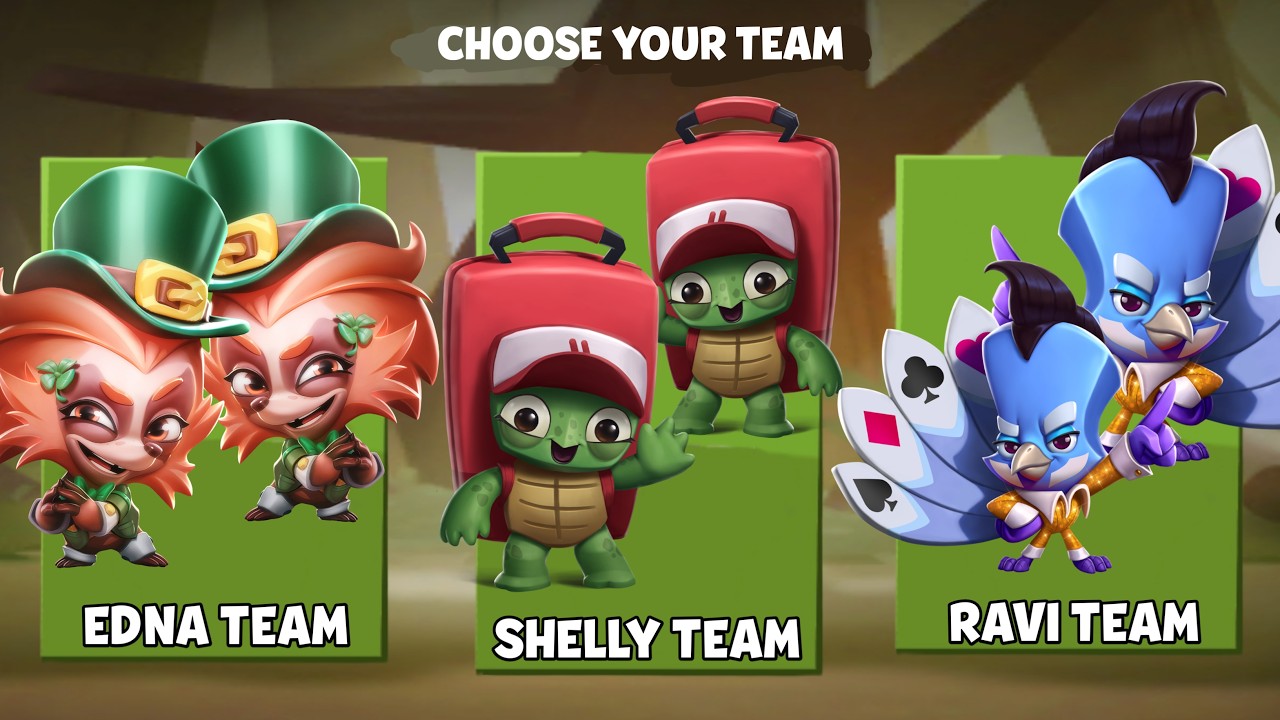

In Zooba: Zoo Battle Arena, the difference between a top-tier player and a frustrated newcomer often comes down to how they handle "annoying" team compositions. These squads aren't necessarily stronger in raw stats; they are simply better at controlling the pace of the match through crowd control, area denial, and coordinated burst damage. If you find yourself consistently getting locked down, stunned, or cornered by specific character pairings, you are likely falling victim to synergy-based tactics.
Countering these teams requires a shift in mindset: stop trying to out-damage them head-on and start playing the game of attrition and positioning. By respecting their threat ranges and forcing them to waste their utility, you can turn their aggressive tactics against them.
Identifying High-Pressure Character Synergies
The most frustrating Zooba teams rely on the "Lock and Load" archetype. This strategy pairs a character capable of crowd control (CC)—such as Bruce’s wall-breaking knockback or Nix’s agility-based disruption—with a high-burst damage dealer who cleans up once the target is immobile.
To identify these threats early, watch for:
- The Anchor: A tanky character who pushes into your space to force a reaction.
- The Enabler: A character with movement speed buffs or area-of-effect (AoE) abilities designed to trap you.
- The Executioner: A high-DPS character who hangs back, waiting for the CC to land before unleashing their full kit.
Teams that rotate these roles effectively will always dictate the pace of the match. If you see a squad grouping up to create a wall of fire or a cluster of grenades, they are baiting you to cluster with your own team. Resist the urge to stack up. Spreading out makes it impossible for them to hit multiple targets with a single CC ability, effectively neutralizing their primary win condition.
Breaking the Lockdown Strategy
When trapped by a team optimized for stuns or knockbacks, your immediate goal is to break the engagement cycle. Most players lose because they attempt to fight back while CC-locked, which is exactly what the enemy wants.
The Disengagement Protocol:
- Prioritize Mobility: If you are playing against a CC-heavy team, swap your item loadout to favor movement-speed boots or dashes.
- Bait the Ability: Walk toward the enemy to trigger their primary utility (like a trap or a long-cooldown grenade), then immediately retreat. Once their "annoying" ability is on cooldown, you have a 3–5 second window of total dominance.
- Respect the Range: Never enter the "danger zone" of an enemy unless you have your own defensive cooldowns ready. If you are a mid-range character, you must stay at the edge of your effective weapon range. If they push, you back up. If they retreat, you poke. Never allow them to dictate the distance.
Mastering Item Management and Cooldown Awareness
In Zooba, victory is often a game of timing. Every character has a specific cadence to their item usage. By tracking these, you can predict when a team is vulnerable.
If an enemy uses their primary movement ability (like a dash) to engage, they have effectively committed to the fight. They no longer have an "out." This is your cue to collapse on them. Conversely, if you have used your defensive items, you must play conservatively until they cycle back.
Pro-Tip: Always hold your defensive items—specifically shields or healing kits—until the enemy has committed their primary burst. If you waste your shield early, you are a sitting duck for the "Executioner" character in their squad. Trading your defensive cooldown for their offensive one is a winning exchange, as it forces the enemy to reset, giving you the initiative.
Positioning for Survival Against Aggressive Squads
Aggressive, annoying teams thrive on open-field brawls where they can surround you. To survive, you must use the map’s architecture to your advantage.
- Hug the Edges: Avoid standing in the center of the arena. By staying near walls or natural obstacles, you reduce the surface area from which you can be attacked.
- Force Overextension: If you play defensively near a choke point, the enemy will often overextend to secure a kill. This is their greatest mistake. As soon as they overextend, they become vulnerable to third-party intervention. In Zooba, the team that chases too far is the team that gets eliminated by a nearby squad waiting for an opportunity.
- Line-of-Sight (LoS) Play: Use trees, buildings, and walls to break line-of-sight during a reload. If an enemy team is chasing you, don’t run in a straight line. Weave through cover. This forces them to waste ammo shooting at walls while you regenerate health or reposition for a counter-flank.
The Mental Game: Why "Annoying" Teams Fall Apart
It is important to remember that "annoying" teams are often fragile. They rely on the success of their initial combo to win. If that combo fails—if the stun misses or the trap is avoided—they often panic.
They are accustomed to opponents who crumble under pressure. When you show them that you are comfortable baiting their skills and keeping your distance, you disrupt their psychological flow. They will start to make desperate moves, overextending into your territory or burning items out of frustration.
Key Takeaways for Your Next Match:
- Never trade damage while CC-locked. Always prioritize escape/evasion.
- Track the "Big" abilities. If the enemy misses their primary stun, take the fight to them immediately.
- Distance is your shield. If they are faster/stronger, you are likely standing too close.
- Let them fight each other. Aggressive teams often attract third-party attention. Use the chaos they create to clean up the survivors.
By viewing these compositions as a puzzle to be solved rather than a wall to hit, you transform from a target into a tactician. Master the art of the bait, respect the cooldowns, and you will find that even the most "annoying" teams in Zooba are easily dismantled with the right approach.

James Brown
James focuses on Android gaming on PC, emulator setup, controls, performance tuning, and practical troubleshooting for longer play sessions.
COMMUNITY
Player Comments
105 players commented on this guide.
The tips are practical and easy to follow.
This helped me understand strategy much better.
I tried this today and it worked better than my old setup.
The explanation is clear, especially for beginners.