
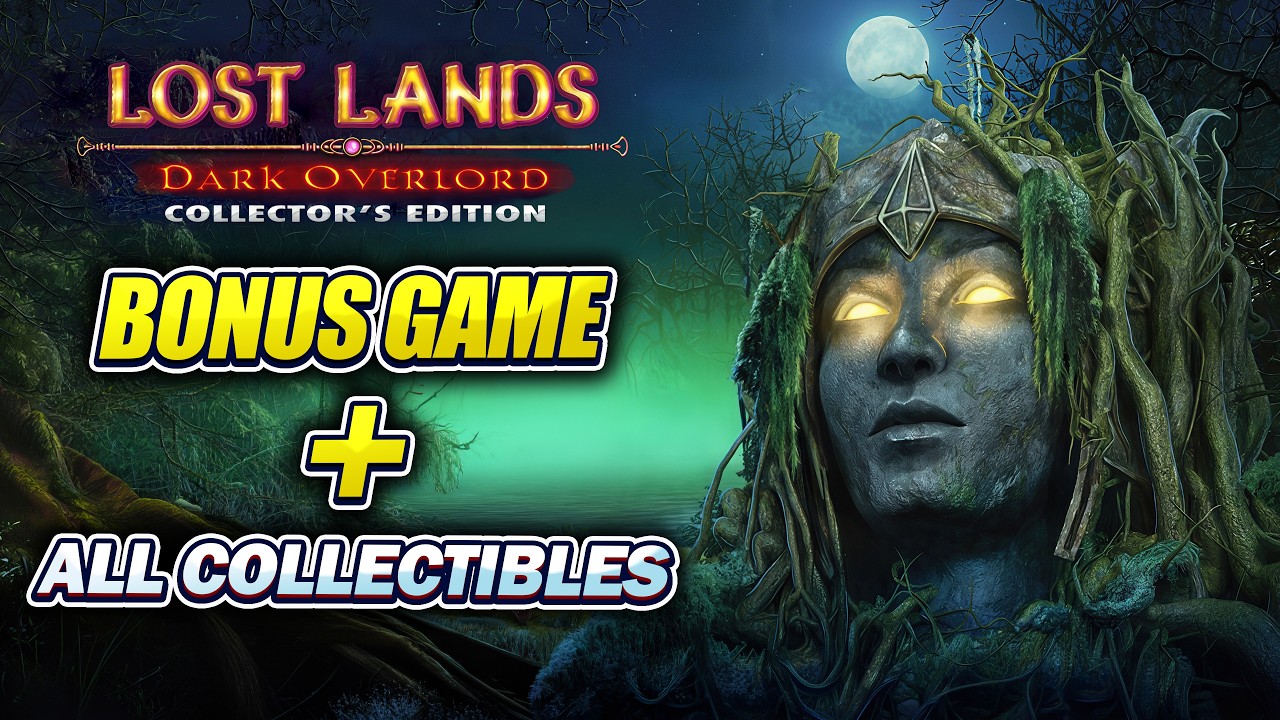

The bonus chapter of Lost Lands 1: Dark Overlord offers a distinct, self-contained narrative experience that shifts the action to a mysterious underwater realm. While the core mechanics remain consistent with the main adventure, the shift in environment introduces unique spatial puzzles and item dependencies that can catch even experienced players off guard. To progress efficiently, you must transition from the forest-based logic of the main game to the more enclosed, interconnected design of the sunken world.
Understanding the Bonus Chapter Mechanics
Unlike the main story, the bonus chapter is tighter in scope, meaning every item found is almost certainly intended for an immediate or near-future puzzle. The game relies heavily on "gate" mechanics—where one object provides access to a new area, which in turn provides the components for the next.
If you find yourself stuck, it is rarely due to a lack of items, but rather a lack of interaction with the environment. In this chapter, items are frequently hidden behind other objects or require a secondary interaction (such as using a tool to open a chest, then taking the item inside) to become available.
Strategic Inventory Management
Inventory clutter is the primary cause of frustration in Lost Lands 1: Dark Overlord. To manage your resources effectively:
- Check Every Angle: If you pick up an item, click on it in your inventory to examine it. Many items in the bonus chapter contain hidden components or clues that are only visible when the item is inspected in the inventory menu.
- The "Use-First" Rule: Do not hoard items. If you have a key, a lever, or a gear, test it against every locked or interactive node in the current area. If it doesn't work, keep it in mind for the next room.
- Clear the Path: Once an item is used for its intended purpose, it will often disappear or become "used up." This helps keep your UI clean and signals that you have successfully completed a specific environmental step.
Mastering Underwater Hidden-Object Scenes
The hidden-object scenes in the underwater chapter are designed to test your visual filtering skills. Because the color palette is dominated by blues, greens, and muted earth tones, items often blend into the background.
- Systematic Sweeping: Never click randomly. Start at the top-left corner of the screen and move your cursor in a grid pattern. This prevents your eyes from "skipping" over objects that match the background color.
- Look for Silhouette Breaks: The game’s artists often hide objects by placing them against a background that matches their shape. Look for "breaks" in the natural texture of the environment—a straight line on a curved stone or a metallic glint in a bed of kelp.
- Scale Perception: Some objects are hidden in plain sight because they are scaled smaller than expected. If you are looking for a specific tool, don't look for the size it would be in reality; look for a miniature version of that shape embedded in the scenery.
Solving Logic and Mini-Game Puzzles
The bonus chapter features several sophisticated mini-games. These are not merely distractions; they are logic checks.
- Identify the Goal State: Before touching a puzzle, analyze the final desired outcome. Is it a color-matching sequence? A sliding tile puzzle? Identifying the "win condition" first helps you avoid moves that reset the mechanism.
- Environmental Clues: Never ignore the notes or murals surrounding a puzzle. Lost Lands 1: Dark Overlord frequently places the solution to a mechanical puzzle on a wall or document nearby. If you see a symbol sequence, document it or take a screenshot; don't rely on memory.
- The Reset Strategy: If you find yourself in a state where a puzzle seems impossible to solve, look for a "Reset" button. Sometimes, the most efficient way to progress is to reset the state and try a new, more logical approach based on the clues you have gathered since your first attempt.
Navigating the Non-Linear Underwater World
The bonus chapter is less linear than the main game, which can lead to aimless backtracking. To minimize this:
- Use the Map: Consult your map frequently. The map is not just for fast travel; it often marks areas where actions can still be performed. If a room is marked as "complete," stop revisiting it.
- Focus on Transitions: Pay close attention to doorways, archways, and debris piles. These are the "hubs" of the underwater world. If you are stuck, return to the last major junction and re-examine the periphery of the screen.
- The Backtracking Loop: If you acquire a new item, revisit the previous two rooms. Often, the item you just gained is the specific key to a chest or door you previously bypassed because you lacked the proper tool.
Common Mistakes to Avoid
Players frequently fail to progress because they over-complicate the game's logic. Remember these three rules:
- Don't Overthink: If a puzzle seems incredibly difficult, look for a simpler solution. The game is designed to be solvable through observation, not complex trial and error.
- Don't Ignore Audio Cues: Even in a no-commentary walkthrough, pay attention to the in-game sound design. A soft "click" or a subtle change in ambient noise often signifies that you have successfully triggered a mechanism or unlocked a secret path.
- Use the Hint System Sparingly: While it is tempting to use hints for every difficult puzzle, try to exhaust your own logic first. Learning how the game hides objects is a skill that will make the final stages of the bonus chapter significantly easier.
Conclusion: The Path to Completion
The Lost Lands 1: Dark Overlord bonus chapter rewards players who approach the game with patience and a methodical mindset. By treating your inventory as a set of tools rather than a collection, scanning scenes with a grid-based approach, and paying close attention to environmental hints, you can navigate the underwater world with ease. Focus on clearing one room at a time, and you will find that the puzzles transition from frustrating obstacles into satisfying milestones in Susan’s journey.

Michael Smith
Michael covers live-service games, events, reward systems, and efficient daily routines, turning frequent updates into clear actions for players.
COMMUNITY
Player Comments
153 players commented on this guide.
This saved me time in the early game.
This guide answered the exact question I had.
This helped me understand strategy much better.
I tried this today and it worked better than my old setup.