
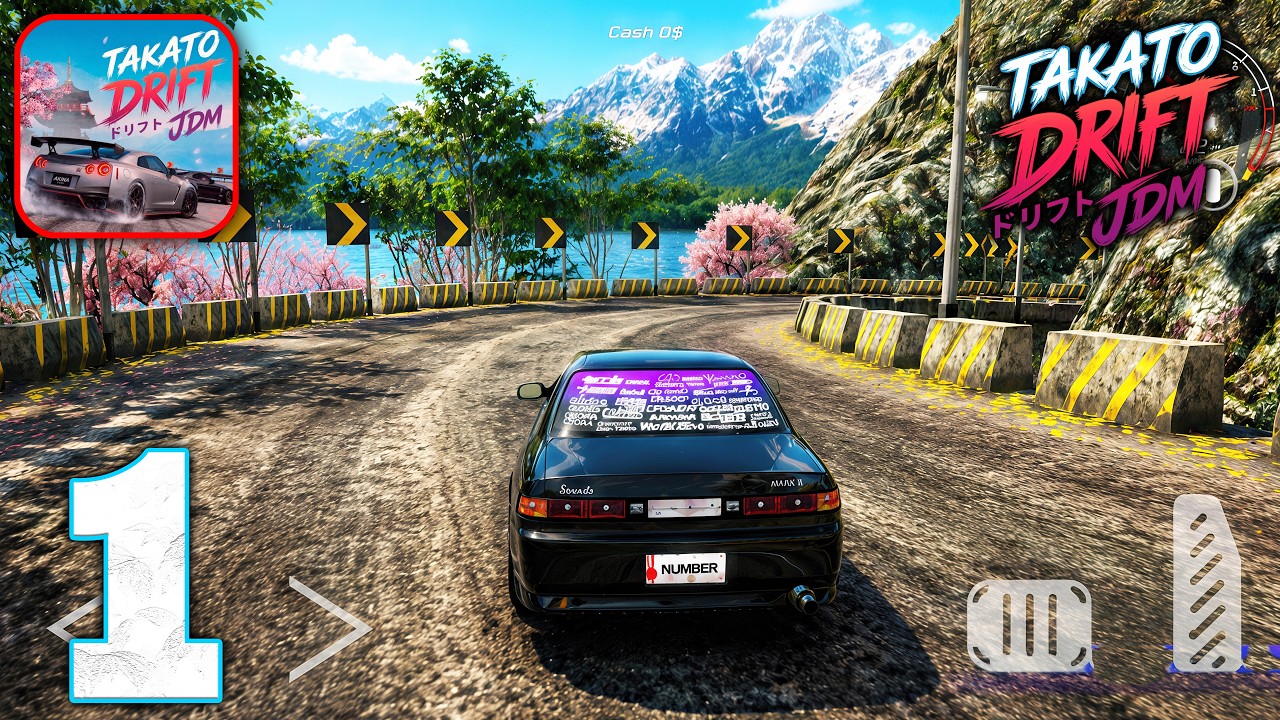

To succeed in Takato Drift Racing JDM, you must master the balance between mechanical tuning and vehicle aesthetics from your very first session. As a beginner, your primary objective is to transform your stock vehicle into a capable drift machine by focusing on engine performance and chassis customization. This guide explains how to effectively utilize your starting resources to ensure your vehicle handles the game’s physics-based drifting mechanics across both neon-lit street environments and technical mountain passes.
Selecting Your First JDM Legend
Your journey begins in the garage, where selecting the right base vehicle dictates your early-game success. The game emphasizes the Japanese Domestic Market (JDM) culture, meaning your initial choice serves as the foundation for all future upgrades. Evaluate your vehicle based on its stock drift potential rather than just its exterior style, as you will need a car that responds predictably to input while learning the game's weight-transfer mechanics.
Once you have purchased your preferred model, resist the urge to spend all your credits on purely cosmetic items. Instead, set aside a significant portion of your starting capital for mechanical performance. A vehicle with high-end paint but a weak engine will struggle to initiate and maintain the long-duration drifts required to score high in the game’s various racing modes.
Tuning for Drift Physics
Mechanical tuning is the most critical factor for achieving consistent drifts. Inside the garage interface, focus your upgrades on the drivetrain and suspension systems. The physics engine in Takato Drift Racing JDM rewards players who find the right balance between tire grip and engine torque. If your car has too much grip, you will struggle to break traction for a drift; too little, and you will lose control entirely during high-speed turns.
Adjust your engine parameters to maximize torque output early in the RPM range. This allows you to initiate drifts more easily when entering corners, especially on the tighter mountain passes. If you find your car sliding out of control too frequently, check your suspension settings; stiffening the rear end slightly can often provide the necessary feedback to keep your drift angle consistent without spinning out.
Visual Customization and Self-Expression
While performance remains the priority, the game’s customization system allows for extensive visual modifications that define your presence in the underground scene. After securing your performance upgrades, use the remaining credits to apply custom paint jobs and decals. This is not just for aesthetic appeal; personalizing your vehicle helps you distinguish your car from opponents during chaotic drift runs, making it easier to track your position in the pack.
When applying decals, consider how they interact with the game’s lighting engine. On the neon-lit street tracks, reflective finishes or high-contrast color schemes stand out significantly. Use these visual elements to create a distinct look that aligns with your racing style, but ensure they do not distract from the road ahead. Remember that you can return to the garage at any time to tweak your design as you earn more credits from successful races.
Navigating Street and Mountain Tracks
The environment in Takato Drift Racing JDM is a vital part of your progression. You will encounter two distinct track types: urban street circuits with wide, neon-soaked turns, and treacherous, narrow mountain passes. Each requires a different approach to throttle control and steering input. Street circuits often allow for higher speeds, meaning you can sustain longer, shallower drifts to rack up style points.
Mountain passes, however, demand precision. These tracks are tight and often include guardrails or drops that punish aggressive driving. On these courses, prioritize short, controlled bursts of acceleration rather than sustained wide-angle slides. If you find yourself hitting walls, it is an indication that you are attempting to drift at speeds your current tire setup cannot support. Scale back your entry speed and focus on hitting the apex of each turn cleanly to improve your overall race completion times.
Resource Management for Long-Term Growth
Progression in Takato Drift Racing JDM is tied to your ability to manage credits efficiently. Do not attempt to upgrade every part of your car simultaneously. Instead, focus on a "bottleneck" strategy: identify which aspect of your car is currently failing you during a race—whether it is acceleration, top speed, or handling—and apply your next upgrade to that specific area. This ensures your limited initial credits provide the highest possible return on investment.
As you progress, the cost of parts will increase, making it essential to save credits rather than spending them on minor, incremental improvements. Only invest in high-tier engine components or advanced aesthetic packages once you have mastered the handling of your current build. By focusing on a single, well-tuned vehicle in the early stages, you build the necessary skills to handle more powerful cars later in the game.

Michael Smith
Michael covers live-service games, events, reward systems, and efficient daily routines, turning frequent updates into clear actions for players.
COMMUNITY
Player Comments
124 players commented on this guide.
The tips are practical and easy to follow.
Can you add more details about early game in a future update?
This guide answered the exact question I had.
I tried this today and it worked better than my old setup.