
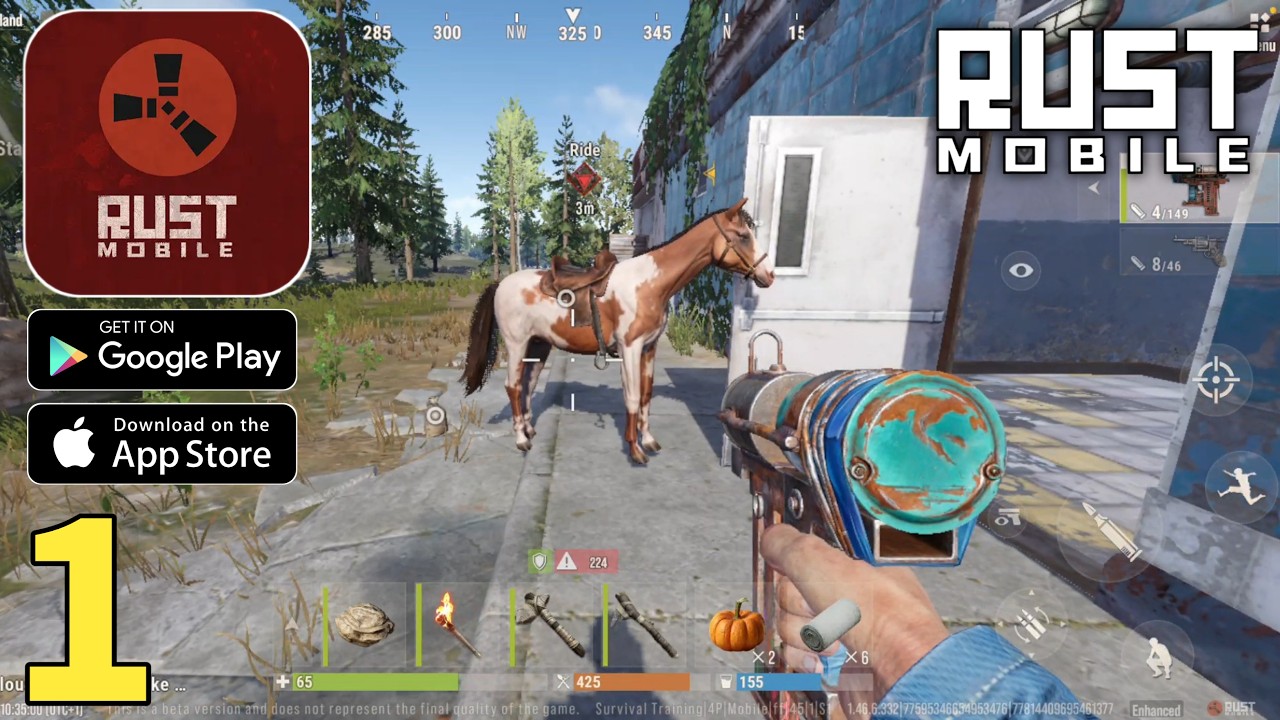

Surviving in Rust Mobile is a test of endurance, tactical planning, and nerves. As an officially licensed adaptation of the legendary PC survival title, Rust Mobile brings the same high-stakes, persistent open-world experience to your fingertips. Whether you are a veteran of the PC version or a newcomer to the brutal sandbox, the core loop remains the same: spawn, scavenge, build, fight, and repeat.
Success in Rust Mobile is rarely about brute force; it is about efficiency. This guide breaks down the essential mechanics you need to master to transition from a defenseless fresh spawn to a formidable presence on your server.
The First Hour: Mastering Primitive Survival
When you first drop into the map, your inventory is empty and your vulnerability is at its peak. The "fresh spawn" phase is the most dangerous time in the game because you have nothing to lose, but also nothing to defend yourself with.
Immediate Resource Gathering
Your immediate goal is to craft a Stone Hatchet and a Stone Pickaxe. Without these tools, you are wasting time punching trees and rocks.
- Wood: Locate trees and harvest them until you have enough wood for basic tools and a workbench.
- Stone: Look for gray, jagged rocks on the ground or nodes on the landscape. Stone is non-negotiable for building foundations and upgrading your initial twig structures.
- Hemp: Gather every hemp plant you see. Cloth is used for sleeping bags, bandages, and clothing. A sleeping bag is your most important early-game item, as it serves as your personal respawn point.
Managing Vitals
In Rust Mobile, hunger and thirst are persistent threats. If your health drops due to starvation, you become an easy target for anyone roaming the area. Always keep an eye on your status bars. If you see animals, hunt them with a spear for meat and animal fat. Cook meat in a campfire, but be careful—the light from the fire at night can attract other players to your location.
Establishing Your First Secure Base
A base in Rust Mobile is your only true protection. In a world where other players can destroy your structures and steal your hard-earned loot while you are offline, base design is an art form.
The Tool Cupboard (TC)
The Tool Cupboard is the heart of your base. Placing one prevents other players from building within your territory and, most importantly, stops your base from decaying over time.
- Maintenance: You must deposit resources (wood, stone, metal) into the TC to pay the upkeep cost. If the TC runs dry, your walls will slowly lose health and eventually vanish, leaving your loot exposed.
Base Progression and Security
Start small. A large, complex base is expensive to maintain and attracts raiders. A simple 2x2 structure is the gold standard for beginners.
- Upgrade to Stone: Start with wood, but upgrade your walls and foundations to stone as quickly as possible. Wood is vulnerable to flame damage and melee attacks.
- The Airlock: Never build a single door. Always create an "airlock"—a small room with two doors—so that when you enter or leave, you are never fully exposed to the outside world.
- Locks: Use Key Locks initially, but transition to Code Locks as soon as you have the resources. Key Locks are risky because if you die and drop your key, whoever finds it can walk right into your base.
Tactical PvP: Staying Alive in a Hostile World
Combat in Rust Mobile is high-risk and high-reward. Because death usually means losing everything in your inventory, you must approach every encounter with caution.
The Rule of Engagement
Before you fire a shot, ask yourself: What do I have to lose? If you are carrying a full inventory of high-tier loot, avoid conflict at all costs. Use the environment—crouch in tall grass, hide behind rock formations, and use the "free look" camera to scout corners without exposing your character.
Combat Mechanics
- Terrain Advantage: Always hold the high ground. If you are caught in an open field, look for any cover. Even a small rock can provide the split-second of protection needed to heal or reload.
- Sound Discipline: Footsteps are loud in Rust Mobile. If you suspect someone is nearby, stop moving and listen. A player who knows someone is coming has a massive advantage over an aggressive player who is sprinting blindly.
- Weapon Tiers: Understand your limits. If you only have a primitive bow, do not engage a player with a firearm unless you have the drop on them. Aim for the head, as primitive weapons rely on precision damage to compete with high-tier gear.
The Progression Loop: From Primitive to Industrial
The game’s progression is gated by the Workbenches. To unlock better weapons and armor, you must gather components and scrap.
- Scrap is King: Scrap is the primary currency for researching and unlocking blueprints. Visit monuments (like the Satellite Dish or Gas Station) to find loot crates and barrels.
- Recycling: Use the Recycler found at major monuments. You can break down unwanted components like road signs or gears into high-value resources like metal fragments and scrap.
- Researching: Once you find a valuable item (like a semi-automatic pistol or a better tool), take it to a Research Table. By spending the required amount of scrap, you can learn the blueprint, allowing you to craft that item indefinitely.
Common Mistakes to Avoid
- Building in High-Traffic Areas: Avoid building directly next to monuments or main roads. These are the most heavily traveled areas and the first places raiders will look for victims.
- Hoarding Too Much: Don't keep all your valuable loot in one base. If you get raided, you lose everything. Distribute your resources across multiple small stashes or secondary "bunker" bases if possible.
- Ignoring the Map: Use your map to track your location and identify nearby monuments. Understanding the geography is key to navigating back to your base after a successful run.
Final Thoughts: The Rust Mentality
The most important lesson in Rust Mobile is to accept that you will eventually lose your gear. Whether through a raid, a PvP encounter, or environmental death, loss is part of the game’s design. By focusing on learning blueprints and building a defensible, efficient base, you ensure that even if you lose your current loadout, you have the knowledge and infrastructure to bounce back stronger than before. Stay quiet, stay mobile, and keep your doors locked.

Sarah Williams
Sarah specializes in RPG and collection games, explaining team building, character growth, and beginner-friendly ways to avoid expensive early mistakes.
COMMUNITY
Player Comments
70 players commented on this guide.
Nice guide. I am checking the other HOT articles next.
The tips are practical and easy to follow.
The explanation is clear, especially for beginners.
This saved me time in the early game.