
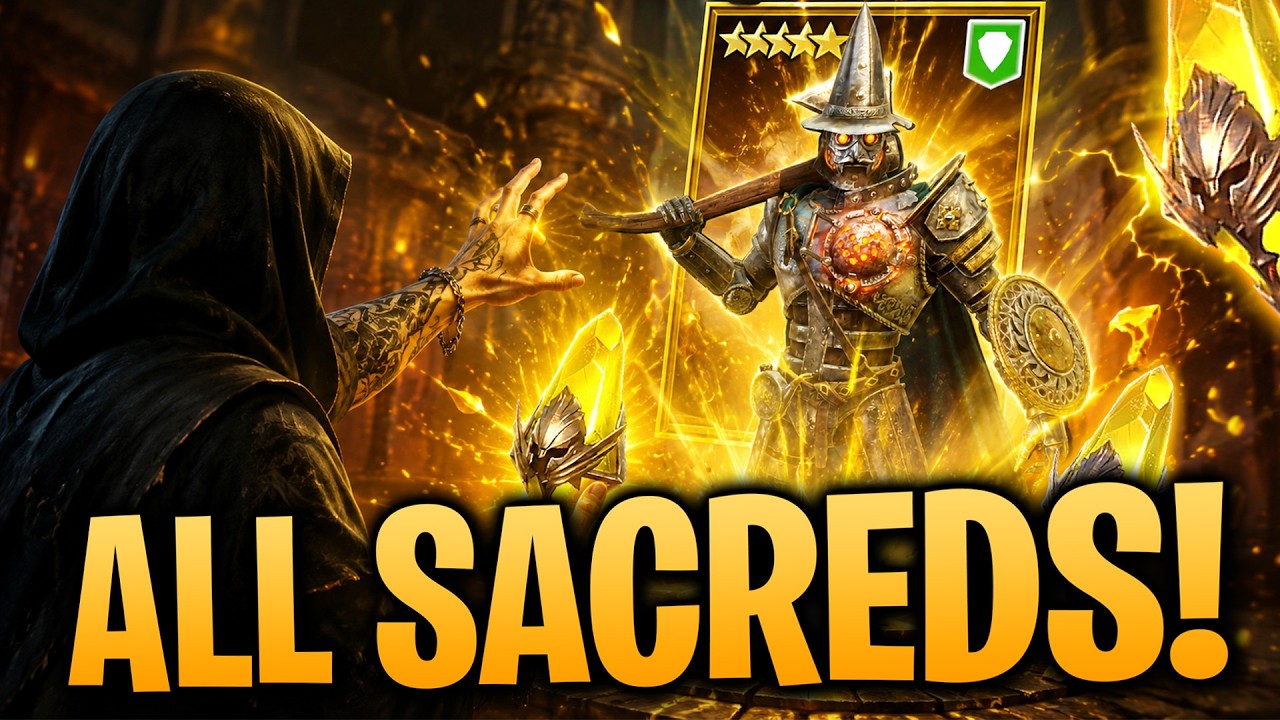

In Raid: Shadow Legends, the most effective way to expand your roster is to treat your resources as long-term investments rather than instant gratification. The game’s economy rewards patience, and nowhere is this more evident than in the management of Sacred Shards. The optimal player strategy is to hoard these shards exclusively for 2x summoning events, ideally when they overlap with active fusion requirements. By doing this, you maximize your mathematical probability of pulling high-tier Legendary champions while simultaneously earning essential fragments to unlock fusion champions like the Cowardly Lion.
The Mathematical Advantage of 2x Sacred Summon Events
The core of Raid progression lies in understanding drop rates. Outside of special events, a Sacred Shard carries a 6% base chance to summon a Legendary champion. During a 2x event, this base rate doubles to 12%. While 6% might seem small, the doubling effect is massive over the span of 10, 20, or 30 shards.
When you summon during a 2x window, you are effectively buying twice as much "Legendary potential" per shard spent. Because Sacred Shards are the rarest resource in the game, wasting them on standard summoning rates is the fastest way to stall your account’s growth. Experienced players treat the 2x event as the only "safe" time to engage with the summoning portal, viewing it as the baseline for responsible resource management.
Aligning Summons with Fusion Events
The "Gold Standard" of efficiency is the overlap between a 2x event and a Fusion/Fragment event. During a fusion, the game tasks you with completing Summon Rushes or Champion Chase tournaments to earn shards or fragments.
If you pull your shards outside of these events, you lose the "double dip" value. By aligning your pulls with a fusion:
- You gain the 2x Legendary rate: Maximizing your chance at high-tier units.
- You secure Fusion progress: Meeting the point requirements for the fusion champion without needing to spend additional resources.
- You optimize event rewards: Most summon events offer secondary rewards like energy, silver, or books, which further accelerate your progression.
Always verify the point thresholds in the event tab before pulling. If you are 500 points away from a key reward, burning your shards during the 2x event ensures you don't have to resort to inefficient methods—like buying shards with gems—to finish the mission.
Understanding the 10x Mechanic vs. 2x Events
Players often confuse 10x events with 2x events. A 2x event increases the chance of pulling any Legendary. A 10x event, such as a focus on a specific champion like the Tin Woodman, increases the chance that a Legendary you pull will be that specific champion.
- The 2x Strategy: Best for players who need "account-wide" improvement. If you lack many top-tier Legendaries, 2x is always the superior choice because it provides the highest volume of Legendary champions.
- The 10x Strategy: Best for end-game players who have a deep roster and are fishing for one specific champion to complete a niche team (e.g., a specific speed-tune setup or a hard-carry for Hydra).
Never pull during a 10x event if the base rate is not also doubled, unless you are a late-game whale. For 99% of players, the volume of Legendaries provided by 2x events is significantly more valuable than the increased odds of one specific unit.
Managing Expectations and RNG
Even with boosted rates, Raid: Shadow Legends remains an RNG-heavy game. It is statistically possible to pull five shards during a 2x event and receive zero Legendaries. This is known as "bad variance." To combat the psychological frustration of this, maintain these three rules:
- The "Nest Egg" Rule: Never go "all-in" unless you have enough shards to reach the next major milestone. If you have only one Sacred Shard, holding it for a better event is usually wiser than pulling it immediately.
- Expectation Management: Treat your pulls as a way to get "food" and Epic champions for your account. If a Legendary drops, it’s a bonus. This mindset shift prevents burnout when RNG doesn't go your way.
- The Pity System: Remember that Raid has a "pity system" for Sacred Shards. If you do not pull a Legendary within 12 shards, your chances increase significantly on the 13th shard. Always track your "dry spell" count to know when you are nearing your guaranteed Legendary.
Evaluating Your New Champions
When you finish an "all-in" session, do not immediately feed your new Epics or Legendaries to your main team. Take time to evaluate how they fit into your current roster. Even if you don't pull the "featured" 10x champion, you may have pulled a sleeper hit.
- Clan Boss Utility: Does the champion provide "Ally Protection," "Increase Defense," or "Poison Sensitivity"? These are the building blocks of a high-damage Clan Boss team.
- Dungeon Wave Control: Look for champions with "Stun," "Freeze," or "Provoke." These are essential for clearing high-level waves in Doom Tower or Dungeons.
- Arena Synergy: Look for Speed Auras or Turn Meter boosters. Even an Epic champion can be better than a Legendary if they enable your team to go first in the Arena.
Common Mistakes to Avoid
- Summoning on impulse: If you see a notification for a "Summon Boost," check if it’s a 2x event. If it’s not, close the tab and walk away.
- Ignoring the Fusion Calendar: Players often pull shards a day early and miss the start of a fusion, forcing them to buy extra shards with real money. Always check the event start times.
- Overvaluing the 10x Champion: Don't chase a 10x champion if they don't solve a specific problem for you. A "meta" champion is only good if you have the gear and books to support them.
By following these guidelines, you move from playing Raid: Shadow Legends by luck to playing it by strategy. Hoard your Sacred Shards, wait for the 2x window, align with fusion milestones, and always prioritize the long-term health of your roster over the desire for a single, fleeting pull.

Sarah Williams
Sarah specializes in RPG and collection games, explaining team building, character growth, and beginner-friendly ways to avoid expensive early mistakes.
COMMUNITY
Player Comments
52 players commented on this guide.
I wish I had read this before upgrading the wrong thing.
This guide answered the exact question I had.
The explanation is clear, especially for beginners.
Can you add more details about updates in a future update?