
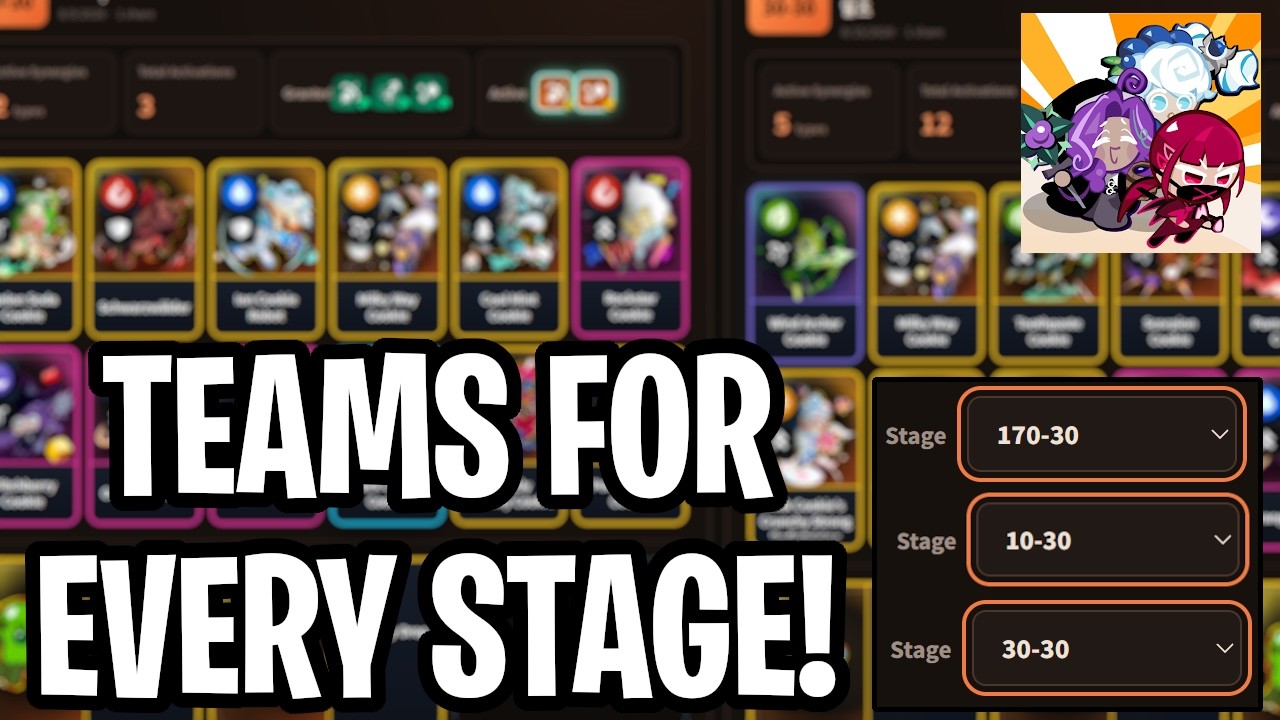

Progressing through the increasingly difficult chapters of Cookie Run: Crumble requires more than just high-level Cookies; it demands a strategic understanding of team synergy, elemental counters, and role optimization. When you hit a progression wall, the solution rarely lies in raw power alone, but rather in how your team interacts with the specific mechanics of that stage. By leveraging data-driven insights from the community, you can transition from struggling against bosses to consistently three-starring every encounter.
The Foundation of Successful Team Compositions
The most common mistake players make in Cookie Run: Crumble is prioritizing individual Cookie rarity over team cohesion. A team of five high-rarity units will frequently fail against a well-balanced team of lower-rarity Cookies that share strong synergies.
To build an effective squad, visualize your team as a functioning ecosystem:
- Frontline Stability: You must have at least one dedicated defensive unit. These Cookies are designed to absorb damage and manage enemy aggro, preventing your squishier units from being targeted.
- Sustain and Utility: A healer or support unit is non-negotiable. Look for Cookies that provide team-wide buffs, such as attack speed increases, shields, or debuff cleansing.
- Damage Profile: Analyze the stage before you enter. If the stage features high-density waves of small enemies, your team needs Area of Effect (AoE) damage dealers. If you are facing a single, high-HP boss, you must swap your AoE units for single-target "shredders" that can bypass damage mitigation thresholds.
Utilizing the CrumbleHub Codex for Meta Analysis
The CrumbleHub codex is the most authoritative resource for identifying which Cookies currently dominate the meta. Instead of blindly leveling your favorite characters, use the codex to observe the "Clear History" for the specific stage you are stuck on.
When analyzing successful team clears, look for these three metrics:
- Usage Frequency: If a specific Cookie appears in 80% of top-tier clears for a chapter, they are likely a "core" unit that provides value far beyond their stats. Prioritize investing in these Cookies.
- Synergy Pairs: Often, two Cookies share a passive interaction that significantly boosts damage or defense. Never break these pairs when experimenting with new team builds.
- Role Consistency: Note if successful players are running double-healer setups or double-tank setups for that stage. This indicates that the stage’s damage output is high enough to warrant extra survivability over raw damage.
Elemental Synergy and Stage Modifiers
Cookie Run: Crumble features a complex elemental system where specific damage types are amplified against certain enemy archetypes. Ignoring these elemental advantages is the fastest way to lose momentum in late-game stages.
Before committing to a fight, check the stage preview for enemy elemental weaknesses. If a stage features enemies resistant to physical damage, you must pivot to a team centered around elemental damage dealers. Furthermore, pay close attention to stage-specific modifiers—these can include environmental hazards like poison clouds, freezing tiles, or enemy-only lifesteal. A "tech" unit—a Cookie whose skill specifically cleanses debuffs or provides immunity—is often worth more than a top-tier damage dealer in these specialized encounters.
Strategic Resource Allocation
Resources like Experience Jellies and Skill Powders are strictly limited. Attempting to level your entire roster will lead to a stalled account. To maintain efficient progress, follow the "Core Five" rule:
- Focus on the Core: Choose five Cookies that cover the essential roles (Tank, Healer, Damage, Support) and invest your primary resources into them.
- The "Must-Build" List: Only invest deeply in units that appear frequently in both story progression and competitive modes. This ensures your investment retains its value as you reach the endgame.
- Skill Powder Management: Prioritize leveling the skills of your support and healing units before your damage dealers. In Cookie Run: Crumble, keeping your team alive for the duration of the stage is almost always more important than increasing your burst damage by a marginal amount.
Adapting to Meta Shifts and Updates
The Cookie Run: Crumble meta is dynamic. As developers release balance patches and introduce new Cookies, the "best" team for a specific stage will inevitably evolve.
If you find that an old guide or a team composition that worked previously is no longer clearing a stage effectively, check the latest community discussions on the official Discord. New Cookies often introduce power-crept mechanics that can neutralize difficult boss gimmicks. Being willing to bench a previously "top-tier" unit for a newer, more relevant Cookie is the hallmark of an advanced player.
Common Mistakes That Stall Progression
- Ignoring Team Order: Placement matters. Ensure your tank is in the lead to draw aggro, while your most fragile damage dealers are placed in the back.
- Over-Investing in Secondary DPS: You only need one, perhaps two, primary damage dealers. Spending resources on a third damage dealer usually leads to a lack of utility and survivability.
- Skipping Skill Upgrades: Many players focus only on character level. However, skill levels provide exponential gains in effectiveness. Always ensure your core team’s skills are capped at your current player level.
- Playing Manually vs. Auto: While Auto-play is convenient, it often fails on difficult stages because it doesn't time abilities correctly. If you are struggling, switch to manual and save your healer’s ultimate for when the team's HP drops below 50%.
By focusing on these structural elements, you can overcome even the most difficult progression walls in Cookie Run: Crumble. Remember that the most successful players are those who treat every stage as a puzzle to be solved with the right combination of Cookies, rather than a brute-force test of character levels.

James Brown
James focuses on Android gaming on PC, emulator setup, controls, performance tuning, and practical troubleshooting for longer play sessions.
COMMUNITY
Player Comments
82 players commented on this guide.
This guide answered the exact question I had.
I wish I had read this before upgrading the wrong thing.
Good guide for HOT players. The base building part was useful.
The tips are practical and easy to follow.