
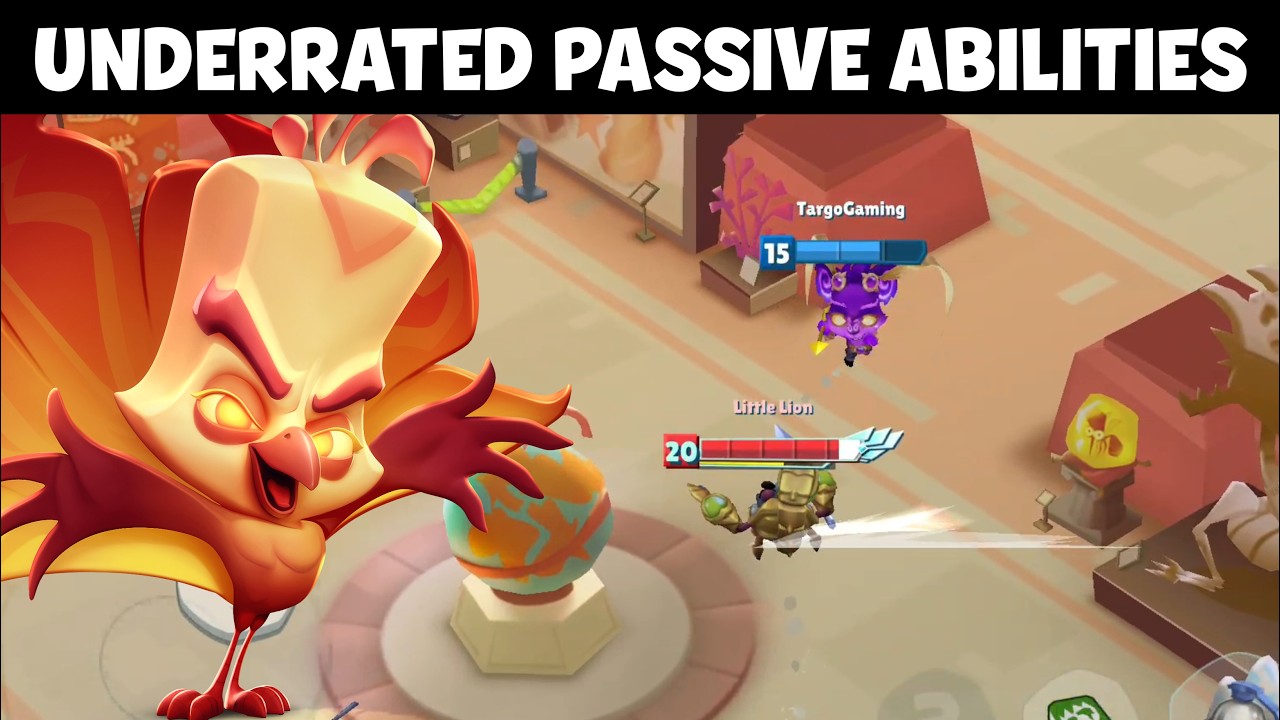

Many players in Zooba fixate on active character skills, but ignoring passive abilities often leaves significant power on the table. By strategically selecting characters based on their unique passive kits, you can gain a distinct advantage in movement, damage output, and defensive sustainability. This guide explores how to identify and utilize these underrated mechanics to improve your survival rate and combat effectiveness during intense arena matches, regardless of your current trophy level or character roster.
Evaluating Passive Ability Utility
The most effective way to gain an edge is to stop viewing passive abilities as secondary bonuses and start treating them as core components of your loadout. A passive ability that improves your base stats—such as movement speed or health regeneration—is often more reliable than an active skill that relies on cooldowns or precise aiming. When evaluating a character, always look at how their passive interacts with the current map's terrain and the general flow of combat.
Characters with passives that trigger under specific conditions, such as being in water or hiding in bushes, offer situational mastery that many opponents fail to account for. By learning which characters possess these environmental triggers, you can force engagements in areas where your passive gives you a mathematical advantage, effectively turning a standard skirmish into a favorable trade.
Leveraging Movement-Based Passives
Mobility is the most critical factor in Zooba, and passives that enhance your movement speed or navigate terrain efficiently are consistently underrated. These abilities allow you to kite slower opponents or escape lethal situations that would otherwise end your run. When your hero has a passive that grants a speed boost after a kill or while moving through specific biomes, you can dictate the pace of the battle.
To maximize these traits, avoid playing conservatively in neutral areas. Instead, prioritize positioning yourself near the terrain types that activate your hero's unique movement bonuses. If your character gains speed in water, intentionally route your pathing through aquatic zones even if it seems slightly longer. The time saved by the passive boost will almost always outweigh the pathing inconvenience during a pursuit or a tactical retreat.
Maximizing Defensive Passive Synergies
Defensive passives are often dismissed because they do not provide immediate, flashy combat feedback, yet they are essential for long-term survival. Passives that provide damage reduction or health regeneration allow you to sustain through multiple encounters without needing to burn through your consumable item supply too quickly. This sustainability is a game-changer when you are deep into a match and resources become scarce.
When building your hero, identify the specific threshold where your defensive passive becomes most effective. For instance, some passives activate only when your health drops below a certain percentage. Playing around this "danger zone" requires discipline; you must learn to bait enemies into committing to a fight while your passive is active, turning their perceived advantage into an opening for a counter-attack.
Tactical Considerations and Trade-offs
While focusing on passives provides a strong strategic foundation, it is vital to recognize that these abilities have inherent limitations. Most passive-focused builds require specific playstyles that might not align with every game mode. For example, a passive that excels in a sprawling open map might be completely ineffective in tight, congested corridors. Always assess the current arena map before committing to a character whose primary strength relies on a niche passive.
Additionally, remember that relying too heavily on passives can lead to bad habits. If you become too dependent on health regeneration or speed boosts, you may neglect fundamental skills like proper item management or active ability timing. Use your passive abilities to supplement your gameplay, not to replace the necessity of sound positioning and map awareness.
Strategic Checklist for Passive Optimization
To make the most of these mechanics, follow this systematic approach when preparing for your next match:
- Audit Your Roster: Review every character's passive description in the menu to identify which ones offer consistent stat buffs versus conditional triggers.
- Map Alignment: Match your character selection to the environment. If the current arena features significant water or bush coverage, choose a hero whose passive thrives in those specific areas.
- Resource Conservation: Use your passive health or speed advantages to save your active items for true emergencies, ensuring you aren't caught empty-handed in the final circle.
- Baiting Tactics: If your passive triggers at low health, practice staying at that threshold to entice aggressive players into making mistakes.

James Brown
James focuses on Android gaming on PC, emulator setup, controls, performance tuning, and practical troubleshooting for longer play sessions.
COMMUNITY
Player Comments
55 players commented on this guide.
This saved me time in the early game.
The tips are practical and easy to follow.
The explanation is clear, especially for beginners.
Good guide for HOT players. The strategy part was useful.