
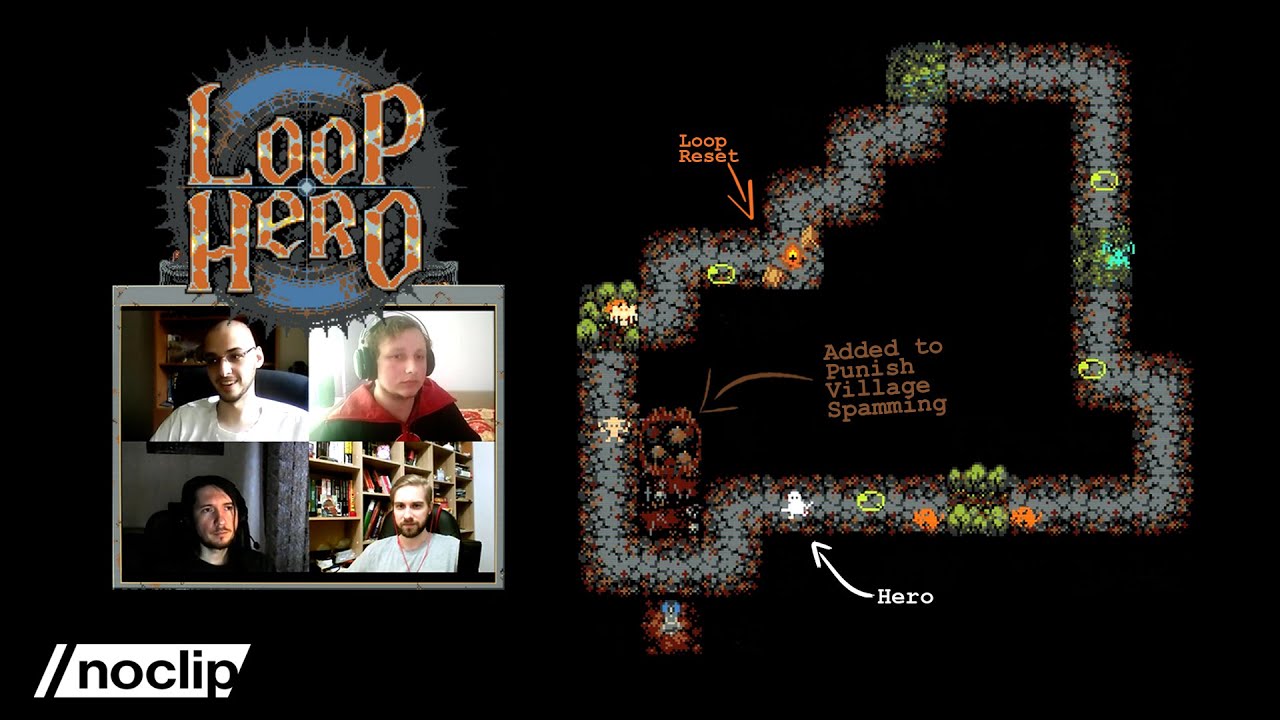
To succeed in Loop Hero, you must stop viewing the game as a passive RPG and start treating every expedition as a deliberate engineering project. In Loop Hero, you are the architect of the world, and every card you place acts as a variable in a mathematical equation that dictates your survival. Success isn't about raw reaction time; it is about managing the "difficulty curve" through strategic tile placement, recognizing when to exploit synergies, and knowing exactly when to extract your hard-earned resources.
The Mechanic of Active World-Building
Unlike traditional roguelikes where the environment is static, Loop Hero places the power of world generation into your hands. Every card you play serves two purposes: providing a benefit (resources or stats) and imposing a condition (new enemies or environmental hazards).
Treat your deck as a tool for controlling the game's pace. If you fill your deck with high-reward cards that spawn powerful monsters, you are effectively accelerating the difficulty. If your hero is consistently dying in the early loops, your deck is likely "top-heavy"—you are introducing threats faster than your gear can scale to meet them. View each card placement as a negotiation: "What is the cost of this resource, and can my current equipment handle the enemy density it creates?"
Balancing Resource Density vs. Combat Risk
The fundamental tension in Loop Hero is the balance between looting and surviving. Each tile carries a hidden cost-to-benefit ratio that you must learn to calculate instinctively:
- The Early Loop Strategy: Your first three laps around the loop should be focused entirely on resource accumulation and gear acquisition. Avoid placing tiles that spawn high-tier enemies until your hero has at least two or three equipment slots filled with items that provide "Defense" or "Vampirism."
- The Gear-Check Threshold: If your health bar is consistently dropping below 50% before reaching the Campfire, you have placed too many enemy-spawning tiles (like Groves or Vampire Mansions) relative to your current gear quality.
- Buffer Tiles: Use Meadow tiles or Treasury adjacency bonuses to bolster your survivability before adding more combat-intensive tiles.
Leveraging Strategic Tile Synergies
The most successful Loop Hero players do not play cards in isolation; they create "combos" that provide exponential returns. Learning these synergies is the single biggest step in transitioning from a novice to an expert.
Essential Synergy Clusters
- The Mountain Peak: Placing nine Rock or Mountain tiles in a 3x3 grid creates a Mountain Peak. This grants a massive HP boost and spawns a Harpy every two days. It is the best way to scale HP, but prepare for the additional combat challenge.
- Blood Groves and Blood Path: Placing a Blood Grove next to a Grove (or a Vampire Mansion) allows you to execute enemies when they drop below 15% HP. This is an essential synergy for clearing high-density paths quickly.
- The Treasury Trap: Placing eight tiles around a Treasury provides a massive resource burst. However, once the Treasury is full, it turns into an Empty Treasury, which spawns Gargoyles. Anticipate this shift so you aren't caught off guard by a high-damage enemy when your hero is already low on health.
- Desert and River: Combining these two cards is one of the most powerful strategies in the game. River tiles double the effect of adjacent Desert/Sand Dune tiles, allowing you to rapidly debuff enemy HP while maintaining your own combat effectiveness.
Strategic Extraction: Protecting Your Progress
The most common mistake for new Loop Hero players is the "greed loop"—pushing for one more circuit when your health is low. In this game, the only resources that matter are the ones you successfully bring back to your camp.
The Rule of Extraction:
- Check your gear level: If your current items are three or more loops behind your current progress, your damage output and survivability are likely compromised.
- Monitor the Boss Meter: Never start a loop if you are close to spawning the boss unless you have a full inventory of high-rarity gear and a clear plan.
- The 60% Health Rule: If you are at 60% health or lower and have no reliable way to heal before reaching the next Campfire, extract immediately. You lose 100% of your loot upon death, but 60% of your loot upon retreat. That 60% is enough to upgrade your base, which provides permanent, global stats for your next run.
Managing the Escalating Difficulty Curve
As you progress through the chapters, the game’s baseline difficulty increases. Your job is to stay ahead of this curve using meta-progression.
The Role of the Camp
Your base is not just a hub; it is your insurance policy. Prioritize upgrading your Field Kitchen and Smithy early. The Field Kitchen increases your healing from the Campfire, while the Smithy provides you with a starting weapon and shield, effectively giving you a "head start" on every single expedition.
Deck Optimization
As you unlock more cards, your deck will inevitably become bloated. Resist the urge to add every new card you unlock. A smaller, focused deck is often more powerful because it increases the probability of drawing the specific synergy cards you need. If you are struggling with a specific chapter, audit your deck:
- Remove cards that don't contribute to your current win condition.
- Ensure you have a "defensive" set (e.g., Mountains/Meadows) for every "offensive" set (e.g., Groves/Vampire Mansions).
Final Expert Insights
- Don't ignore the Oblivion card: This is the most underrated tool in the game. Use it to remove difficult tiles that you placed prematurely or to destroy a Vampire Mansion that is making a loop too dangerous. It is a "get out of jail free" card for your map layout.
- Class Synergies: Remember that each class interacts with cards differently. The Rogue, for example, relies on speed and evasion, making thickets and rivers more valuable than they might be for the Warrior. Always tailor your tile placements to the specific strengths of the hero you have selected.
- The "Zero-Risk" Farm: If you need specific resources like Stable Metal or Preserved Rocks, it is perfectly acceptable to run a "low-effort" loop where you only place tiles that don't add significant combat difficulty, farm the resources, and extract early.
By treating Loop Hero as a design challenge rather than a simple dungeon crawler, you gain control over the chaos. Build your deck with intent, respect the power of tile synergies, and never let pride prevent you from retreating with the loot you have earned. Master the cycle, and you will eventually shatter it.

Free Loop Hero Codes
Current active codes and how to redeem them.

Emily Johnson
Emily writes practical mobile strategy guides with a focus on resource planning, base progression, and the early decisions that shape a long-term account.
COMMUNITY
Player Comments
55 players commented on this guide.
This helped me understand resources much better.
Good guide for Loop Hero players. The resources part was useful.
I wish I had read this before upgrading the wrong thing.
This guide answered the exact question I had.