
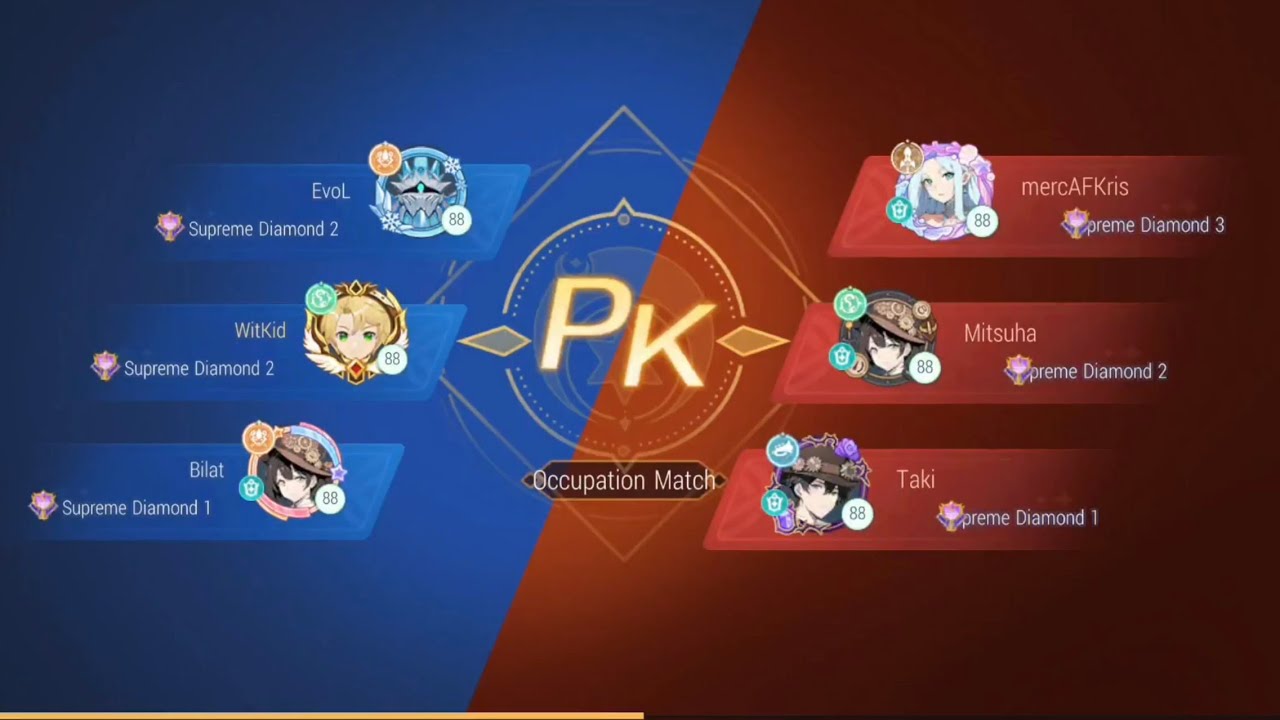
In Lumina Saga M, the 3v3 Occupation Match is not a test of raw kill counts, but a tactical exercise in spatial dominance. While the fast-paced combat of the Martial Arts Tournament might tempt players to chase down opponents for individual glory, the secret to high-rank progression lies in discipline and objective-based play. To consistently win, you must shift your mindset from "hunting" to "holding."
Success in the arena requires a synthesis of class-specific utility, map awareness, and the ability to dictate the tempo of the fight. This guide breaks down the mechanics and strategies necessary to master the Occupation Match format and climb the leaderboards.
Prioritizing Zone Control Over Skirmishes
The core mechanic of the Occupation Match is the capture circle. The game calculates your team’s progress based on the total time spent within these boundaries. Every second spent outside the circle, even if you are securing a kill, is a second of progress lost for your team.
- The "Anchor" Strategy: Designate one player—typically the tankiest or most utility-focused member—to remain within the capture circle at all times. This "anchor" serves as the focal point for the team's defense.
- Preventive Positioning: Do not wait for enemies to reach the circle. Push your defensive perimeter out by 10–15 yards. By intercepting opponents before they reach the objective, you force them to burn mobility cooldowns just to enter the fight, leaving them vulnerable to your team’s crowd control (CC).
- The Cost of Overextension: Chasing an enemy into their spawn area is the most common mistake in Lumina Saga M. Doing so pulls your team out of the zone, effectively handing the objective to the opposition. If an enemy retreats, let them go. Your victory condition is the point, not the opponent’s health bar.
Maximizing the Witkid Herbalist in PVP
The Witkid Herbalist is a top-tier choice for 3v3 modes due to its ability to create "dead zones" that make it impossible for enemies to stand in the capture circle. Unlike melee classes that must be physically present to contest the point, the Herbalist can project influence from a distance.
- Layering Fields: Effective Herbalists layer their healing and damage-over-time (DoT) fields. By dropping a damage field directly on the objective, you force opponents to choose between taking constant chip damage or stepping out of the circle to heal, which resets their capture progress.
- Utility Rotation: Prioritize your cooldown reduction gear. You want your displacement skills available as often as possible. When an enemy enters the circle, use your displacement to knock them back or stun them, forcing them to re-enter and restart their engagement.
- Sustained Pressure: Even when your team is not actively capturing, your ground-based abilities can "lock down" the area, preventing the enemy from gaining momentum. Use your zones to create a pathing bottleneck that funnel opponents into your team's waiting attacks.
Executing Coordinated Team Rotations
Winning the Martial Arts Tournament requires more than just individual skill; it requires a synchronized team dance. Your team must move as a single unit to ensure the capture point is never left undefended.
- The Screen and Core: One player stays in the center (Core), while the other two move in a triangle formation around the perimeter (Screen). This prevents opponents from flanking the anchor.
- The Burst Window: If you lose control of the zone, do not trickle in one by one. Wait for your teammates to respawn or regroup. Coordinate a "burst window" where all three members use their Ultimate abilities simultaneously. This overwhelming force is the most reliable way to force a group off a defended point.
- Communication: In a 3v3 setting, call out your cooldowns. If your healer’s cleanse is on cooldown, the front-line fighters must play more conservatively. If your CC is ready, call for an aggressive push to catch an overextended opponent.
Managing Trade-offs and Combat Risks
Building your character for the 3v3 Arena involves distinct trade-offs. A "glass cannon" build might secure high damage numbers, but you will find yourself respawning more often than you are capturing.
- Resilience > Damage: In 3v3, "Time-to-Kill" (TTK) is the most critical metric. If you can survive for 10 seconds longer than your opponent, you have a massive advantage in objective uptime. Prioritize gear that offers health regeneration, physical/magical resistance, and crowd-control reduction.
- Cooldown Management: The most successful players in Lumina Saga M prioritize cooldown reduction (CDR) over raw attack power. Being able to use your stuns, heals, and dashes every 8–10 seconds is mathematically superior to having a 15% boost to raw damage but having your skills on long cooldowns.
- Adaptability: Always inspect your opponents. If they have high burst damage, stack resistance. If they have high sustain/healing, prioritize items that apply "Healing Reduction" or "Anti-Heal" debuffs.
Adapting to Arena PVP Dynamics
Unlike dungeon monsters, players in the Martial Arts Tournament are unpredictable. They will kite, wait for your cooldowns, and use environmental objects to break line-of-sight.
- Predicting Movement: Watch how your opponents move. Do they favor the left or right side of the map? Do they aggressively dive the healer? Anticipate these patterns and position your skill zones accordingly.
- Environmental Usage: Use the arena’s pillars and terrain to your advantage. If you are playing a ranged class, keep the capture point between you and the enemy melee fighters. This forces them to run through the center of the circle to reach you, making them easy targets for your area-denial skills.
- The "Final Seconds" Mindset: The game often comes down to the last 30 seconds. Save your most powerful defensive cooldowns for this phase. Many teams blow their ultimates early, leaving themselves vulnerable when the match is actually decided.
By focusing on zone control, mastering your class's area-denial utility, and staying disciplined in your rotations, you will climb the Lumina Saga M rankings faster than those simply hunting for kills. Success in the arena is about making the enemy's life as difficult as possible within the capture circle—keep them moving, keep them off-balance, and stay in the zone.

Free Lumina Saga M Codes
Current active codes and how to redeem them.

Michael Smith
Michael covers live-service games, events, reward systems, and efficient daily routines, turning frequent updates into clear actions for players.
COMMUNITY
Player Comments
151 players commented on this guide.
I tried this today and it worked better than my old setup.
The tips are practical and easy to follow.
I wish I had read this before upgrading the wrong thing.
This saved me time in the early game.