
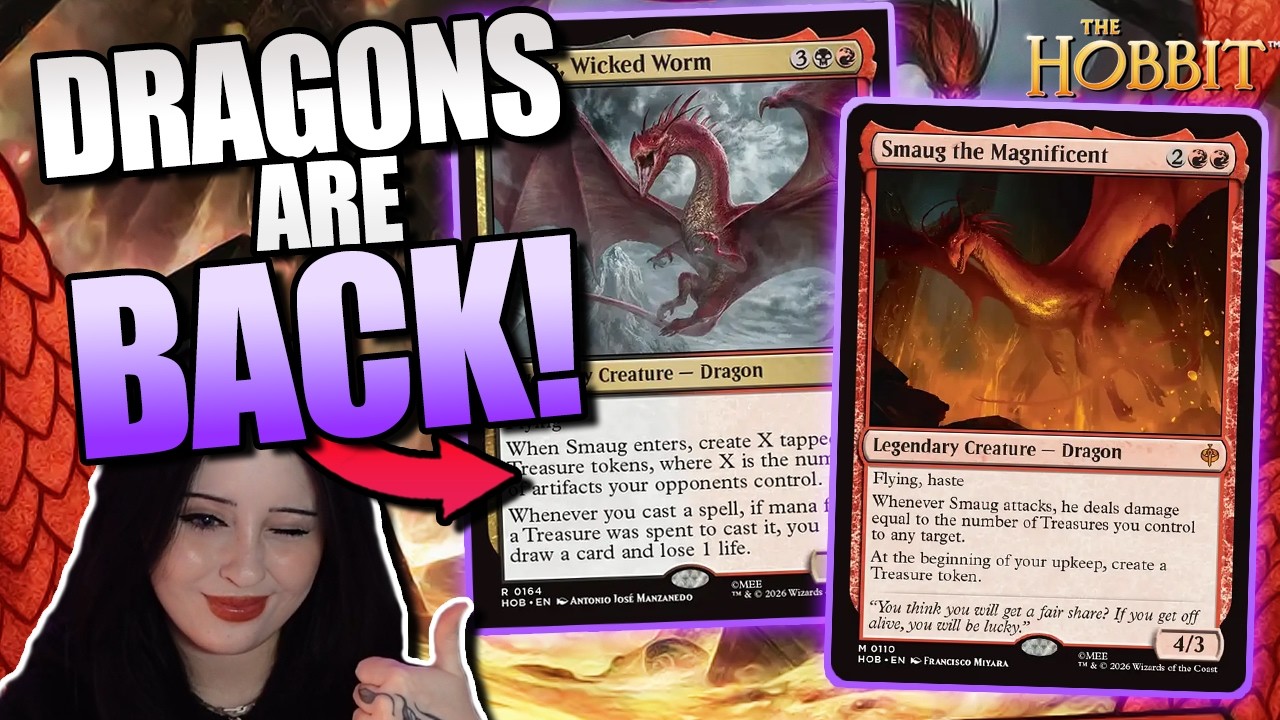
In the evolving landscape of Magic: The Gathering Arena Standard, Rakdos (Black-Red) Midrange has found a terrifying new identity. By integrating the high-impact Smaug cards into a core of efficient removal and aggressive threats, players can create a deck that scales rapidly, outpaces traditional aggro, and grinds down control opponents. This guide breaks down the mechanics, strategic sequences, and decision-making processes required to pilot Rakdos Dragons effectively on the ranked ladder.
The Engine: Leveraging Smaug for Treasure Economy
The primary strength of this archetype in Magic: The Gathering Arena is its ability to "cheat" the mana curve. Smaug cards are not just heavy hitters; they are engines that generate massive amounts of Treasure tokens. These tokens act as a bridge, turning your early-game board presence into explosive late-game turns.
To maximize this, you must treat your Treasure tokens as a flexible resource pool rather than just mana acceleration. Experienced players hold these tokens to enable "swing turns"—moments where you deploy a high-cost threat while keeping mana open for a game-ending removal spell or a protective interaction.
Pro Tip: Do not feel pressured to sacrifice your Treasure tokens immediately. Often, the threat of potential mana is more valuable than the mana itself. Keep your opponent guessing by holding onto your Treasure until you are ready to force them into a losing board state.
Balancing Midrange Threats and Removal
Rakdos Dragons succeeds because it refuses to play fair. While your opponent is busy setting up their board, you are systematically dismantling their pieces while building toward your own win conditions. The deck functions best when you balance a 1:1 interaction ratio with your high-value dragon drops.
Core Strategic Pillars:
- Early-Game Stabilization: Utilize low-cost black removal (such as Go for the Throat or Cut Down) to ensure you don’t fall behind against aggressive decks.
- The Mid-Game Pivot: Transition from defensive interaction to proactive threats by turn four or five. Once your Smaug-based ramp comes online, your goal is to present a "must-answer" threat every turn.
- Board Clears: Always include at least one mass-removal spell (like Deadly Derision or board wipes depending on your specific list) to reset the board if you encounter "go-wide" strategies that threaten to overwhelm your individual units.
Optimizing the Dragon Curve
In Magic: The Gathering Arena, sequence is everything. When piloting Rakdos Dragons, your curve is your most important asset. You want to avoid "clumping" your threats. If you have two high-mana dragons in hand, prioritize the one that provides immediate board impact (such as an enters-the-battlefield effect or haste) over a card that requires a full turn to "spin up."
If you have Smaug on the board, you have the potential to "double-spell." This is your primary path to victory. By playing a dragon and a removal spell in the same turn, you effectively nullify the opponent’s ability to stabilize. You are forcing them to react to your board while simultaneously clearing their blockers, creating a tempo advantage they rarely recover from.
Managing Trade-offs and Vulnerabilities
While the power level of this deck is immense, it is not invincible. The biggest weakness of any dragon-focused midrange deck is over-commitment. If you dump all your resources into a single dragon only to have it hit by a cheap counter-spell or enchantment-based removal, you lose your momentum.
- The Counter-Magic Trap: If you suspect your opponent is holding counter-magic, wait. Play your cheaper, lower-impact spells first to bait out their interaction.
- Resource Conservation: If you are ahead on the board, there is no need to play a second dragon if your first one can finish the game. Keep cards in hand to rebuild if the opponent manages to wipe the board.
- The "Slow Start" Risk: Ensure your deck includes enough low-cost creatures to survive the early turns. Relying exclusively on Treasure generation to cast your spells is a recipe for disaster if your opponent destroys your artifacts or taxes your mana early.
Strategic Decision-Making: The Late Game
Once you reach the late game, your strategy should shift from "ramp" to "domination." At this stage, your dragons should be capable of finishing the game within one or two combat steps. If the game extends, use your remaining Treasure tokens to dig through your deck for finishers or utility cards that can push through the final points of damage.
Remember that in Magic: The Gathering Arena, patience is often more valuable than speed. Even if you have the mana to play a dragon, wait for a window where the opponent is tapped out or has already committed their resources to a previous threat. By forcing your opponent to play on your terms, you maximize the impact of your dragon-focused strategy.
Common Mistakes to Avoid
- Over-relying on Treasure: Do not sacrifice your Treasure tokens unless you have a specific, immediate purpose for the mana. They are your most valuable resource for responding to the opponent’s threats.
- Playing into Board Wipes: Avoid over-extending your board if you haven't seen your opponent play their board-wipe spells yet. Keep one or two dragons in your hand as a "backup plan."
- Ignoring Synergy: Always look for ways to sacrifice your tokens for value (like card draw or direct damage) if your deck list supports it. This turns your "extra mana" into "extra cards," which is the surest way to win a long-form midrange battle.
By mastering the sequencing of your dragons and the tactical usage of your Treasure tokens, you will find that Rakdos Dragons is not just a fun flavor deck—it is a competitive powerhouse capable of climbing the Magic: The Gathering Arena ladder with consistency and style. Focus on forcing the opponent to have the answer, and when they do, use your remaining resources to immediately reload and strike again.

Free Magic: The Gathering Arena Codes
Current active codes and how to redeem them.

Sarah Williams
Sarah specializes in RPG and collection games, explaining team building, character growth, and beginner-friendly ways to avoid expensive early mistakes.
COMMUNITY
Player Comments
81 players commented on this guide.
I tried this today and it worked better than my old setup.
This saved me time in the early game.
Good guide for Magic: The Gathering Arena players. The strategy part was useful.
Can you add more details about strategy in a future update?