
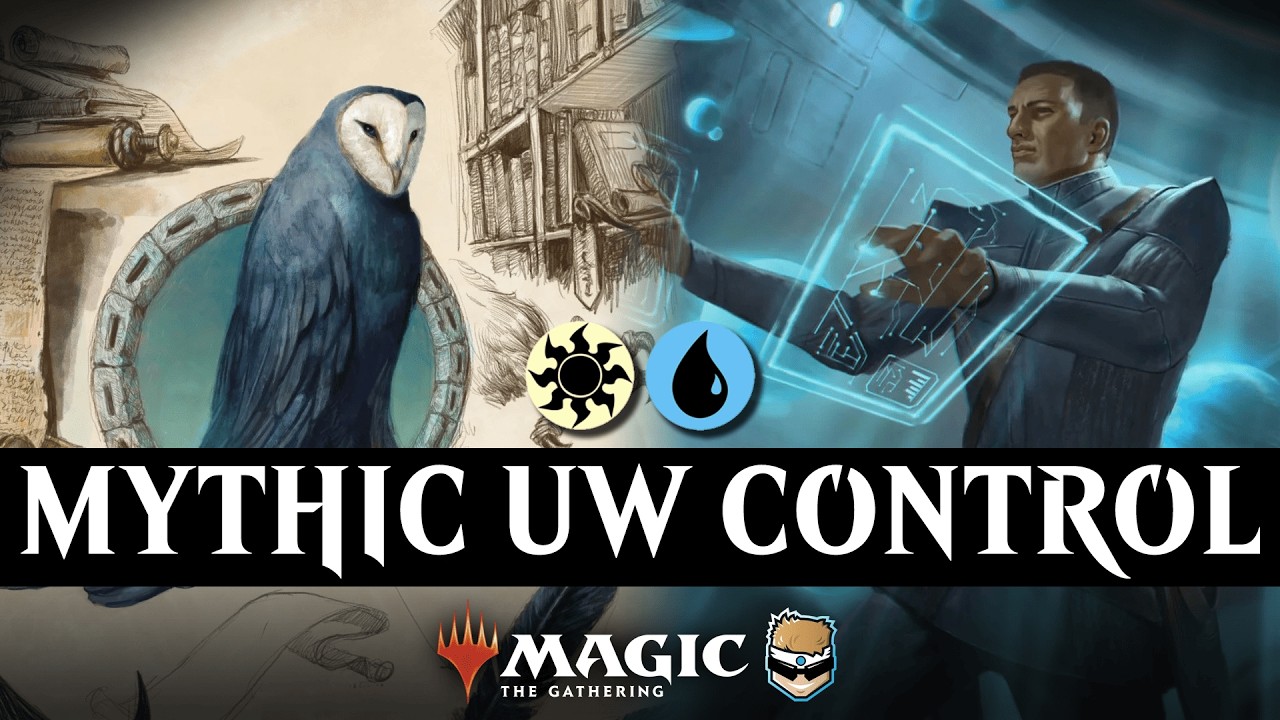
Reaching Mythic rank in Magic: The Gathering Arena requires more than just a powerful deck; it requires a deep understanding of the tempo and resource economy that defines the Azorius (White-Blue) Control archetype. Control players thrive by turning the opponent’s aggression against them, systematically dismantling threats, and winning the game only once the opponent has exhausted all options.
To succeed with Azorius Control, you must shift your mindset from "how do I win right now" to "how do I survive until I am inevitable." This guide breaks down the mechanics, strategies, and psychological discipline required to climb the ladder effectively.
The Philosophy of Reactive Resource Management
The core tenet of Azorius Control is the trade. Every card you play should ideally neutralize one or more of your opponent’s cards while leaving you with a net advantage in hand size or battlefield presence.
The Mana-Hold Deterrent
Holding open mana—specifically untapped Islands and Plains—is a psychological weapon. When your opponent sees two or three untapped lands, they are forced to play around potential counterspells, flash creatures, or instant-speed removal. This hesitation often causes them to "play around cards you don't even have," causing them to under-commit to the board.
- The Golden Rule: Never tap out on your own turn unless the threat is immediate or you are executing your primary win condition.
- The Efficiency Gap: If an opponent spends three mana on a creature and you spend two mana to remove it, you have gained a tempo advantage. If you can use a board wipe to remove three creatures for a single card, you have gained a massive resource advantage.
Prioritizing Board Stability Over Tempo
Aggro decks seek to end the game by turn five. Control decks seek to extend the game past turn ten. You do not need to be at 20 life to win; you only need to be at 1 life to have a chance to turn the tide.
Trading Life for Advantage
Do not panic when your life total drops. In the early game, taking five or six damage is an acceptable price to pay if it allows you to wait for a more efficient board wipe that clears the entire battlefield rather than just a single threat.
The "Clean Slate" Strategy
Use your board wipes—such as Sunfall or Temporary Lockdown—only when the impact is maximized. If your opponent has one creature, use targeted removal. Save your "reset buttons" for when the opponent has committed multiple threats to the board. By forcing them to overextend into your removal, you ensure that when the dust settles, they are left with an empty hand and an empty board, while you still have cards in reserve.
Selecting Win Conditions for the Late Game
Many new players make the mistake of running too many win conditions, leading to "clunky" hands full of high-mana cards that cannot be cast under pressure. In Magic: The Gathering Arena, your deck should ideally run a very low number of finishers, allowing the rest of your deck to focus on survival and card draw.
The "Inevitable" Finisher
Your win condition should be a card that, once played, is difficult to answer or wins the game on its own. Planeswalkers that generate tokens or draw cards every turn are ideal, as they force the opponent to focus their remaining resources on your planeswalker instead of your life total.
Tips for finishers:
- Protection is key: If your finisher has ward, hexproof, or indestructible, it is significantly better.
- Value over power: A creature that draws you a card when it enters the battlefield is often better than a creature that is simply large, as it replaces itself in your hand.
Identifying Key Matchup Transitions
To reach Mythic, you must learn to read the "game clock." Every match follows a arc:
- The Survival Phase (Turns 1–4): You are trading resources 1-for-1. Your goal is to keep the opponent's pressure manageable.
- The Stabilizing Phase (Turns 5–8): You deploy board wipes to nullify the opponent's board state. This is where you re-establish control.
- The Dominance Phase (Turn 9+): The opponent is top-decking (playing cards one by one as they draw them) while you have a full grip of cards. This is when you deploy your finisher to close the game.
Avoiding Common Pitfalls
Even experienced players fall into traps that cost them games on the ranked ladder.
- Over-sideboarding: In Best-of-3 formats, do not over-adjust your deck. Keep your core survival engine intact.
- The "Dead Draw" Problem: Avoid cards that are only useful in one specific matchup. If a card is a "dead draw" against half the field, replace it with a cycle-able card or a more versatile interaction piece.
- Rushing the Clock: Magic: The Gathering Arena games can be long. If you find yourself playing quickly to save time, you will make mistakes. Control is a game of precision; take your time to calculate the math for every interaction.
Practical Tips for the Mythic Climb
- Track the Meta: Use deck-tracking software to see what archetypes are popular. If you see a rise in aggro decks, adjust your board wipes. If you see a rise in control mirrors, include more card draw and counterspells.
- Know Your Role: In every game, ask yourself: "Am I the beatdown?" If you are against a faster deck, you are the control player. If you are against a slower deck, you may need to become the aggressor to close the game before they can set up their own engine.
- Practice Patience: The most significant difference between a Diamond player and a Mythic player is the discipline to wait for the perfect moment to cast a spell. Do not let the opponent bait you into using your removal early.
By prioritizing board stability, managing your resources with extreme care, and choosing your win conditions wisely, you will find that Azorius Control is one of the most consistent and rewarding ways to conquer the ranked ladder in Magic: The Gathering Arena.

Free Magic: The Gathering Arena Codes
Current active codes and how to redeem them.

Emily Johnson
Emily writes practical mobile strategy guides with a focus on resource planning, base progression, and the early decisions that shape a long-term account.
COMMUNITY
Player Comments
79 players commented on this guide.
This guide answered the exact question I had.
This saved me time in the early game.
Good guide for Magic: The Gathering Arena players. The resources part was useful.
The tips are practical and easy to follow.