
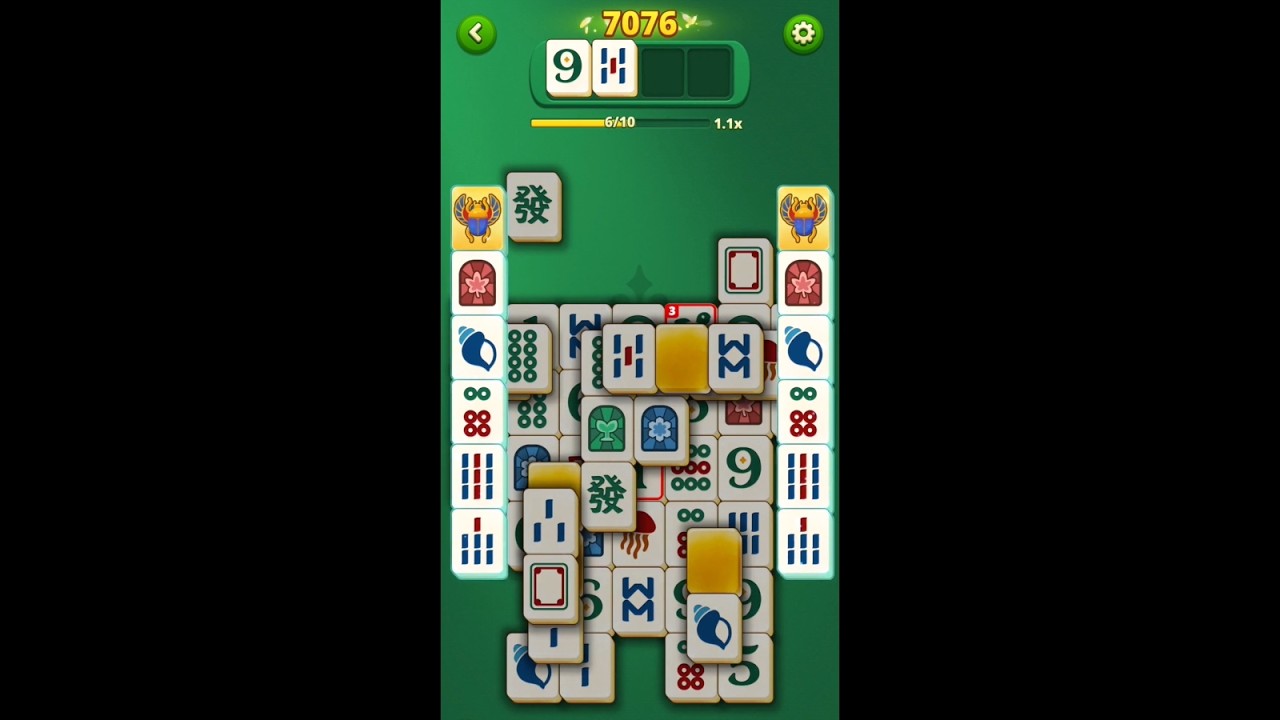
To clear levels 1 through 20 in Mahjong Blast without running out of moves, dismantle high central tile stacks before picking easy perimeter pairs. Clearing outer edge tiles too early removes matching partners that buried central tiles need later, creating unwinnable boards.
Early Stage Layout Progression
Early boards in Mahjong Blast transition rapidly from flat starter boards to tiered multi-layer formations. Adjust your matching order based on the structure of each stage group:
| Stage Range | Layout Structure | Main Hazard | Clearing Priority |
|---|---|---|---|
| Levels 1–5 | Flat grids, single-layer spreads | Misidentifying matching suit icons | Fast visual suit recognition |
| Levels 6–14 | Two-tier pyramids and cross shapes | Trapping tiles beneath central peaks | Dismantling top-tier elevations |
| Levels 15–20 | Three-plus tier stacks and long wings | Premature edge clearing and dead ends | Preserving flank tiles as reserve pairs |
In stages 1 through 5, tiles lie flat with minimal overlap. These introductory stages let you practice recognizing the three primary suits: Dots, Bamboo, and Characters.
Starting at level 6, layers stack two to three tiles deep. Because upper tiles lock everything beneath them, peeling down the center becomes mandatory to access hidden tiles. By stage 15, arrangements feature long lateral rows and dense vertical towers that conceal over half of the board at the start.
Target Tall Stacks First
Always prioritize exposed tiles resting on multi-layer piles over exposed tiles on the board's outer edges.
Mahjong solitaire rules prevent you from selecting a tile if another tile rests on top of it or if both its left and right sides are blocked. Central spires hide the vast majority of unavailable tiles. When you see two possible matches—one that unblocks the top of a deep stack and one between two loose perimeter tiles—take the stacked match immediately.
Targeting vertical height avoids the hidden tile trap. If you clear perimeter matches early, you deplete the twins needed to clear identical tiles buried deep inside the spires. Once uncovered later, those buried tiles will have no legal partners left on the board.
Preserve Flank Tiles as Reserve Matches
Keep outer edge tiles on the board until you need them to unlock a vertical layer or clear a top-tier tile.
In stages 8 through 20, long single-file wings frequently flank the main layout. Only the outermost tile on each wing is playable. Clearing these wing tiles immediately shrinks the visual spread, but it exposes no underlying layers and eliminates critical escape options.
Use edge tiles only under two conditions:
- Clearing the flank tile immediately opens lateral access to a blocked stack.
- The flank tile is your only legal match for an exposed top-tier tile.
Treating peripheral tiles as reserves guarantees you have matching options ready when deep central layers are peeled open.
Use Flower and Season Tiles to Break Deadlocks
Save flexible Flower and Season tiles for mid-board bottlenecks rather than matching them right away.
Standard suit tiles (Dots, Bamboo, and Characters) require exact numerical matches. In contrast, any Flower matches with any other Flower, and any Season matches with any other Season regardless of the artwork. This wildcard-style rule allows them to clear congested paths without consuming a specific numbered pair.
Each level contains only four Flower tiles and four Season tiles. Do not spend them on trivial, non-blocking outer tiles during the opening moves. Keep them available to bypass suit freezes in stages 12 through 20 when central progress stalls.
How to Handle Deadlocks and Use Helper Tools
When no moves remain, use the undo tool to reverse two or three steps instead of immediately triggering a board shuffle.
Mahjong Blast includes undo, hint, and shuffle tools on the interface. Boards in levels 1 through 20 can be cleared without power-ups if proper layering priority is maintained. When you encounter a deadlock, stepping back several turns lets you identify the branching error—such as eliminating an edge pair instead of digging into a high stack—and choose the alternate path. Reserve shuffles for rare emergencies in stages 18 through 20.

Free Mahjong Blast Codes
Current active codes and how to redeem them.

Sarah Williams
Sarah specializes in RPG and collection games, explaining team building, character growth, and beginner-friendly ways to avoid expensive early mistakes.
COMMUNITY
Player Comments
34 players commented on this guide.
Can you add more details about early game in a future update?
Good guide for Mahjong Blast players. The early game part was useful.
This saved me time in the early game.
I tried this today and it worked better than my old setup.