
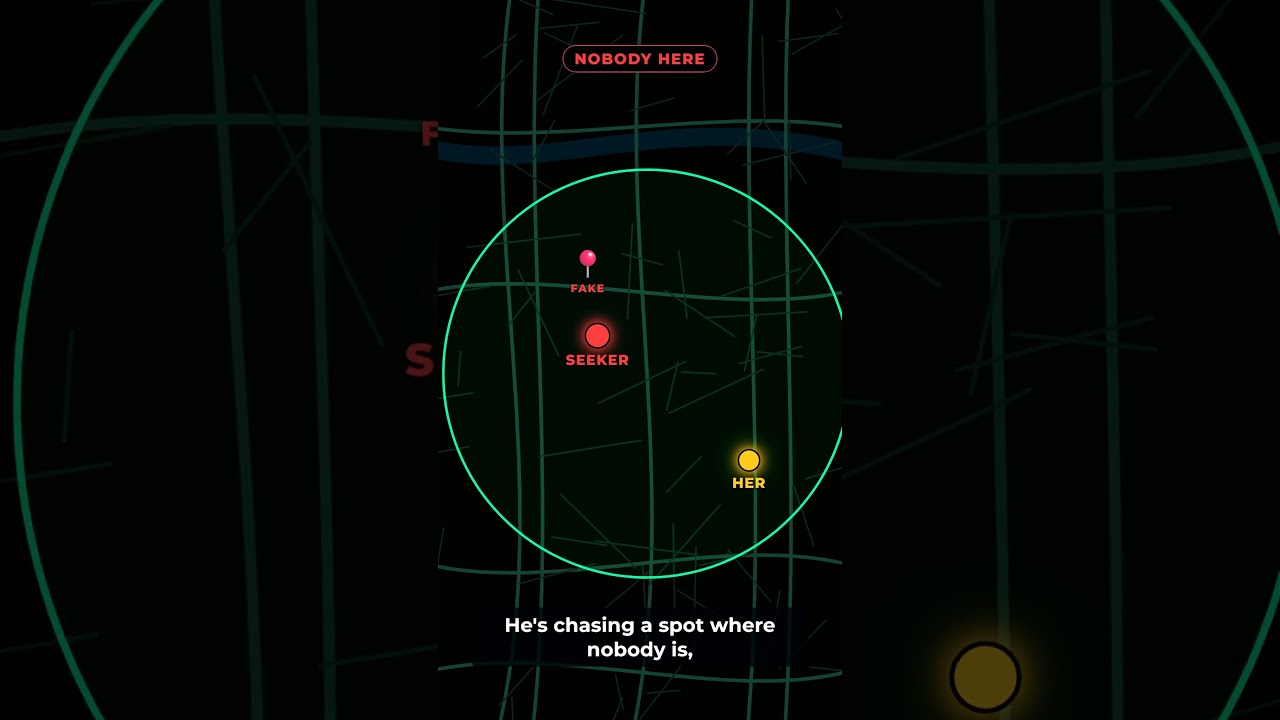
To use a fake ping effectively in Manhunt: Hide & Seek, place your decoy coordinate in complex terrain that takes time to search, wait for the hunter to commit to that heading, and immediately relocate at a 90-degree angle away from their path. This breaks their pursuit angle and lets you slip into areas they have already cleared.
How the Fake Ping Mechanic Works
The fake ping feeds fabricated coordinate data to the hunter’s tracking interface. When triggered, the pursuer receives an alert pointing toward the decoy location rather than your actual physical position.
Hunters typically react to fresh radar signals by sprinting directly toward the reported blip to close distance before the target moves. This creates a brief window where the pursuer's attention and field of view narrow onto that specific destination.
However, deploying a decoy confirms to the hunter that an active target is in the vicinity and spending utility. If the ping appears in an illogical spot or an empty opening, an attentive hunter will recognize the trick, abandon the chase, and secure surrounding choke points.
Choosing Effective Decoy Placement Zones
A fake ping must target an area that cannot be cleared with a quick glance. Dropping a decoy into wide-open terrain allows a hunter to confirm the space is empty within seconds and pivot straight back toward your hiding spot.
Target zones that force physical search time:
- Multi-level structures: Scaffolding, stairwells, and multi-story parking structures force pursuers to check elevation layers, burning substantial search time.
- Enclosed dead ends: Alleys, recessed doorways, and fenced corners require hunters to travel fully into the pocket to confirm nobody is there.
- Dense physical clutter: Thick vegetation, storage units, and partitioned indoor areas require manual, corner-by-corner clearance.
Keep the decoy within a plausible travel distance relative to your last known position. If the coordinate appears geographically impossible to reach in the time elapsed, experienced hunters will ignore it.
| Decoy Placement Zone | Hunter Clearance Time | Primary Strategic Risk |
|---|---|---|
| Enclosed Dead Ends | High | Traps the hunter temporarily, but leaves them covering the exit path. |
| Multi-Floor Structures | Very High | Hunters sweep methodically and remain in the broader sector longer. |
| Open Fields or Wide Roads | Very Low | Hunters spot the empty space immediately and sweep outward perimeters. |
| Opposite Zone Quadrants | High | Creates wide separation, but requires a believable prior movement vector. |
Moving After Activation: The Perpendicular Slip
Running in a straight line directly away from your fake ping is a common mistake. Linear escapes frequently intersect the hunter's incoming route or generate loud footsteps along their expected line of sight.
Instead, execute a perpendicular slip:
- Confirm hunter commitment: Monitor the hunter's approach vector and wait until they commit their travel direction toward the decoy ping.
- Move at 90 degrees: Break cover and travel laterally at a right angle relative to the hunter's incoming sprint path.
- Claim vacated ground: Loop behind the hunter’s starting approach. Pursuers rarely double back to check territory they just walked through, making their vacated path one of the safest repositioning zones.
- Reset before arrival: Establish cover in your new position before the hunter reaches the decoy coordinate. Once they find the decoy empty, their initial sweep focuses on the immediate perimeter of the false blip.
Critical Mistakes That Expose Decoys
Avoid these errors when deploying fake pings:
- Placing the ping too close: Placing a decoy near your current hiding spot causes the hunter to stumble upon you during their approach or initial search sweep.
- Establishing predictable timing: Triggering decoys on a fixed schedule lets hunters anticipate the deception and stay on your true trajectory.
- Making audio noise while fleeing: Sprinting prematurely produces physical footstep audio that overrides the false visual data on the hunter's screen. Keep movement quiet until adequate distance separates you from the pursuer's route.

Free Manhunt: Hide & Seek Codes
Current active codes and how to redeem them.

James Brown
James focuses on Android gaming on PC, emulator setup, controls, performance tuning, and practical troubleshooting for longer play sessions.
COMMUNITY
Player Comments
51 players commented on this guide.
This guide answered the exact question I had.
Nice guide. I am checking the other Manhunt: Hide & Seek articles next.
I wish I had read this before upgrading the wrong thing.
I tried this today and it worked better than my old setup.