
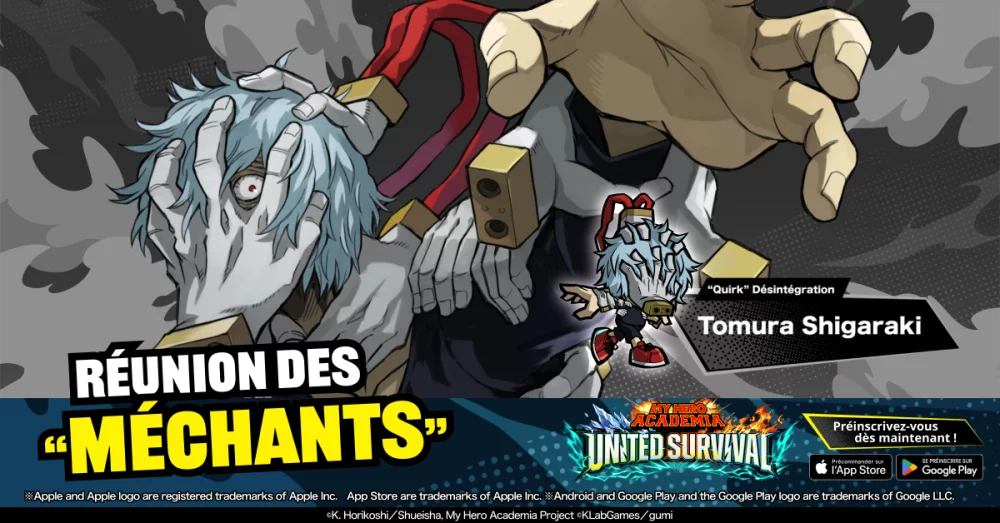
The newly introduced challenge mode in MHA: UNITED SURVIVAL represents a significant shift from the standard campaign structure, moving away from short, objective-based stages toward a grueling, endurance-focused gauntlet. Unlike typical story missions that reward raw power, this mode demands strategic resource management and precise tactical execution across multiple, increasingly difficult waves of enemies. To successfully clear the higher tiers and maximize your rewards, you must transition from a "power-first" mindset to one defined by sustain, crowd control, and cooldown efficiency.
Understanding the Endurance Mechanics
In MHA: UNITED SURVIVAL, the challenge mode functions as an attrition test. You are tasked with clearing successive waves of enemies within a strict time limit. The difficulty curve is not linear; rather, it spikes significantly during later waves where enemy density and elite-level health pools converge.
Key mechanics to track include:
- Dynamic Scaling: Enemy damage and health scale per wave. What worked in the first three waves will likely fail by wave seven.
- Resource Conservation: You are managing your heroes' health as a finite resource. Because there is often no mid-stage healing, minimizing chip damage through movement is just as important as dealing damage.
- Time-to-Kill (TTK) Pressure: The mode enforces a time limit. If you play too defensively, you will fail the stage even if your heroes are at full health. You must find the balance between aggression and survival.
Optimal Team Building: The Trinity Approach
Many players make the mistake of bringing three high-DPS heroes. In this mode, this composition usually leads to a "glass cannon" failure—you might clear early waves quickly, but you will lack the survivability to handle the sustained damage from elite mobs in the final stages.
To build a meta-ready team, adopt the Trinity Approach:
- The Crowd Controller (CC): Essential for grouping mobs. Look for heroes with displacement or hard-CC (stuns/knock-ups). Grouping enemies allows your AOE abilities to hit multiple targets, effectively multiplying your damage output.
- The Sustained DPS: Choose heroes whose damage does not rely solely on long-cooldown ultimates. You need consistent output to handle the "trash" mobs between elite spawns.
- The Utility/Anchor: This hero should provide damage reduction, shields, or self-sustain. An anchor hero allows your team to survive "burst windows" where enemies execute high-damage attacks that would otherwise wipe a squishy DPS character.
Pro Tip: Avoid stacking heroes with long ultimate animations. In high-level waves, being locked in an animation for 3+ seconds is a death sentence, as it prevents you from dodging telegraphed elite attacks.
Mastering Tactical Skill Rotations
Effective skill rotation is the difference between a sub-minute clear and a failed run. Do not view your abilities as a simple "damage dump." Instead, treat them as a tactical deck.
The "Layered Rotation" Strategy
- Phase 1 (Setup): Use your CC hero to gather enemies into a cluster. Do not use your heavy hitters yet.
- Phase 2 (Burst): Once enemies are clustered, deploy your AOE ultimates. By layering your skills here, you maximize the damage-per-second (DPS) window.
- Phase 3 (Cooldown Management): If your primary skills are on cooldown, switch to your utility hero. Use defensive buffs to mitigate incoming damage while you kite the remaining enemies, waiting for your main abilities to refresh.
Never use your ultimate abilities on the last few remaining enemies of a wave unless the timer is critical. Always save your resources for the start of the next wave, where enemy density will be at its peak.
Managing Elite Mob Encounters
Elite enemies are the primary cause of run failure in MHA: UNITED SURVIVAL. Unlike standard mobs, elites often have "shield bars" or "hyper-armor" that makes them immune to basic CC.
- Prioritize Target Switching: If an elite mob uses a telegraphed AOE attack, immediately switch focus to interrupt it if your hero kit allows, or use your mobility skills to reposition the entire squad.
- Break Before Burst: Always focus your CC on the minions around the elite first, then dump your single-target damage into the elite once they are isolated. Using your best skills on an elite surrounded by minions is inefficient and leaves you vulnerable to the mob's chip damage.
Progression and Reward Optimization
The challenge mode is the primary source for end-game upgrade materials. Because these rewards are limited, you must prioritize your daily attempts.
- Check for Elemental/Archetype Bonuses: Before entering a stage, check the event interface for "Hero Bonuses." The developers frequently rotate these buffs to encourage the use of different, potentially under-utilized heroes. A team that fits the bonus criteria will almost always outperform a "top-tier" meta team that lacks the synergy bonus.
- Study the Failure Screen: If you fail, do not simply restart. Look at which hero died first. If it is your DPS, you lack sufficient CC to keep them safe. If it is your utility hero, you are likely staying in "dead zones" too long and need to work on your movement.
- Tiered Clearing: Focus on clearing the highest tier you can consistently achieve within 80% of the time limit. Consistency yields more consistent upgrade materials than pushing for one lucky high-tier clear that takes three times as long.
By moving away from brute-force tactics and focusing on the synergy between your CC, DPS, and utility heroes, you will find that the MHA: UNITED SURVIVAL challenge mode becomes a rewarding tactical puzzle rather than an insurmountable wall. Always prioritize positioning over damage, and remember that in a survival mode, your heroes' survival is the only stat that truly matters.

Free MHA: UNITED SURVIVAL Codes
Current active codes and how to redeem them.

Sarah Williams
Sarah specializes in RPG and collection games, explaining team building, character growth, and beginner-friendly ways to avoid expensive early mistakes.
COMMUNITY
Player Comments
45 players commented on this guide.
The explanation is clear, especially for beginners.
I tried this today and it worked better than my old setup.
Can you add more details about heroes in a future update?
Good guide for MHA: UNITED SURVIVAL players. The heroes part was useful.