
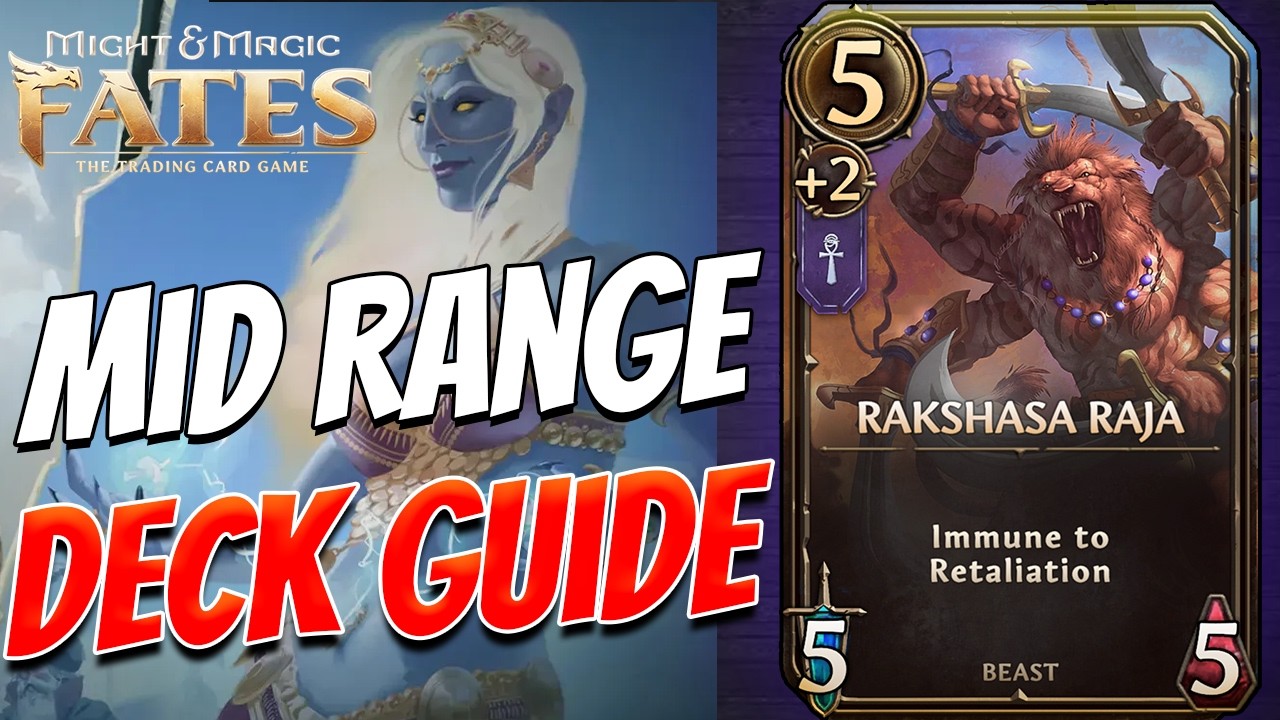
In Might & Magic Fates Heroes TCG, the Academy faction stands as the premier choice for players who value tactical precision and board state manipulation. The Academy midrange archetype is not about rushing your opponent down or playing a long, drawn-out control game; it is about "stabilizing and swinging." By utilizing efficient early-game units, high-value removal spells, and game-ending finishers, you can dictate the pace of every match.
This guide breaks down the core mechanics of the Academy midrange playstyle, providing you with the strategic depth needed to climb the competitive ladder.
Understanding the Academy Midrange Core
Midrange is often considered the most difficult archetype to master because it requires you to swap roles depending on your opponent. Against aggressive decks, you are the controller; against control decks, you are the aggressor.
The Academy deck thrives on this versatility. Your primary goal is to ensure that by the time you reach turn five or six, you have more resources in hand and a stronger board presence than your opponent. Unlike aggro decks that run out of steam or control decks that struggle to apply pressure, the Academy midrange build maintains a "threat-answer" loop that eventually exhausts the opponent's options.
Phase 1: Securing the Early Game
You cannot win a midrange game if you lose the board in the first three turns. In Might & Magic Fates Heroes TCG, falling behind on the board often leads to a cascade effect where you are forced to use your "finishers" just to survive.
- Mulligan Strategy: Always prioritize units with a cost of 1 or 2. If you do not have a unit to play by turn two, your chances of winning drop significantly.
- Defensive Trading: Do not feel pressured to attack the enemy hero early. Your early creatures are your defensive line. Trade them into enemy units to maintain a clean board.
- The "Chip" Rule: Only attack the enemy hero if you have a clear board advantage. Otherwise, use your units to clear the opponent's threats, forcing them to spend their turn playing new creatures that you can then neutralize with spells.
Phase 2: Mastering Academy Board Control Spells
Academy is defined by its spell kit. Where other factions rely on raw creature stats, Academy relies on magical synergy. Your spells serve two purposes: removing threats and creating tempo swings.
Key Spell Interactions:
- Reactive Removal: Avoid using high-impact spells on minor enemy threats. Wait for the opponent to commit a "boss" monster or a major board-wide buff, then clear it. This creates a "tempo swing"—you spend one card to negate two or three of theirs.
- The "Buff-Trade": Use minor defensive buffs to ensure your creatures survive trades. If your 3/3 creature survives an encounter with an enemy 2/2, you have effectively gained a free unit for the next turn.
- Board Wipes: If you are playing against an opponent who overextends (playing 3+ units at once), save your board-wipe spells. A single wipe against a full enemy board is often the turning point that secures your victory.
Phase 3: Executing the Late-Game Transition
Once the board is stabilized, the "Midrange Pivot" begins. This is the moment you transition from playing defensively to dropping your high-impact finishers.
The Academy faction features several finishers that provide both board presence and utility. When choosing which finisher to play, consider the current board state:
- Against Wide Boards: Prioritize finishers with "Cleave" or Area-of-Effect (AoE) damage triggers.
- Against Tall Boards (Single big threats): Prioritize finishers that have "Freeze" effects or direct removal capabilities.
- The Reserve Rule: Never play your entire hand. If you have two finishers, play one. If your opponent clears it, you still have the second one in reserve. This prevents you from being caught off-guard by a surprise board clear from the enemy.
Resource Management and Hand Economy
"Dead turns" occur when you have no cards to play or no board presence to exert pressure. To avoid this, you must master the art of holding back.
- Card Flow: Always keep at least two cards in your hand. This forces the opponent to play around potential answers. If your opponent knows you have a card in hand, they will be less likely to commit their most valuable resources to the board.
- Resource Value: Evaluate every card based on its "potential value." A low-cost unit is a resource for early game, but in the late game, it is a tool to trigger spell synergies. Don't be afraid to hold onto a "weak" early-game card if it enables a stronger late-game combo.
Common Mistakes to Avoid
Even experienced players struggle with the technicalities of this deck. Avoid these common pitfalls to improve your win rate:
| Mistake | Consequence | Correction |
|---|---|---|
| Over-committing | Vulnerable to board wipes. | Keep one or two units in reserve. |
| Resource Dumping | Empty hand, no options. | Play only what is necessary to maintain control. |
| Aggressive Face-Attacking | Lose board control. | Use units to clear enemy threats first. |
| Panic Spells | Waste removal on weak units. | Wait for high-value targets. |
Why This Strategy Works
The Academy midrange deck works because it exploits the fundamental mistake most players make: impatience. Aggressive players will exhaust their hand, and control players will play too passively. By acting as the bridge between both styles, the Academy midrange player forces the opponent to play in uncomfortable ways.
You win by being the player who makes the fewest mistakes. When you prioritize board control, conserve your resources, and time your finishers correctly, you remove the element of luck from the game, leaving only the cold, hard logic of tactical play. Practice this rotation of board control and resource management, and you will find your rank in Might & Magic Fates Heroes TCG climbing steadily.

Free Might & Magic Fates Heroes TCG Codes
Current active codes and how to redeem them.

Emily Johnson
Emily writes practical mobile strategy guides with a focus on resource planning, base progression, and the early decisions that shape a long-term account.
COMMUNITY
Player Comments
78 players commented on this guide.
The explanation is clear, especially for beginners.
I wish I had read this before upgrading the wrong thing.
Can you add more details about heroes in a future update?
This guide answered the exact question I had.