
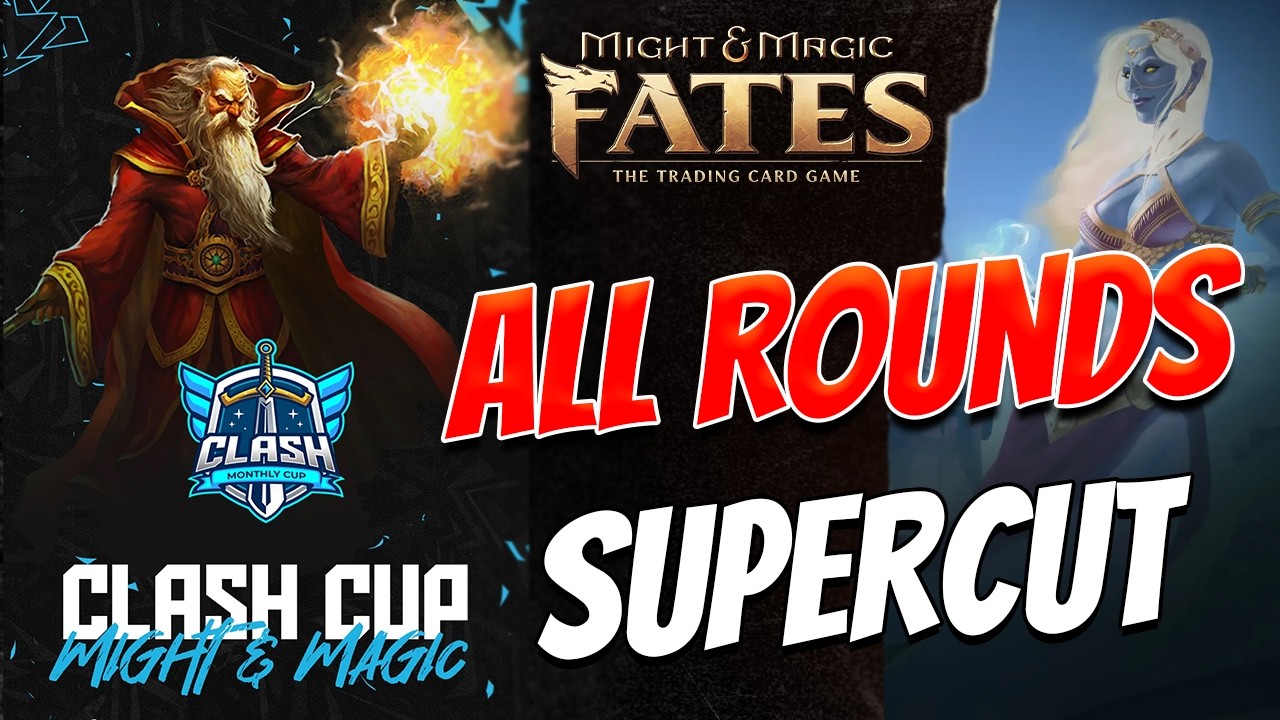
To succeed in high-stakes competitive environments like the Community Cup, players must shift their focus from standard ladder climbing to tournament-specific adaptations. Success in Might & Magic Fates Heroes TCG is not merely about having the strongest cards; it is about strategic consistency, understanding meta-shifts, and mastering the psychological edge required for best-of-series formats. By analyzing elite-level match footage, you can identify how top-tier players maintain board presence, manage hero ability cooldowns, and execute complex win conditions under intense pressure.
Analyzing Tournament-Grade Board Presence
In high-level play, board presence is a resource to be managed, not a static state. Tournament matches demonstrate that elite players prioritize high-value trades over aggressive, early-game face damage. When you watch professional replays, observe the "anchor" cards—units that provide inherent value or high defense—used to stabilize the board against aggressive archetypes.
- Trade Efficiency: Never trade a unit if it doesn't leave your opponent in a worse position. Pro players often force inefficient trades by utilizing cards with high health pools or shield mechanics to absorb damage.
- Board Recovery: A tournament-ready deck must have "reset" potential. Evaluate your deck's ability to bounce back from a board wipe. If your strategy relies on flooding the lane, ensure you have card draw or low-cost units to rebuild immediately after your opponent clears the field.
- Lane Control: Focus on controlling the tempo of the lane. If you have the initiative, dictate the pace by forcing your opponent to react to your plays rather than the other way around.
Mastering Hero Ability Cooldowns
Hero ability timing is the single most significant factor separating intermediate players from tournament champions in Might & Magic Fates Heroes TCG. Using an ability the moment it is available is often a rookie mistake. Instead, treat your hero power as a tactical weapon held in reserve.
The best players in the Community Cup consistently hold their hero powers to counter specific board states or to secure lethal damage. In a tournament format, your opponent is actively tracking your ability availability. You can exploit this by "baiting" their reaction. For example, if your hero has a board-clearing ability, you can play aggressively to force the opponent to over-commit their units to the board, only to wipe them out once they have expended their resources. Practice holding your ability for one extra turn to force your opponent into a suboptimal, cautious playstyle.
Executing Win Conditions Under Pressure
Tournament matches often drag into the late game, where individual card synergy determines the outcome. If your deck relies on a single "silver bullet" combo, you will eventually lose to a player who has learned to counter it. Successful competitors build decks with redundant win conditions.
To reach this level of execution, perform "stress tests" on your deck. Simulate tournament conditions by playing against friends or practicing in unranked modes while intentionally avoiding your primary win condition. Can you still close out the game using secondary synergies? If the answer is no, your deck is too fragile for a tournament setting. Aim to include cards that serve dual roles—offense when you are ahead and defense when you are behind.
Adapting to Multi-Game Tournament Formats
Tournament play differs from ladder play because you are often locked into a deck for a best-of-three or best-of-five series. This allows for post-match adaptation. After the first game, you have a window into your opponent’s deck identity.
- Identify Weaknesses: If you lost the first game, analyze why. Was it a specific card that swung the tempo? Adjust your playstyle in game two to prioritize removing that threat or holding a specific counter-card in your opening hand.
- Predictive Play: Use the knowledge of your opponent’s faction to predict their next moves. If they play a specific faction known for late-game scaling, you know you have a limited window to secure the win.
- Mental Database: Treat every match as a data point. Building a mental database of common faction matchups and their typical "tech" cards will allow you to make rapid, informed decisions during the heat of competition.
Refining Deck Consistency for Long Events
Tournament stamina requires a deck that functions reliably over five or more rounds. In a long bracket, high-roll potential is a liability; if your deck relies on drawing a specific card in your starting hand, you will eventually lose to bad RNG.
Review your deck list and identify "dead weight"—cards that are only useful when you are already winning or against specific, rare matchups. Replace these with "staple" cards that provide value in every stage of the game. A consistent deck that plays well on curve is statistically more likely to win a tournament than a deck designed for flashy, one-off combos. Focus on cards that increase your draw probability and provide board flexibility, ensuring that you can navigate through the diverse range of opponents you will face throughout the tournament day.
The Mental Game: Beyond the Cards
Finally, remember that Might & Magic Fates Heroes TCG is as much about psychology as it is about card math. In a tournament setting, your opponent will try to read your reactions. Keep your play pace consistent, regardless of whether you have the "perfect" hand or a handful of duds. By maintaining a steady tempo and focusing on the logical progression of the board, you minimize your own tilt and maximize the pressure on your opponent. Always prepare to pivot, stay disciplined with your hero ability usage, and ensure your deck can survive the long haul of a competitive bracket.
Free Might & Magic Fates Heroes TCG Codes
Current active codes and how to redeem them.

Michael Smith
Michael covers live-service games, events, reward systems, and efficient daily routines, turning frequent updates into clear actions for players.
COMMUNITY
Player Comments
44 players commented on this guide.
I wish I had read this before upgrading the wrong thing.
I tried this today and it worked better than my old setup.
This helped me understand heroes much better.
This saved me time in the early game.