
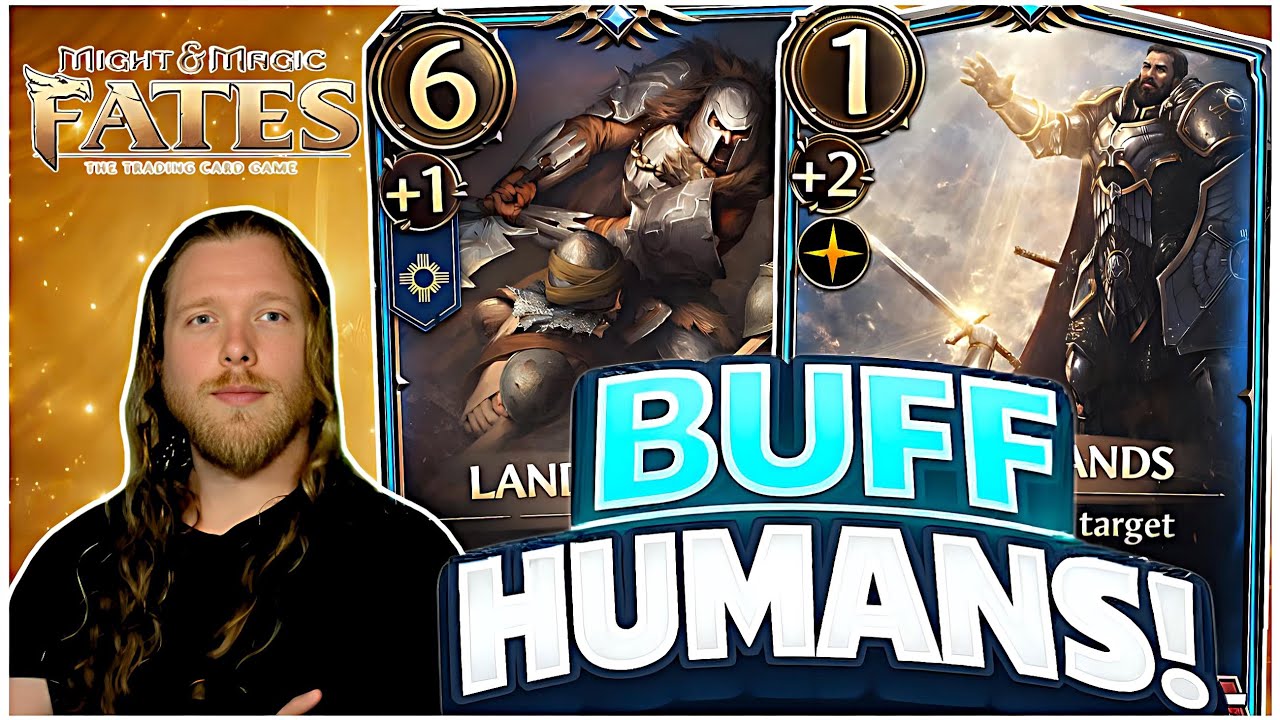
In Might & Magic Fates Heroes TCG, the prevailing myth is that you need a collection packed with Epics and Legendaries to climb the competitive ladder. This is false. By focusing on cohesive unit synergies and high-efficiency positioning, you can construct a "Human-Tribal" deck using only Common and Rare cards that consistently outplays high-rarity piles.
The secret to success with a budget deck lies in "Vertical Synergy"—the ability of your units to collectively exceed the power of an individual high-cost card. While your opponent waits for their expensive, high-mana bomb to hit the board, your budget human deck will have already established an insurmountable board presence.
The Philosophy of Budget Human Tribal
The core strength of a human-centric deck is the Keyword Synergy Network. Humans in Might & Magic Fates Heroes TCG often possess "Commander" or "Squad" traits that grant passive buffs to adjacent allies. When you run a deck composed entirely of low-rarity Humans, you are rarely playing a single card in a vacuum; you are playing a piece of a larger engine.
When deck-building without Legendaries, your goal is to minimize individual card reliance. If a card is only good when played alone, it does not belong in your budget deck. Every card must serve one of three roles:
- The Vanguard: Units with high health pools or "Armor" keywords designed to soak up damage.
- The Force Multiplier: Low-cost units that provide flat attack buffs or "Haste" to nearby units.
- The Tempo Pivot: Units that provide board repositioning or utility, allowing you to control the flow of the skirmish.
Maximizing Human Faction Synergies
To effectively run a budget deck, you must embrace the "Snowball Effect." High-rarity decks often rely on massive individual power spikes. You, conversely, rely on cumulative value.
Positioning for Synergy
- The Phalanx Formation: Always place your "Vanguard" units in the center of your formation. Flank them with your "Force Multipliers" to ensure they are protected while they provide their buffs.
- Row-Based Buffs: Many human units grant bonuses to units in the same row. Keep your units tightly grouped to maximize these buffs, but be mindful of the opponent’s area-of-effect (AoE) potential. If you notice an opponent running heavy damage spells, stagger your units diagonally to avoid total board wipes.
- Resource Efficiency: Use your low-mana-cost units to trade into the opponent’s high-cost units. Even if you lose a unit in the trade, if you forced them to spend two turns dealing with a single Common card, you have won the tempo battle.
Categorizing Your Budget Unit Roles
A balanced budget deck needs a specific distribution to handle the diverse threats found in the current meta. Aim for this internal structure:
- Front-line Anchors (40% of deck): These are your "walls." Look for units with Shield or Taunt mechanics. Even if they have low attack stats, their job is to stay alive long enough for your back-line to scale.
- Tactical Buffers (40% of deck): These are the engine of your deck. Prioritize units that offer +1/+1 buffs to adjacent allies. In Might & Magic Fates Heroes TCG, a board of five units with +1 attack is effectively five times more dangerous than a single unit with a high attack value.
- Utility/Situational Cards (20% of deck): These are your "tech" cards. Include units that can move themselves or others, or units that deal chip damage to the enemy hero. These cards win games when the board state is deadlocked.
Strategic Positioning and Board Control
In Might & Magic Fates Heroes TCG, board state is the primary currency. When playing a budget deck, you must prioritize Board Presence over Resource Advantage.
If you are playing against a deck with powerful Legendaries, they will likely play passively, waiting for the right moment to drop their "win-con." Do not let them. By playing aggressively and forcing them to use their high-cost cards defensively, you disrupt their game plan.
Tactical Tip: If an opponent plays a high-value Legendary, do not immediately dump your entire hand to kill it. Instead, use your lower-cost units to "chump block" or reposition, forcing the opponent to waste their Legendary's potential on a single, low-value unit. This is known as "trading up"—getting more value out of your mana than the opponent gets out of their high-rarity investments.
Exploiting Rarity Dependency
High-rarity decks have a fatal flaw: Predictability. Because these players rely on specific, powerful cards, their strategy often revolves around drawing and playing those exact cards.
Once you identify the opponent's strategy—for example, if they are playing a "Dragon-Heavy" deck or a "Control-Spell" deck—you can adjust your positioning to counter it.
- Vs. High-Attack/Low-Health: Spread your units out. Do not give them a target for their high-damage units.
- Vs. Board-Wipe Spells: Do not over-commit. Keep one or two units in your hand at all times to rebuild immediately after the opponent clears your board.
The Mid-Game Transition: Closing the Match
The "Danger Zone" for a budget player is the late game. As the mana pool increases, your opponent’s access to late-game bombs becomes a serious threat. You must force the game to end before turn 8 or 9.
If the game stretches too long, your deck will naturally lose steam against decks designed for late-game scaling. To prevent this, focus on Face Pressure. Whenever you have a window of opportunity where the opponent has no blockers, commit to the enemy Hero. Your goal isn't to win by having the strongest board in the late game; your goal is to win by having the most aggressive board in the mid-game.
Common Mistakes to Avoid
- Chasing "Shiny" Cards: Don't craft a single Epic just because it looks strong. A deck with 30 cohesive Commons will beat a deck with 25 Commons and 5 "random" Epics every time.
- Over-committing to the Board: Never put every unit you have on the field at once. Leave yourself an "out" in your hand in case of a board clear.
- Ignoring Movement: Positioning is the most undervalued mechanic in Might & Magic Fates Heroes TCG. Moving your unit one tile can often be the difference between getting buffed or getting destroyed.
By mastering these fundamental strategies, you will find that Might & Magic Fates Heroes TCG is a game of skill, not a game of wallet size. Focus on your synergies, refine your unit placements, and you will find yourself climbing the ranks faster than those relying on luck-of-the-draw Legendaries.

Free Might & Magic Fates Heroes TCG Codes
Current active codes and how to redeem them.

Sarah Williams
Sarah specializes in RPG and collection games, explaining team building, character growth, and beginner-friendly ways to avoid expensive early mistakes.
COMMUNITY
Player Comments
57 players commented on this guide.
The explanation is clear, especially for beginners.
This helped me understand heroes much better.
I tried this today and it worked better than my old setup.
I wish I had read this before upgrading the wrong thing.