
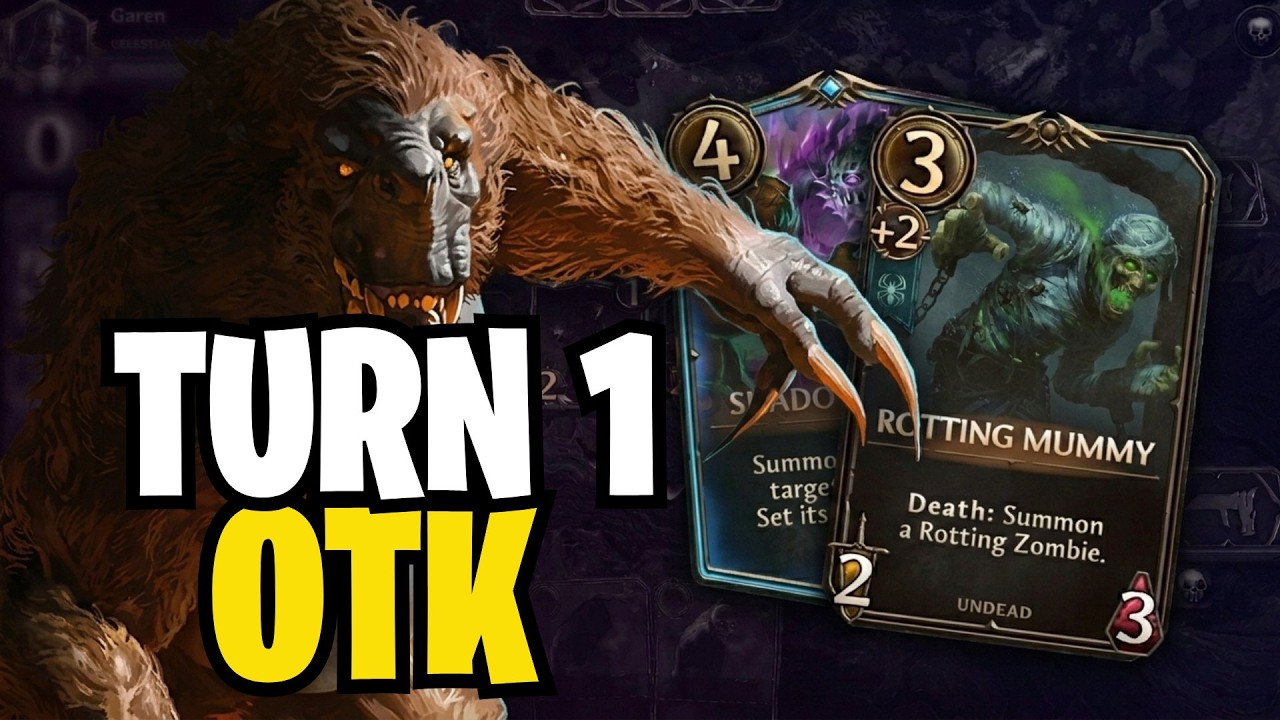
In Might & Magic Fates Heroes TCG, few moments are as satisfying or devastating as securing a victory before your opponent has the chance to stabilize. The "24-Damage Turn 1 Kill" (OTK) is a high-level competitive tactic that relies on exploiting specific card synergies—most notably the Behemoth—to turn an opponent’s early board development into their immediate downfall. This guide breaks down the mechanics, card sequencing, and strategic risks involved in executing this high-stakes play.
Understanding the Mechanics of the Turn 1 Kill
The Turn 1 OTK in Might & Magic Fates Heroes TCG is not a random occurrence; it is a calculated response to meta-dominant plays. The core of this strategy revolves around "reactive scaling." Rather than building your own board from scratch, you are waiting for the opponent to deploy a high-value, high-stat unit—typically a Behemoth—that possesses enough base power to be converted into a lethal weapon.
The objective is to force the opponent into a "trap" scenario. By leaving your board empty or holding specific utility cards in your opening hand, you bait the opponent into feeling safe enough to commit their strongest early-game unit. Once that unit hits the board, you trigger a chain of events that manipulate the unit's control, damage output, or vulnerability, effectively weaponizing their own asset against their hero’s life total.
Identifying the Combo Pieces
Success requires a specific hand composition. If your opening hand lacks these elements, attempting the OTK is a recipe for a loss. You generally need three categories of cards:
- The Trigger: A card that interacts with the opponent’s board, such as a "Take Control" effect or a positional displacement card that forces the Behemoth into an unfavorable lane.
- The Multiplier: Buffs or passive abilities that increase damage output. Since you are aiming for 24 damage, raw base stats are rarely enough; you need percentage-based or additive modifiers that scale with the Behemoth’s high base attack.
- The Finisher: A card that provides Haste, double-attack, or direct-to-hero damage, ensuring that the 24 damage can actually reach the opponent’s health pool on the same turn it is generated.
Step-by-Step Execution: The 24-Damage Combo
When the stars align and your opponent plays their Behemoth, follow this precise sequence to maximize your damage output:
- Wait for the Commitment: Do not play your utility cards prematurely. Let the opponent fully commit their resources to the Behemoth.
- Establish Control: Play your "Take Control" or "Copy" effect. By shifting the Behemoth to your side of the board, you immediately neutralize their board presence while gaining a high-stat attacker.
- Apply Scaling Buffs: Before declaring an attack, layer your multipliers. In Might & Magic Fates Heroes TCG, order matters; calculate your buffs so that percentage increases apply after flat stat additions to maximize the final number.
- Clear the Lane: If the opponent has defensive units or traps, use your remaining energy to clear the path. A 24-damage attack is useless if it is absorbed by a low-cost "Taunt" unit.
- Declare the Attack: Once the path is clear and the buffs are active, commit the unit to the attack. Ensure you have accounted for any reactive cards the opponent might have in their graveyard or active spells.
Why This Strategy Matters for Competitive Play
Beyond the sheer spectacle of a Turn 1 victory, mastering this OTK forces your opponents to play differently. When you are known for this combo, opponents will often delay playing their Behemoths, opting for smaller, lower-risk units. This hesitation gives you the "tempo advantage." By simply threatening the Turn 1 kill, you dictate the pacing of the entire match, forcing the opponent to play around a shadow in your hand.
However, expert players know that this is an "all-in" strategy. It is an investment of resources that, if countered, leaves you with a depleted hand. You must weigh the win-percentage increase of the OTK against the consistency of a traditional midrange deck.
Managing Risks and Counter-Play
The primary risk of the Turn 1 kill is the "Dead Hand" scenario—where you hold all your combo pieces but the opponent never plays the necessary trigger. To mitigate this, your deck must be a hybrid.
- The Pivot Plan: If the opponent plays conservatively, you must be able to transition into a standard game. Your deck should contain secondary win conditions that function independently of the Behemoth combo.
- Baiting Removal: If you suspect the opponent is holding a counter-spell, use a "dummy" play—a card that looks like a threat but isn't part of your core combo—to force them to waste their removal.
- Tracking Energy: Many players fail because they miscalculate energy costs. Always calculate your mana/energy usage for the full chain before playing your first card. If you are even one point short, the entire combo fails, and you will be left vulnerable.
Strategic Mistakes to Avoid
To excel in Might & Magic Fates Heroes TCG, avoid these common pitfalls when attempting the 24-damage combo:
- Overcommitting: Do not dump your entire hand if you haven't verified the opponent's available energy or potential "Secret" cards.
- Ignoring Board State: A Turn 1 kill is only possible if there is a clear lane. Failing to check for defensive triggers or unit positioning is the most common reason for a failed OTK.
- Predictability: If you always hold your cards until the opponent plays a Behemoth, smart opponents will catch on. Occasionally play cards to force them to react, keeping them guessing about whether you are setting up a combo or playing a tempo game.
Conclusion: Mastering the Timing
The 24-damage Turn 1 kill is a powerful tool in your arsenal, but its true value lies in the mastery of its timing. It is a high-reward play that punishes arrogance and lack of preparation in your opponents. Use it to close out games quickly, but remember that in the competitive scene of Might & Magic Fates Heroes TCG, the ability to adapt when the combo doesn't land is what separates the casual players from the grandmasters. Keep your deck balanced, your calculations sharp, and your opponents guessing.

Free Might & Magic Fates Heroes TCG Codes
Current active codes and how to redeem them.

Sarah Williams
Sarah specializes in RPG and collection games, explaining team building, character growth, and beginner-friendly ways to avoid expensive early mistakes.
COMMUNITY
Player Comments
62 players commented on this guide.
The tips are practical and easy to follow.
Good guide for Might & Magic Fates Heroes TCG players. The heroes part was useful.
I tried this today and it worked better than my old setup.
I wish I had read this before upgrading the wrong thing.