
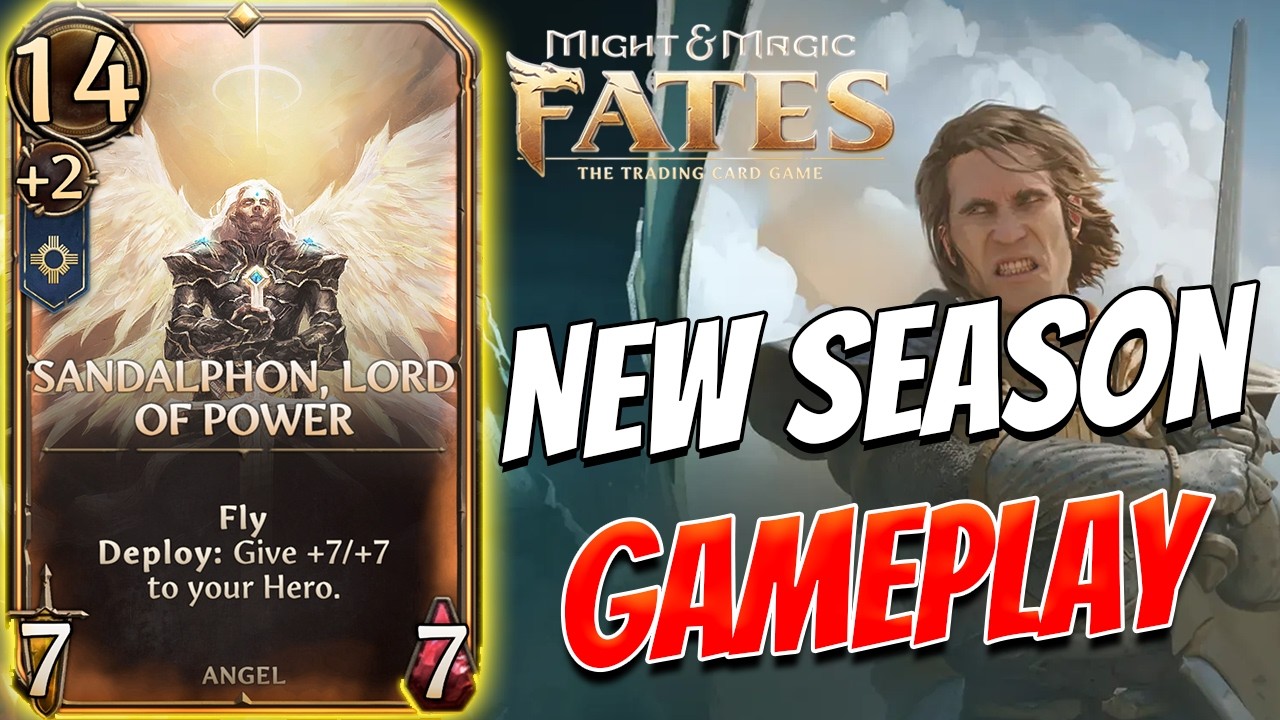
To succeed in the current competitive season of Might & Magic Fates Heroes TCG, players must shift their focus toward the Haven faction’s core strength: sustainable board control. By prioritizing units that force inefficient trades and managing your mana curve to outlast aggressive opponents, you can stabilize the board against high-pressure decks. This guide explores the strategic nuances of building and piloting a competitive Haven deck, ensuring you have the tools to climb the ranked ladder effectively.
The Haven Philosophy: Attrition Over Aggression
The Haven faction in Might & Magic Fates Heroes TCG is built on the concept of "value trading." Unlike aggressive archetypes that look to flood the board with low-health, high-damage units, Haven thrives when the game slows down. Your goal is not to race the opponent to zero health, but to build a defensive wall that makes every attack from the enemy costly.
When building your deck, prioritize units with high health pools or defensive keywords like "Shield" or "Guardian." These units act as a resource drain on your opponent. When an opponent is forced to commit two or three cards to remove a single Haven unit, you gain a significant card advantage. In the long run, this resource disparity allows you to dictate the pace of the game, turning the tide once the opponent exhausts their options.
Strategic Deck Construction and Resource Curves
A common mistake among intermediate players is overloading their deck with late-game finishers. While Haven has excellent late-game scaling, you will never reach Turn 7 if you cannot survive the early game. To build a consistent Haven deck, organize your cards into a balanced curve that supports three distinct phases of the match:
- Early Game (Turns 1–3): Focus on "board presence" units. You need low-cost minions that can absorb damage or trade evenly with the opponent’s opening plays. If you fall too far behind on board presence, you lose the ability to dictate trades later.
- Mid-Game (Turns 4–6): This is where Haven shines. Utilize mid-tier units that provide synergy—such as cards that buff adjacent allies or grant temporary health increases. This is the optimal window to use your hero’s active abilities to stabilize the board.
- Late Game (Turn 7+): Deploy your high-value threats. By this stage, you should have a board advantage. Use these finishers to close out the game while your defensive wall protects your hero from incoming threats.
Neutralizing Aggressive Meta Threats
The current Might & Magic Fates Heroes TCG meta is heavily populated by "Rush" decks—factions designed to end matches as quickly as possible. To counter this, your Haven deck must include dedicated reactive slots.
Reactive cards are spells or units designed to punish the opponent for overextending. When you identify an aggressive player, your goal is to deny them chip damage against your hero. Even if you are not attacking their hero back, keeping your board clear of their threats is a win. Once an aggressive player runs out of cards in their hand, they lose their momentum entirely. At this point, the natural durability of your Haven units will allow you to transition from a defensive stance to an overwhelming offensive push.
Mastering Hero Ability Synergy
Your hero’s unique abilities should not be viewed as mere chip damage tools; they are tactical assets. In Might & Magic Fates Heroes TCG, the most common misuse of abilities is burning them for small amounts of damage to the enemy hero early in the game.
Instead, hold your hero abilities for high-impact turns. Save them for moments where they can:
- Clear an enemy threat that would otherwise trade favorably against your board.
- Buff a key unit to survive a trade that would otherwise result in a loss for you.
- Reset a lane when the opponent has successfully established a multi-unit threat.
By keeping your abilities in reserve, you create a "threat of activation" that forces your opponent to play more cautiously, fearing a sudden board wipe or defensive swing.
Navigating Matchup-Specific Trade-offs
While Haven is inherently defensive, it is not invincible. The primary weakness of the faction is its relative lack of "burst" damage. If you find yourself against a control deck that focuses on direct-damage spells, your defensive wall may be bypassed entirely.
To overcome this, you must incorporate "tech" cards into your deck. These are situational choices that allow you to adapt when your primary strategy is countered. For example:
- Anti-Spell Tech: Units that provide spell resistance or hero-protection buffs.
- Direct Damage Tech: A few cards that can bypass the enemy’s board if you find yourself unable to secure control.
Always review your deck after a loss. Did you lose because your units were too slow, or because you lacked an answer to a specific spell? Adjusting your tech slots based on the current ladder meta is what separates legendary players from the rest.
Common Mistakes to Avoid
As you climb the ranks, keep these common pitfalls in mind:
- Overextending: Do not play every card in your hand just because you have the mana. Keep a buffer in your hand to replenish the board after the opponent uses an area-of-effect (AOE) spell.
- Predictability: If you always play the same units in the same lanes, your opponent will know exactly how to counter you. Mix up your positioning to force your opponent to commit resources to lanes they aren't prepared to handle.
- Ignoring the Hand State: Always keep an eye on how many cards your opponent has. If they have a full hand, they likely have a board wipe ready. If they have only one or two cards, you can safely commit more resources to the board.
By mastering the balance between defensive stability and tactical aggression, Haven players can effectively control the flow of any match. Focus on the core mechanics of board value and resource management, and you will find consistent success in the evolving landscape of Might & Magic Fates Heroes TCG.

Free Might & Magic Fates Heroes TCG Codes
Current active codes and how to redeem them.

James Brown
James focuses on Android gaming on PC, emulator setup, controls, performance tuning, and practical troubleshooting for longer play sessions.
COMMUNITY
Player Comments
118 players commented on this guide.
Can you add more details about heroes in a future update?
This guide answered the exact question I had.
This saved me time in the early game.
I tried this today and it worked better than my old setup.