
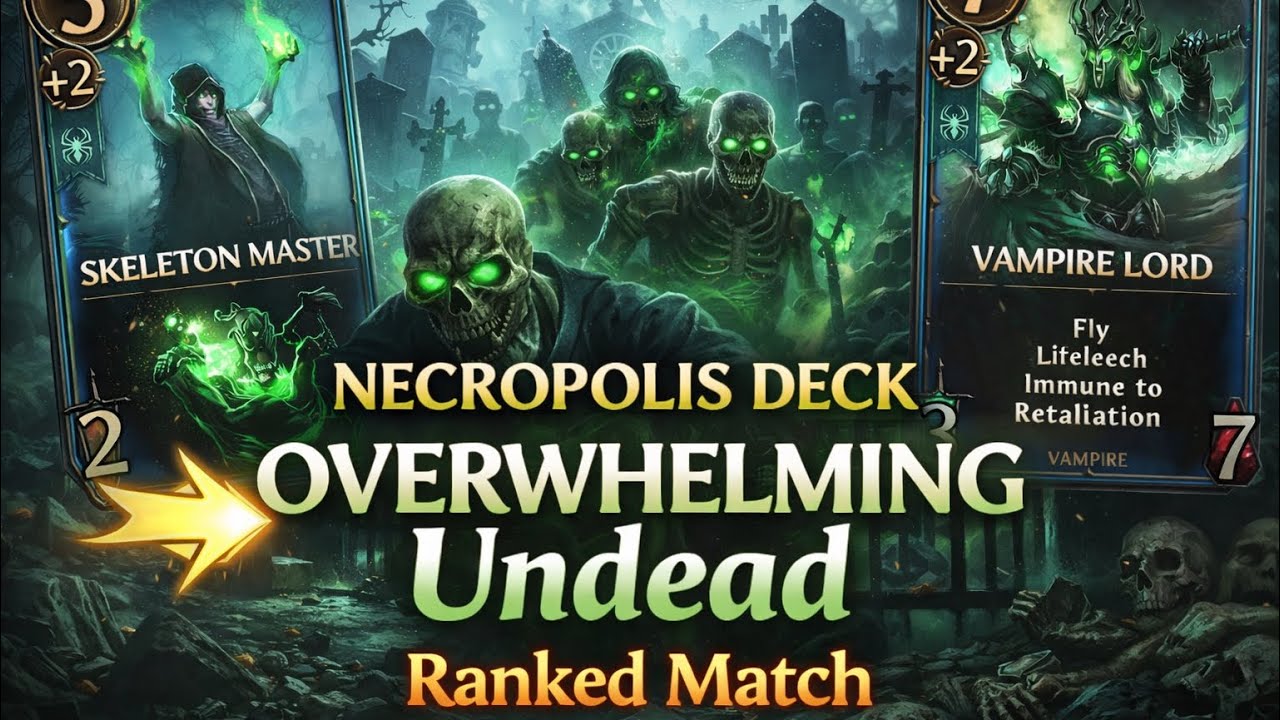
Achieving a one-hit knockout (OTK) in Might & Magic Fates Heroes TCG requires a calculated blend of board control, resource management, and precise sequencing. Necropolis decks are uniquely positioned to execute these explosive turns because of their reliance on synergy-based scaling and graveyard interaction. By transforming seemingly innocuous board states into overwhelming damage spikes, you can bypass traditional defensive stall tactics and secure victories before your opponent can stabilize.
Building the Necropolis Burst Engine
The success of a Necropolis OTK deck in Might & Magic Fates Heroes TCG hinges on "Burst Engine" construction. Rather than relying on singular high-attack units—which are easily countered by single-target removal—you must build a deck around units that scale cumulatively.
- Synergy Units: Prioritize creatures that gain incremental stats whenever a friendly unit dies or when another Necropolis unit enters the lane. These units become exponential threats as the game progresses.
- The "Fodder" Strategy: Include low-cost units that serve two purposes: early-game board presence and late-game "fuel" for your sacrifice-based buffs.
- Global Buffs: Select spells and hero abilities that provide a board-wide attack bonus. The math for an OTK usually requires at least three units in a single lane receiving a +3 or higher buff simultaneously.
When drafting your deck, ensure that 60% of your cards are dedicated to early-game survival, while 40% are reserved for your "Combo Pieces"—the cards that provide the necessary stat modifiers to push your board over the 20-damage threshold in a single turn.
Strategic Lane Positioning for Maximum Impact
In Might & Magic Fates Heroes TCG, positioning is the difference between a blocked attack and a lethal blow. Because your opponent will attempt to wall off lanes with high-health defenders, you must force them to commit to the wrong lane.
- Centralization vs. Diversification: In the early game, spread your units across all three lanes to force the opponent to divide their removal resources.
- The Loading Lane: Choose one "Strike Lane" early. As you approach your OTK turn, stop playing units in the other lanes unless necessary for defense. This creates a "threat vacuum" that forces the opponent to play defensively in the lane where you have already established a foundation.
- Front-Line Protection: Always place your highest-health units at the front of your Strike Lane. This protects your glass-cannon damage dealers, ensuring they survive to the attack phase.
Timing Your Offensive Surge
The most common mistake players make is "telegraphing" their combo. If you play your damage-scaling units too early, the opponent will save their board-clear spells specifically for your setup.
- Baiting the Clear: Play "bait units"—creatures that look like threats but aren't your true win condition. When the opponent uses their board wipe or hard removal, you have successfully cleared the path for your actual combo.
- The "Lethal Threshold" Check: Before committing your full hand, calculate your damage. In Might & Magic Fates Heroes TCG, always factor in the opponent’s hero armor and any potential reaction cards they might be holding. If your calculated damage is exactly equal to their remaining HP, wait one more turn to draw a secondary buff; over-committing into a counter-spell is the fastest way to lose.
- Mana Efficiency: The perfect turn for an OTK is when you have enough mana to play your core units plus at least one defensive spell to protect them from reactionary removal during the opponent's turn.
Managing Resource Trade-offs and Recovery
The "all-in" nature of an OTK deck creates a vulnerability: if your first attempt fails, your hand is often empty. To maintain high-level play, you must build in fail-safes.
- Graveyard Recursion: Necropolis factions excel at bringing units back from the dead. Include at least two cards that allow you to pull units from your discard pile. This turns your "failed" initial push into a resource pool for a second attempt.
- Card Draw Engines: If you don't draw your combo pieces by turn six, you will likely lose to midrange decks. Prioritize including units that cycle themselves or spells that draw cards upon unit death.
- The Pivot: If the game goes long, stop trying to force the OTK. Transition to a "Attrition Necropolis" style, where you prioritize board control and value trades. The ability to switch gears is what separates top-ranked players from those who rely on a single, one-dimensional win condition.
Common Mistakes to Avoid
- Ignoring Backline Resources: Many players focus entirely on the units in front. Always keep an eye on the opponent's mana reserves and "Reaction" card potential. If they have 3+ mana open, assume they have a board wipe.
- Over-extending: Never play your entire hand unless you are 100% sure it ends the game. Maintaining a "reserve" in your hand is the best defense against surprise board clears.
- Ignoring Hero Abilities: In Might & Magic Fates Heroes TCG, your hero's unique ability is often the missing piece of the OTK puzzle. Ensure your hero choice complements your deck’s specific damage type, whether it be direct damage or unit-scaling buffs.
By mastering these mechanics, you will find that the Necropolis faction becomes one of the most consistent and terrifying decks to face on the ranked ladder. Focus on the math, respect the opponent's removal, and strike only when the path is clear.

Free Might & Magic Fates Heroes TCG Codes
Current active codes and how to redeem them.

Michael Smith
Michael covers live-service games, events, reward systems, and efficient daily routines, turning frequent updates into clear actions for players.
COMMUNITY
Player Comments
32 players commented on this guide.
I wish I had read this before upgrading the wrong thing.
The tips are practical and easy to follow.
Good guide for Might & Magic Fates Heroes TCG players. The heroes part was useful.
Can you add more details about heroes in a future update?