
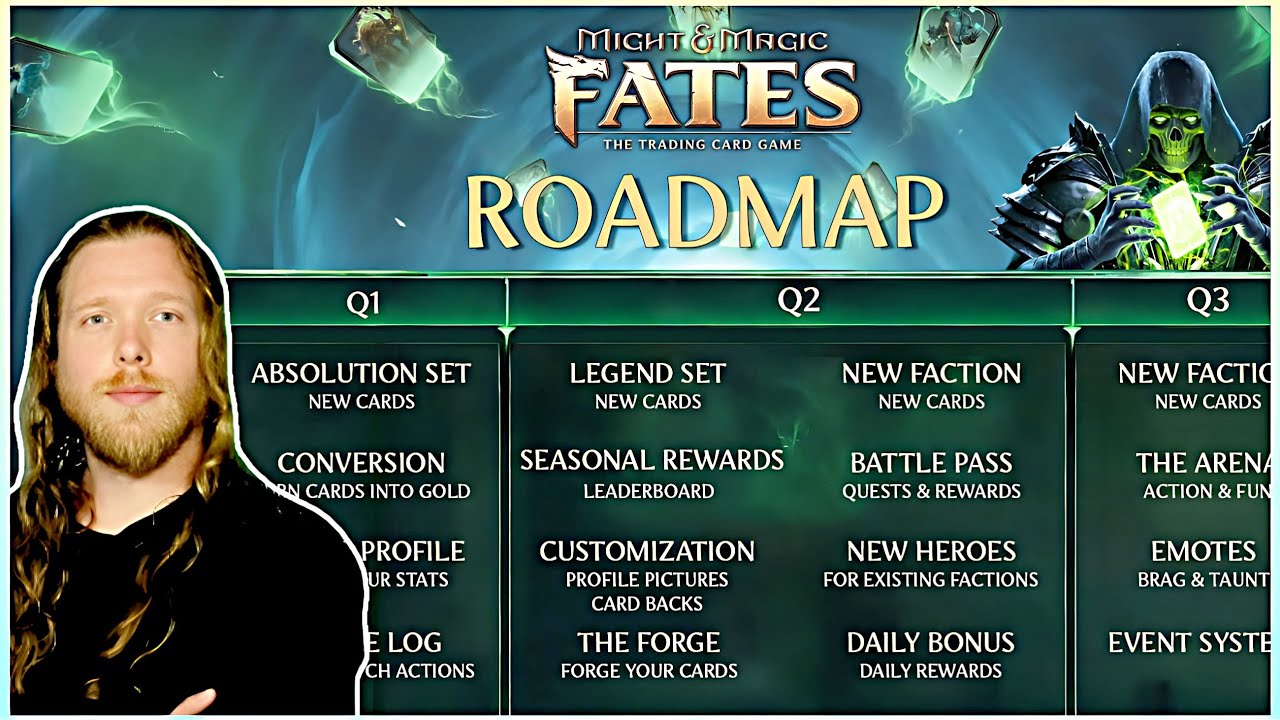
To succeed in Might & Magic Fates Heroes TCG, you must treat the developer’s roadmap not just as a schedule of events, but as a blueprint for your own economy and collection management. As the game evolves through seasonal content and balance patches, the value of specific cards, factions, and currencies will inevitably shift. By prioritizing long-term resource preservation and strategic flexibility, you can ensure your deck remains top-tier regardless of upcoming meta-volatility.
Strategic Resource Management: Why Hoarding Pays Off
In Might & Magic Fates Heroes TCG, the most common mistake players make is impulsive spending on current card packs without considering the horizon. When a roadmap announces upcoming content waves, the introduction of new mechanics or factions can instantly devalue cards that were previously "meta-essential."
To maximize your efficiency:
- The 70/30 Rule: Keep 70% of your gold and crafting materials in reserve once a roadmap phase approaches its conclusion. Only spend the remaining 30% on essential cards required to maintain your current ladder ranking.
- Avoid Completionism: Do not waste resources completing minor collections or upgrading niche cards that don’t serve your primary competitive win condition.
- Wait for the Meta-Stabilization: When a new set drops, resist the urge to craft everything on day one. Wait 48 to 72 hours for the competitive community to identify which cards actually define the new meta.
Navigating Meta-Shifts and Balance Adjustments
The Might & Magic Fates Heroes TCG development cycle explicitly uses balance tuning to keep the game fresh. If you invest heavily in a "flavor of the month" deck that relies on a single overpowered interaction, you are setting yourself up for a significant loss in investment value when the next patch arrives.
How to Build Future-Proof Decks
- Prioritize Utility Cards: Focus on cards that offer board control, card draw, or flexible mana-curve benefits. These cards are rarely the target of aggressive nerfs because they support multiple archetypes.
- Monitor "Power Creep" Patterns: If the roadmap promises an expansion focusing on a specific faction, expect that faction to receive powerful new tools. It is often wiser to diversify your collection across multiple factions rather than dumping all resources into one that might be targeted for a future "tuning" pass.
- Identify Over-Performers: Look at the current ladder. If a deck is winning at an unsustainable rate, it is a prime candidate for a nerf. If you own these cards, decide if you should trade them or use them to farm rewards before their power level is adjusted.
The Role of Community Sentiment in Your Strategy
In Might & Magic Fates Heroes TCG, the player base often acts as a secondary testing ground. Engaging with community forums and competitive discords provides you with "early warning" signals regarding balance.
Why community feedback matters:
- Identifying "Sleepers": Players often flag cards that are undervalued or underutilized. If the community consensus starts shifting toward a specific underplayed card, it may be a candidate for a future buff or a secret powerhouse in the next meta cycle.
- Predicting Reworks: If a card is consistently described as "toxic" or "frustrating" by the player base, there is a high probability that the developers will prioritize a rework for that card in the next roadmap update. Use this information to avoid crafting such cards near the end of a patch cycle.
Mastering Seasonal Events for Faster Progression
Seasonal events in Might & Magic Fates Heroes TCG are designed to be the most efficient paths for collection growth. When a roadmap highlights a new event window, you should shift your daily focus away from standard ranked play if the event offers better "gold-to-card" value.
- Aligning Play Sessions: Review the event timeline to see if there are daily login bonuses or quest multipliers. Completing these at the start of a season ensures you have the capital to invest in the new expansion immediately.
- Targeted Faction Farming: Some events reward specific faction cards. If the roadmap indicates a shift toward a faction you enjoy, save your event-specific currency to exclusively target those pools, rather than buying random packs.
Avoiding Common Pitfalls During Transitions
Transitions between roadmap updates are high-risk periods. Many players panic-dismantle their collections when a balance patch is announced. This is rarely the right move.
- The "Wait and See" Strategy: Even if a card is nerfed, its utility in specific game modes or niche deck builds may remain. Do not mass-dismantle cards until the new meta has fully settled. You may find that a "nerfed" card actually fits perfectly into a new, previously undiscovered archetype.
- Ignoring Vague Roadmap Details: Even if a roadmap is "vague," it usually signals the direction of the game. If the notes suggest a focus on "slowing down the game pace," prioritize high-value, high-cost cards. If the focus is on "aggressive expansion," prioritize fast, early-game units. Understanding the intent behind the changes is just as important as the changes themselves.
Conclusion: Turning Roadmaps into Competitive Advantage
Success in Might & Magic Fates Heroes TCG requires a balance between enjoying the game today and preparing for the changes of tomorrow. By maintaining a disciplined approach to your resources, staying attuned to community meta-signals, and keeping your collection diverse, you insulate yourself from the volatility of constant balance updates. Use the roadmap as your primary tool for decision-making—not just to know when changes are coming, but to understand why they are happening and how you can position your account to benefit from them.

Free Might & Magic Fates Heroes TCG Codes
Current active codes and how to redeem them.

Sarah Williams
Sarah specializes in RPG and collection games, explaining team building, character growth, and beginner-friendly ways to avoid expensive early mistakes.
COMMUNITY
Player Comments
54 players commented on this guide.
I tried this today and it worked better than my old setup.
I wish I had read this before upgrading the wrong thing.
Good guide for Might & Magic Fates Heroes TCG players. The resources part was useful.
Can you add more details about resources in a future update?