
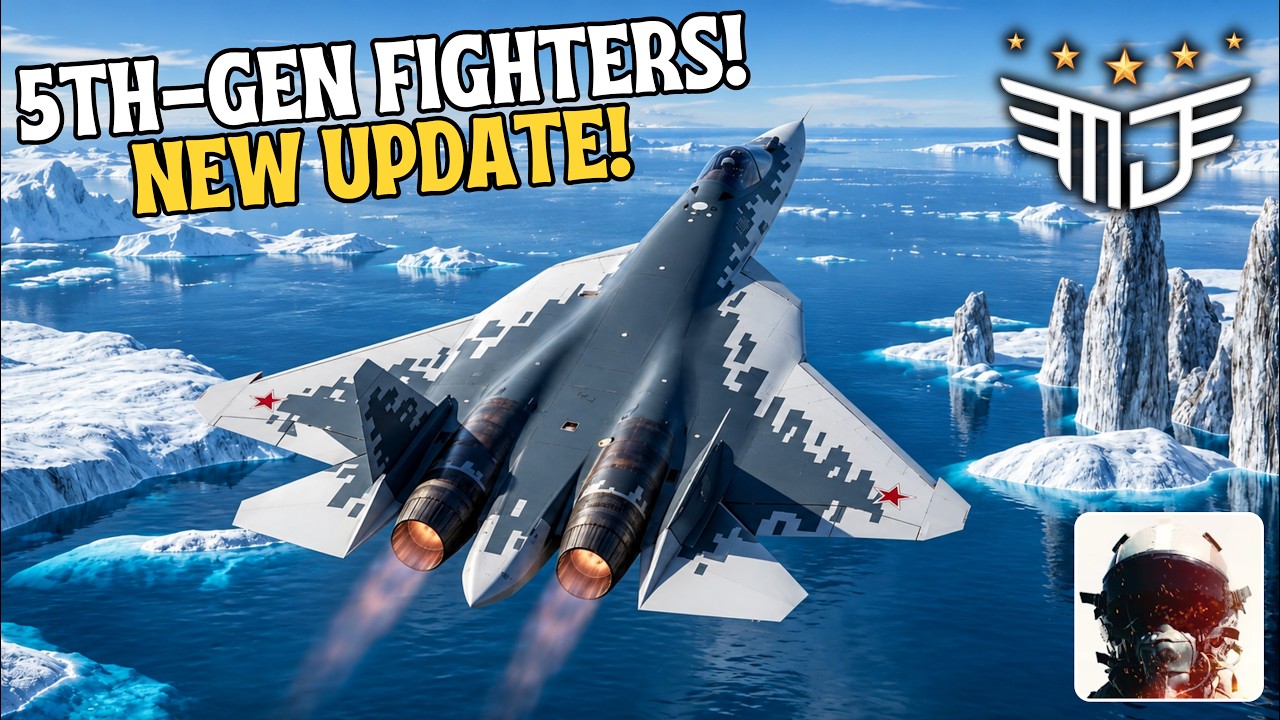
To win dogfights in 5th Gen aircraft in Modern Jet Fighters Online, prioritize kinetic energy management during tight turns, establish long-range missile locks before merging, and cut your afterburners whenever deploying defensive flares. Fifth-generation platforms feature aggressive pitch authority and stealth profiles, but sustained hard turns rapidly bleed airspeed and leave you vulnerable if you mismanage your throttle.
---
Managing Energy and High-Alpha Turns
Fifth-generation jets use thrust vectoring to pull extreme angles of attack (high-alpha), but aggressive pitch changes will quickly drop your airspeed into a stall.
- Enter the merge at high speed: Carry 500 to 600 knots into initial passes to ensure you have enough kinetic energy to complete vertical or horizontal reversals.
- Throttle back before pitching: Cut afterburners right as you initiate pitch-up to compress your turning radius.
- Re-engage reheat immediately: The instant your nose aligns with the target lead indicator, engage full afterburner to recover forward momentum.
- Avoid full-time airbrake deployment: Feather the throttle rather than holding the airbrake down, which prevents severe speed drops and flat spins.
---
Long-Range Missile Engagement Tactics
Stealth profiles reduce radar detection margins, requiring cleaner launch parameters and steady sensor tracking compared to lower-tier battles.
- Climb for altitude at spawn: Gaining early altitude gives your long-range missiles higher initial speed and extended reach due to thinner air and gravity assist.
- Confirm a steady lock: Wait for a solid tone and stable HUD reticle over the target’s signature before firing; launching on flickering locks results in premature tracking loss.
- Crank after firing: After launching a radar-guided missile, turn your nose 30 to 45 degrees away from the target while keeping them within the outer edge of your sensor cone. This forces counter-fired missiles to fly a wider intercept path while keeping your missile on track.
- Hold fire in pure head-on passes: Avoid dumping multiple missiles directly head-on against maneuvering targets, as front-aspect evasions easily defeat frontal launches.
---
Evasion and Countermeasure Timing
Countermeasures fail if your jet produces too much engine heat for flares to distract the incoming seeker. Always pull your throttle to idle during missile defense.
| Threat Type | Maneuvering Response | Countermeasure Action |
|---|---|---|
| Long-Range Radar Missile | Dive into denser air, notch perpendicular to seeker path | Deploy a single flare/chaff cycle as the missile closes to mid-range |
| Rear-Aspect Infrared Missile | Execute a maximum-G break turn while chopping throttle to idle | Drop a 2- to 3-burst flare volley immediately upon warning |
| Close Merge Snap-Shot | Barrel roll across the enemy flight path, reverse pitch | Deploy flares continuously until you clear the threat’s nose angle |
Once the missile loses lock and passes your airframe, reignite afterburners to regain combat speed and reposition.
---
Close-Quarters Gun and Post-Stall Fights
When missile exchanges end without a splash, dogfights collapse into close-range gun passes.
- Use short cannon bursts: Fire in controlled half-second bursts when the predictive reticle intersects the target's fuselage. Continuous fire rapidly depletes ammunition and widens bullet spread.
- Capitalize on overshoots: If a faster enemy closes too quickly behind you, pitch up vertically with flaps deployed to force them to fly past. Roll inverted, bring your nose down onto their tail, and fire while they attempt to recover.
- Switch camera perspectives: Stay in the third-person chase camera during dynamic turns to track nearby bandits and terrain, then switch to the cockpit HUD for precision lead markers and rudder adjustments during firing runs.

Free Modern Jet Fighters Online Codes
Current active codes and how to redeem them.

Emily Johnson
Emily writes practical mobile strategy guides with a focus on resource planning, base progression, and the early decisions that shape a long-term account.
COMMUNITY
Player Comments
82 players commented on this guide.
I wish I had read this before upgrading the wrong thing.
I tried this today and it worked better than my old setup.
Can you add more details about strategy in a future update?
This helped me understand strategy much better.