
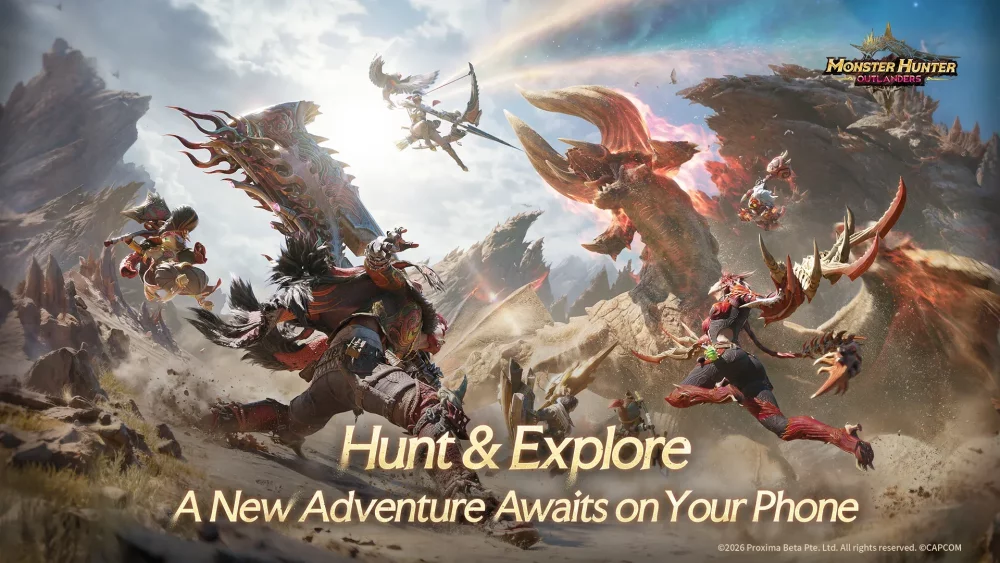
In Monster Hunter Outlanders, the transition from traditional action-RPG gameplay to a gacha-integrated ecosystem requires a fundamental shift in how you view progression. Players are often lured by the initial abundance of "standard" tickets, which provide a steady stream of characters and items, but these rewards are rarely enough to overcome the challenges of the endgame. To excel, you must treat your premium currency with extreme discipline, prioritizing limited-time banners that feature meta-defining adventurers over the deceptive convenience of the standard pool.
Understanding the Gacha Economy in Monster Hunter Outlanders
Monster Hunter Outlanders utilizes a dual-system approach to acquisition. You have your standard, permanent banner—often fueled by free tickets earned through daily play and early-game milestones—and your limited-time "rate-up" banners.
The core trap for new players is the perceived value of the standard pool. Because the game showers you with tickets early on, the "pulling" loop feels rewarding and frequent. However, the standard pool is designed to provide baseline units. These adventurers are competent for early-game hunting, but they lack the specialized skills, weapon synergies, and power-scaling capabilities of the limited-time units. Recognizing this distinction is the first step toward becoming a high-level hunter who doesn't hit a wall at the mid-game mark.
Strategic Resource Allocation: Why "Saving" is Your Best Tool
The most effective way to progress in Monster Hunter Outlanders is to practice aggressive hoarding. When you see a new banner drop, your first instinct might be to pull immediately to expand your roster. However, you should evaluate the unit’s kit against your current needs.
- Standard Tickets: Treat these as incidental, background resources. Use them to fill out your roster during the first few days, but stop actively chasing characters here once you have a functional team for each elemental weakness.
- Premium Currency: This is your lifeblood. Never spend this on the standard banner. Save it exclusively for limited-time banners that offer a significant "power jump" or characters that enable specific, high-level combat tactics.
By resisting the urge to pull for minor upgrades, you ensure that when a truly "must-have" adventurer arrives, you have enough currency to hit the game’s internal pity threshold, ensuring you don't walk away empty-handed after a long saving period.
The Role of Adventurers in Combat Optimization
Unlike legacy Monster Hunter titles where your power is tied almost exclusively to your gear and crafting, Monster Hunter Outlanders introduces the "Adventurer" system. Your chosen adventurer dictates your tactical options, passive buffs, and unique combat maneuvers.
Because adventurers possess specific elemental affinities and playstyles, a diverse roster is necessary. However, you do not need every character. Instead, you need the right characters. A well-optimized team built around a limited-time unit with high-burst damage or unique traversal abilities will always outperform a team of five or six standard-pool characters who lack synergy. When deciding whether to pull on a banner, ask yourself: Does this character solve a problem I currently have (e.g., lack of high-tier elemental damage for a specific monster)? If not, hold your resources.
Navigating the Beta and Future-Proofing Your Account
As Monster Hunter Outlanders continues through its testing phases, the balance between standard and limited resources is subject to change. Developers often adjust drop rates and ticket distribution based on player feedback.
To stay ahead, keep an eye on the "pity" mechanics—the system that guarantees a high-rarity unit after a certain number of failed attempts. Knowing how many pulls you need to reach that guarantee is vital. If you only have enough currency for 20 or 30 pulls, you are gambling. If you save until you have enough for a full "pity" cycle (typically 80–100+ pulls, depending on the specific banner rules), you are investing. In a competitive gacha environment, the difference between a gambler and an investor is the difference between a stalled account and a powerhouse roster.
Common Mistakes to Avoid
- Pulling on Impulse: Don't pull just because you have enough for a ten-pull. If the current banner doesn't offer a significant upgrade, keep saving.
- Ignoring Elemental Coverage: Don't chase "meta" units if you already have that element covered. Focus on rounding out your weaknesses.
- Wasting Premium Currency on Standard Pulls: This is the most common error. Standard tickets will come over time; your premium currency is non-renewable and should be spent with extreme prejudice.
- Neglecting Equipment Synergy: Remember that your adventurer is only half the equation. Look for banners that provide synergy with the gear you already have or plan to craft.
Conclusion: The Path to Mastery
Success in Monster Hunter Outlanders is a marathon, not a sprint. The game is designed to test your patience by providing easy, low-value rewards while gating the truly transformative content behind limited banners. By focusing on the long-term health of your account and ignoring the temptation of the standard pool, you position yourself to dominate the endgame content.
Keep your goals clear: identify the meta-defining characters that will carry you through high-rank hunts, save your premium currency until you can guarantee their acquisition, and use your standard tickets only as a secondary means to bolster your support roster. With this mindset, you will navigate the complexities of Monster Hunter Outlanders with the precision of a master hunter.

Free Monster Hunter Outlanders Codes
Current active codes and how to redeem them.

Sarah Williams
Sarah specializes in RPG and collection games, explaining team building, character growth, and beginner-friendly ways to avoid expensive early mistakes.
COMMUNITY
Player Comments
24 players commented on this guide.
Nice guide. I am checking the other Monster Hunter Outlanders articles next.
This helped me understand early game much better.
This guide answered the exact question I had.
I wish I had read this before upgrading the wrong thing.