
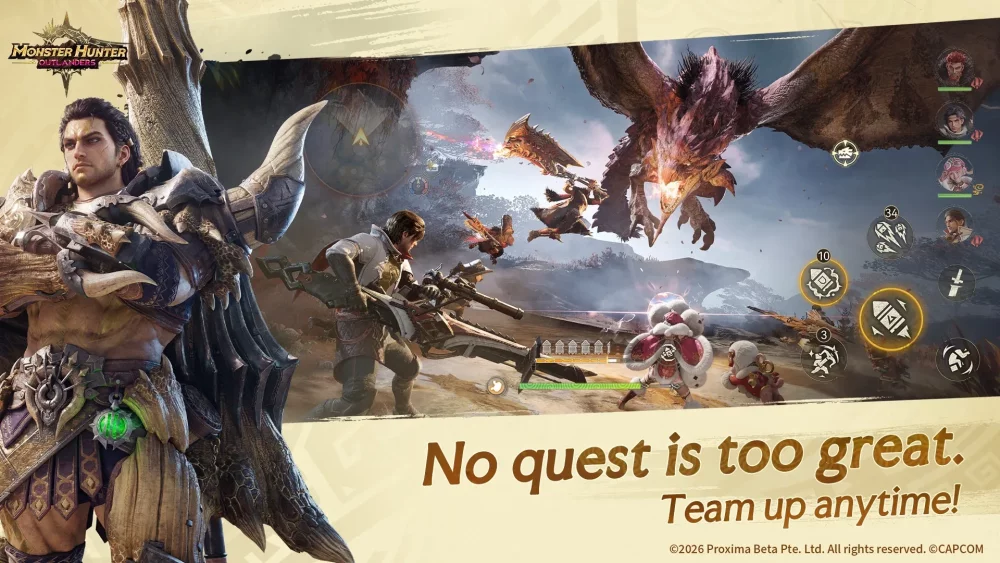
Before spending premium gacha resources on a featured Great Sword Hunter banner in Monster Hunter Outlanders, test the character in trial mode to verify their charge speed, defensive mitigation skills, and synergy with your existing roster.
Great Sword hunters specialize in single-target burst damage during stagger states and boss recovery windows. However, their heavy playstyle requires specific kit features and team support to offset low drawn-weapon mobility.
---
Key Banner Evaluation Factors
Use these criteria to evaluate whether a new Great Sword Hunter justifies your gacha currency:
| Evaluation Factor | Key Mechanic to Check | Combat Impact |
|---|---|---|
| Charge Speed | Passives that shorten charge times | Increases hit rates during brief mobility windows. |
| Defensive Mitigation | Shoulder tackles or damage reduction skills | Maintains offensive pressure without relying entirely on healers. |
| Skill Utility | Armor shredding or elemental debuffs | Extends performance beyond single-target burst damage. |
| Weapon Pool | Critical hit rates, sheath speed, elemental boosts | Maximizes character potential without extra gear farming. |
---
Step-by-Step Character Evaluation
1. Test Charge Speeds and Burst Windows
The primary role of a Great Sword user is delivering massive physical or elemental damage when a monster is vulnerable. When testing a new banner hero:
- Observe the delay required to reach maximum charge levels. Passives that speed up charge times make the character drastically more effective against fast-moving bosses.
- Check if heavy finisher attacks chain smoothly into secondary effects like armor reduction or elemental weakness triggers.
2. Verify Survival and Mobility Options
Drawn Great Swords reduce character movement speed significantly, leaving hunters exposed during long attack animations.
- Self-sufficient kits: Look for built-in super armor, damage reduction, or shoulder-tackle mechanics that absorb incoming hits while charging.
- Dependent kits: If the character lacks defensive maneuvers, factor in the cost of pairing them with support hunters who provide active shields or healing.
3. Audit Roster Gaps and Elemental Coverage
Avoid pulling for a character that duplicates an existing role on your account.
- Elemental alignment: Only invest if the featured hunter covers an elemental weakness you currently lack for high-difficulty monster encounters.
- Roster redundancy: If you already possess an upgraded Great Sword hunter with similar elemental coverage, save resources unless the new banner hero offers a demonstrably higher damage ceiling or essential team debuffs.
4. Inspect Featured Weapon Passives
A banner hero's output relies heavily on complementary equipment. Review the weapon pool on the banner to check for:
- Direct offensive stats such as increased critical hit rate or flat elemental damage bonuses.
- Quality-of-life perks like faster sheath speed or stamina recovery, which alleviate Great Sword positioning penalties.
---
When to Skip the Banner
Skip the Great Sword Hunter banner if any of the following apply:
- Your team already covers the element: Duplicating elemental damage roles leads to diminishing returns on finite summons.
- The kit lacks defensive traits and utility: Pure damage hunters without defensive hyper-armor or armor-shredding debuffs fall off quickly as content difficulty scales.
- The combat speed feels too restrictive: If trial mode tests reveal unmanageable swing delays that do not fit your playstyle, save currency for upcoming range or support banners.
Free Monster Hunter Outlanders Codes
Current active codes and how to redeem them.

Emily Johnson
Emily writes practical mobile strategy guides with a focus on resource planning, base progression, and the early decisions that shape a long-term account.
COMMUNITY
Player Comments
94 players commented on this guide.
This saved me time in the early game.
The explanation is clear, especially for beginners.
I wish I had read this before upgrading the wrong thing.
Can you add more details about strategy in a future update?