
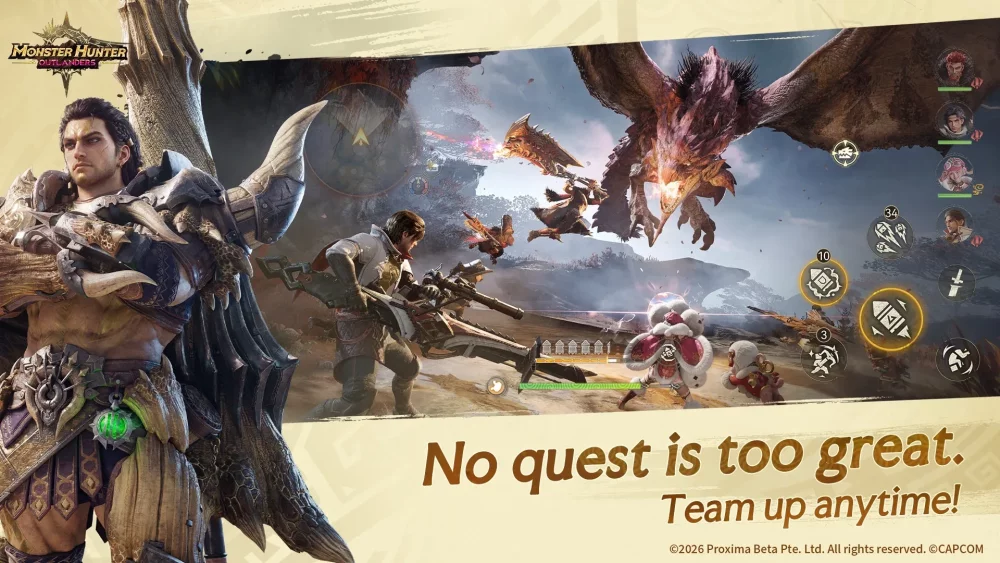
To climb the competitive leaderboards in Monster Hunter Outlanders, you must treat the game as an efficiency-based ecosystem where every quest and resource expenditure counts toward your total score. The most effective way to ascend the rankings is to prioritize story progression, which acts as the primary gatekeeper for high-yield content, advanced crafting materials, and the most rewarding monster encounters. By balancing rapid narrative advancement with precise gear optimization, you can maintain a trajectory that keeps you competitive against even the most seasoned hunters.
The Strategy: Why Story Progression Leads the Meta
In Monster Hunter Outlanders, your rank is fundamentally tied to your ability to tackle increasingly difficult monsters. The main story quest is not just a narrative experience; it is the most efficient roadmap for account progression.
- Zone Unlocks: The story grants access to higher-tier maps. Higher-tier maps house monsters that provide significantly more ranking points per successful hunt.
- System Unlocks: Many of the game’s core systems, including advanced gathering and specialized crafting, are locked behind story milestones. If you linger in low-level zones, you are effectively capping your potential points-per-hour.
- The "Wall" Philosophy: When you hit a difficulty spike, your first instinct should not be to grind low-level monsters. Instead, focus on gathering the specific materials needed for gear upgrades that allow you to clear the next story mission. This "just-in-time" crafting approach keeps your resource expenditure low while ensuring your damage output remains relevant for your current progression tier.
Optimizing Gear for Competitive Efficiency
Ranking high in Monster Hunter Outlanders requires a "lean" approach to gear. Because the meta can shift with balance updates, investing heavily in gear that will be obsolete within a few days is a common pitfall for aspiring leaderboard climbers.
The Core Loadout Rule
Focus your resources on a core set of equipment that supports your primary weapon class rather than diversifying too early.
- Prioritize Attack Power: In time-attack scenarios and ranking challenges, damage-per-second (DPS) is king.
- Survivability vs. Speed: While defense is important, the fastest hunters prioritize offensive stats to end encounters before the monster enters its most dangerous phases.
- Material Allocation: Use your gathered resources to enhance weapons that provide elemental advantages. Being able to exploit a monster’s elemental weakness is the single most significant factor in shortening your hunt times.
Mastering High-Level Monster Encounters
As you climb, the mechanical skill required to survive becomes just as important as your character's stats. Not every monster is worth your time if you are chasing a top-ten spot on the leaderboard.
- Scouting for Efficiency: Always utilize the game’s scouting features before engaging. Knowing a monster’s attack patterns and elemental weaknesses allows you to formulate a strategy that minimizes "downtime" or the need for healing items during the fight.
- Points-to-Time Ratio: Evaluate your hunts based on how long they take versus the points rewarded. If a specific boss takes fifteen minutes to clear but offers only a marginal increase over a five-minute hunt, avoid the former for ranking purposes. Focus on the monsters that offer the highest point density per minute of active combat.
- Team Composition: If Monster Hunter Outlanders allows for cooperative play, ensure your team composition complements your weapon. A well-coordinated team that can stunlock or capitalize on monster openings will consistently outperform solo efforts in high-tier ranking brackets.
Adapting to Seasonal Shifts and Meta Changes
The competitive landscape of Monster Hunter Outlanders is dynamic. With each seasonal update, new monsters, gear sets, and weapon adjustments arrive, potentially shifting which tactics are most effective.
- Monitor the Top 10: The most reliable way to stay ahead is to observe the players currently holding the top spots in your region. Check their loadouts, their weapon choices, and their specific monster farming habits. If the top players have shifted to a specific weapon class, there is likely a mechanical reason related to the current balance patch.
- The Pivot Strategy: Do not be afraid to pivot your main weapon if the meta shifts significantly. While it is tempting to stick to one playstyle, the best players are those who can adapt their playstyle to exploit the current game balance.
- Resource Hoarding: Keep a reserve of general-purpose crafting materials. When a new update drops, you want to be able to immediately upgrade new, powerful gear rather than waiting days to farm basic materials.
Common Mistakes to Avoid
Even skilled players often find themselves stuck in a ranking plateau due to avoidable errors. Watch for these common pitfalls:
- Over-farming early monsters: Once you have the gear to move to the next tier, move on. Farming low-level monsters provides diminishing returns on both experience and ranking points.
- Neglecting Elemental Advantages: Attempting to force a "raw damage" build against a monster with a massive elemental weakness is a common way to lose seconds or minutes off your hunt time. Always carry a secondary weapon that exploits the target's primary weakness.
- Ignoring Daily Objectives: Many players focus solely on the main story and ignore daily quests. These dailies often provide steady, reliable supplies of crafting materials and experience that bridge the gap between major story milestones.
By consistently clearing high-value targets, staying flexible with your gear, and aggressively pushing through the main narrative, you can secure your place on the Monster Hunter Outlanders leaderboards. Success in this game is not just about having the best gear—it is about having the most efficient strategy for the time you invest.

Free Monster Hunter Outlanders Codes
Current active codes and how to redeem them.

Emily Johnson
Emily writes practical mobile strategy guides with a focus on resource planning, base progression, and the early decisions that shape a long-term account.
COMMUNITY
Player Comments
67 players commented on this guide.
This saved me time in the early game.
The explanation is clear, especially for beginners.
This helped me understand strategy much better.
Nice guide. I am checking the other Monster Hunter Outlanders articles next.