
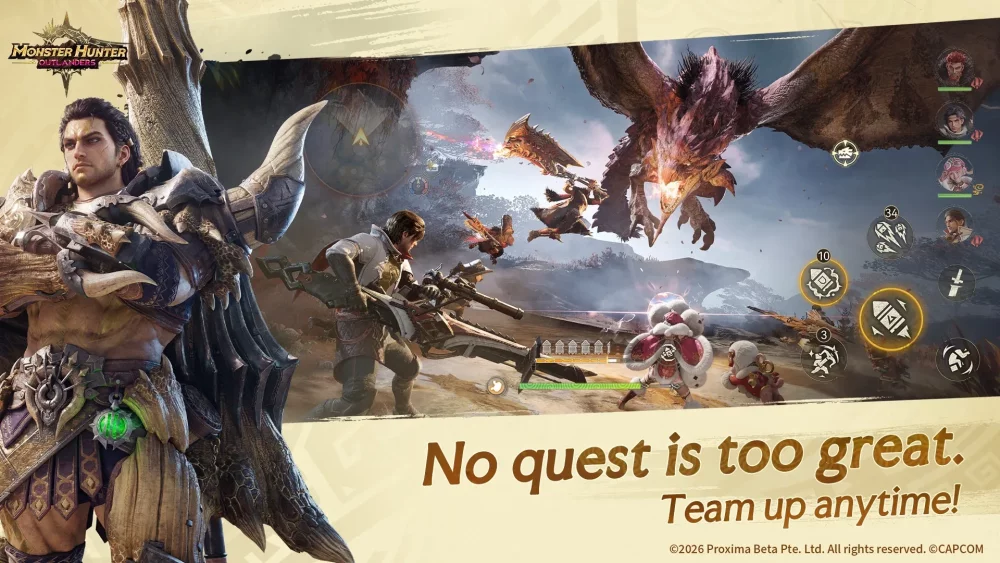
When evaluating a new SSR hunter during the Monster Hunter Outlanders beta, take the character into the training area or a low-level hunt immediately after unlocking them. Test their core skill animations and dodge windows before spending significant resources. High theoretical damage output is ineffective if long attack animations leave your hunter vulnerable to aggressive monster attacks.
Evaluating SSR Combat Animations and Mobility
Combat efficiency in Monster Hunter Outlanders relies on animation safety as much as raw numerical stats. To determine whether a new SSR hunter fits your playstyle, run through their attack loop against low-risk targets and observe four critical mechanics:
- Startup Frames: Check how quickly a hunter's primary skill triggers after pressing the button. Slow skill activations require strict timing during boss vulnerability windows.
- Recovery Locks: Measure the delay between the end of an attack sequence and the moment your character can initiate a dodge roll or move.
- Cancel Windows: Identify whether high-damage skills can be interrupted mid-animation to avoid telegraphed monster attacks.
- Repositioning Capability: Evaluate dashes or directional skills to see if they move the character clear of incoming damage zones while maintaining combat momentum.
| Evaluation Factor | Key Combat Criteria | Actionable Check |
|---|---|---|
| Animation Lock | Startup and recovery frames | Verify if attack sequences can be canceled early into a timely dodge. |
| Mobility | Repositioning and dash skills | Test ability to dodge telegraphed monster attacks mid-combo. |
| Utility & CC | Interrupts, flinches, and status effects | Check if skills disrupt monster charging phases or extend down states. |
| Team Synergy | Buffs, healing, and kit independence | Determine if the unit functions solo or requires specific roster support. |
Assessing Skill Utility and Team Value
A high-ranking SSR unit should offer functional utility that complements your existing roster rather than simply duplicating another hunter's role.
- Test Interrupt Capabilities: Check if the unit's core skills apply flinches or status effects capable of interrupting monster charge attacks.
- Review Team Buffs and Healing: Identify whether the skill set provides passive or active support to improve overall squad survivability during prolonged encounters.
- Determine Roster Independence: Check if the hunter's output requires specific elemental setups or status triggers from teammates. Self-sufficient units adapt better to random matchmaking and varying boss encounters.
Managing Beta Gacha Currency
Because game balance and mechanics are subject to adjustments throughout beta testing, treat pulls on new character banners as opportunities to experiment with fresh playstyles rather than permanent account investments.
If a newly introduced SSR hunter uses mechanics, weapon types, or combo loops identical to a character you already own, consider saving your currency. Focus your testing on hunters who offer unique movement options, specialized counter-attack timing, or distinctive crowd-control mechanics that enhance your ability to handle difficult boss phases.

Free Monster Hunter Outlanders Codes
Current active codes and how to redeem them.

Sarah Williams
Sarah specializes in RPG and collection games, explaining team building, character growth, and beginner-friendly ways to avoid expensive early mistakes.
COMMUNITY
Player Comments
93 players commented on this guide.
I wish I had read this before upgrading the wrong thing.
The explanation is clear, especially for beginners.
I tried this today and it worked better than my old setup.
Can you add more details about strategy in a future update?