
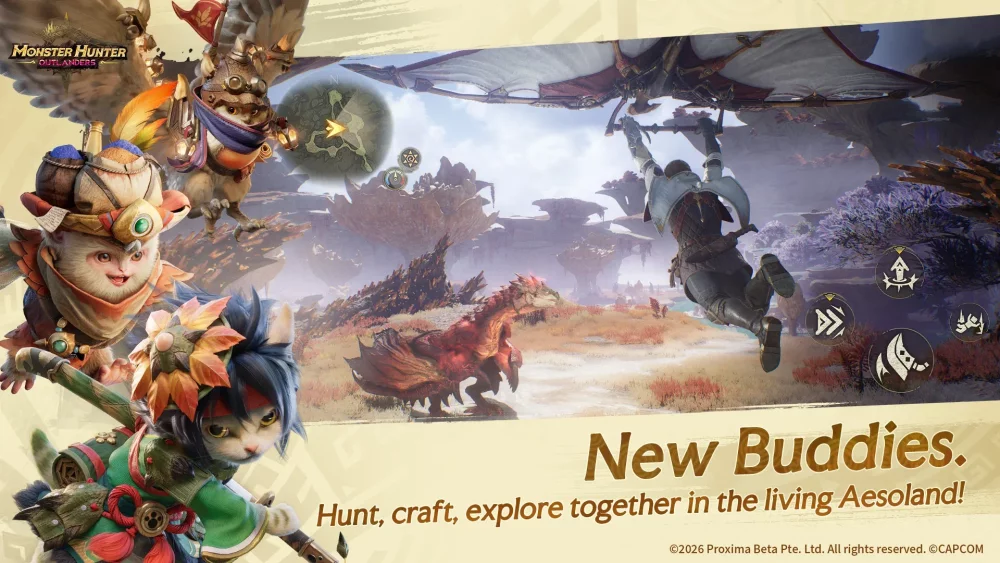
Monster Hunter Outlanders represents a significant evolution in the franchise, bringing the series’ signature loop of hunting, crafting, and progression to a mobile-first, open-world environment. Successfully transitioning from the initial character setup to high-tier monster encounters requires a clear understanding of how the game’s mechanics have been adapted for touch controls and fluid, on-the-go gameplay.
This guide provides an authoritative breakdown of how to approach character customization, combat execution, and open-world traversal to ensure you are consistently ahead of the curve as you progress through the beta.
Defining Your Hunter: Character Creation Strategy
While character creation in Monster Hunter Outlanders is primarily an aesthetic endeavor, it is your first point of interaction with the game’s visual engine. Because mobile screens offer a different perspective than large monitors, we recommend focusing on high-contrast features and distinct silhouettes.
When customizing your avatar:
- Prioritize Silhouette: In the heat of battle, your character’s armor and hair style help you maintain spatial awareness. Choose a hairstyle or headpiece that remains visible during intense, zoomed-out combat sequences.
- Utilize the Full Suite: Do not rush the creation phase. Use the granular sliders to refine facial structure and body composition. These details are frequently highlighted in the game’s cinematic cutscenes, which are rendered in-engine.
- Identity Consistency: Choose an aesthetic that aligns with your preferred weapon class. While purely cosmetic, picking a "look" that matches your playstyle—such as rugged, armored aesthetics for Great Sword users or sleek, lightweight designs for Dual Blades—can assist in mentally reinforcing your role during team-based hunts.
Adapting to Fluid Combat Mechanics
The combat in Monster Hunter Outlanders has been meticulously tuned for touch inputs. The key to mastering this system is moving away from the "button-mashing" instinct often found in mobile games and embracing the "rhythm-based" combat intrinsic to the Monster Hunter series.
The Importance of Telegraphed Animations
Every monster in Monster Hunter Outlanders follows a predictable animation cycle. The game is designed to reward players who identify the "wind-up" for specific moves. Before a monster executes a heavy tail sweep or a charge, there is almost always a distinct shift in posture.
- The Dodge Window: Evasive rolls are not just for repositioning; they are your primary defensive tool. Practice the timing of your dodge to coincide with the monster's active frames.
- Lock-On vs. Free Camera: Utilize the target lock-on system for aerial monsters or fast, erratic targets to keep them centered. However, turn it off when fighting larger, slower monsters to manually aim your attacks at specific breakable parts, such as tails or horns.
Animation Canceling and Input Buffering
To maximize your DPS, you must learn to "cancel" the recovery frames of your attacks. Many weapon skills in the game allow you to transition directly into an evade or a secondary combo chain, bypassing the long animation that leaves you vulnerable. Spend time in the training area to find the exact moment an attack registers damage; that is your cue to input the next move.
Mastering Weapon Versatility
The "one-weapon-only" approach is a trap in Monster Hunter Outlanders. The game’s combat design strongly encourages players to carry a diverse loadout to exploit elemental weaknesses and terrain advantages.
Matching Gear to Monster Archetypes
- Agile/Flying Targets: Prioritize ranged weapons or fast-attacking melee weapons (like Dual Blades or Sword and Shield) that allow you to stay mobile while dealing consistent chip damage.
- Heavily Armored Targets: Swap to weapons with high "Part-Break" potential, such as the Hammer or Great Sword, which can stagger monsters and create openings for the rest of your team.
- Elemental Synergy: Always check the monster’s elemental weaknesses before departing. A weapon that is effective in one region may be drastically underpowered in another. Being able to swap your gear sets on the fly is what separates a novice hunter from a veteran.
Efficient Open-World Traversal
Exploration in Monster Hunter Outlanders is designed to be seamless. Unlike traditional entries that require tedious stamina management for every action, the traversal here is streamlined to get you into the action faster.
- Scouting from Elevation: Use the simplified climbing mechanics to reach high ground. From these vantage points, you can use the game’s scouting features to mark gathering nodes and monster locations.
- Safe Zone Pathing: Before engaging a high-threat monster, identify the nearest "Safe Zone." These are areas where you can retreat to heal, sharpen weapons, or reorganize your inventory without the risk of being interrupted.
- Gathering Efficiency: Even if you aren't currently crafting a specific item, gather materials from every node you pass. In Monster Hunter Outlanders, late-game crafting requires thousands of base-tier materials; stocking up early prevents the "grind wall" later in the game.
Strategic Beta Objectives: Testing the Limits
As a participant in the current beta phase, your goal should be to provide meaningful feedback while optimizing your progression.
- Test the Limits: Push into encounters that are slightly above your recommended gear level. This reveals how animation cancels and dodge frames hold up under pressure.
- Report Consistency: If a monster’s hitboxes feel "off" or if an attack animation seems to ignore your dodge inputs, document it. This is the exact type of data developers need to tune the game for launch.
- Manage Resource Flow: Keep track of your quest rewards and material requirements. If certain items are too difficult to farm, note the ratio of "time spent" to "reward received."
Final Pro-Tips for Success
- Never Over-commit: Even if you have a massive opening, don't use your longest combo if the monster’s "rage" meter is high. It is always better to land three quick, safe hits than to be caught in a long animation when the monster starts its follow-up attack.
- Audio Cues: Many monsters have specific audio cues that precede their loudest or most damaging attacks. Playing with high-quality audio or headphones will give you a split-second advantage in reacting to these moves.
- Team Coordination: If you are playing in a group, communicate target focus. Having two hunters focus on the tail while two others focus on the head is the fastest way to trigger "part breaks" and staggers, significantly shortening the hunt.
By focusing on these tactical fundamentals, you will not only survive the dangers of the Monster Hunter Outlanders world but thrive in it, building a hunter that is both efficient and formidable.

Free Monster Hunter Outlanders Codes
Current active codes and how to redeem them.

Emily Johnson
Emily writes practical mobile strategy guides with a focus on resource planning, base progression, and the early decisions that shape a long-term account.
COMMUNITY
Player Comments
100 players commented on this guide.
This helped me understand heroes much better.
I wish I had read this before upgrading the wrong thing.
Nice guide. I am checking the other Monster Hunter Outlanders articles next.
This saved me time in the early game.