
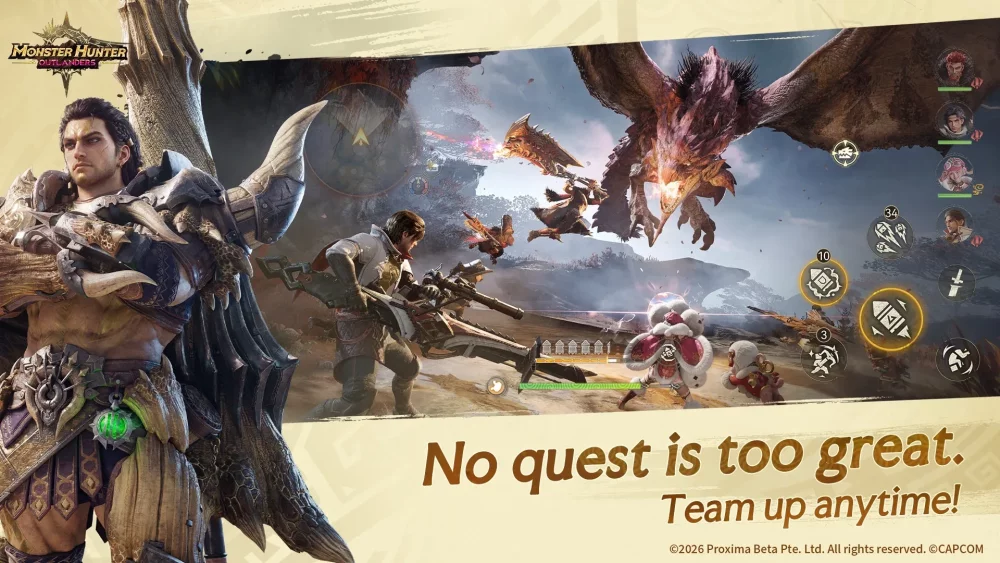
In Monster Hunter Outlanders, the traditional series formula of "choose your weapon, then hunt" has been transformed into a character-centric system. Unlike previous entries where a hunter could swap between any weapon type at will, Monster Hunter Outlanders ties specific weapons to unique characters. This means your choice of character is, in effect, your choice of combat identity and role within the team.
To excel in this environment, you must move beyond simple gear upgrades. Success requires a deep understanding of fixed weapon kits, character-specific skill trees, and the strategic synergy required to take down the most formidable monsters in the game.
The Fixed Weapon System: Why Character Choice Matters
In Monster Hunter Outlanders, characters function as "combat packages." Each hero comes pre-equipped with a signature weapon that dictates their movement, engagement range, and tactical utility.
Because you cannot swap weapons between characters, your progression is tied to developing a stable of heroes. This design choice is intentional: it encourages players to specialize in specific playstyles rather than attempting to be a jack-of-all-trades.
Key Takeaways for Character Selection:
- Role Definition: Every character is designed to fulfill a specific role—whether as a front-line damage dealer, a mobility-focused harasser, or a team-oriented support utility provider.
- Resource Allocation: Since resources are finite, focus on leveling a core roster that covers different elemental affinities and damage types.
- Mastery Over Versatility: Because you are locked into a weapon type, you must master the technical nuances of your character’s kit, including their unique dodges, counters, and special abilities.
The Strategic Dominance of the Long Sword (Tachi)
In the current Monster Hunter Outlanders meta, the Long Sword has emerged as a top-tier "C-position" weapon—the anchor of the team. Its design provides an exceptional balance of offensive output, defensive mobility, and counter-attack potential.
The Long Sword is widely considered the most effective tool for players looking to carry through challenging hunts for several reasons:
- Counter-Attack Windows: The Long Sword rewards precise timing with parry mechanics that allow you to negate incoming damage while simultaneously landing devastating strikes.
- Sustained Pressure: Unlike weapons that require long, vulnerable commitment animations, the Long Sword allows for fluid movement, keeping you glued to the monster even during erratic attack patterns.
- High Skill Ceiling: For players who master its gauge-management mechanics and iframe (invincibility frame) windows, the Long Sword provides the highest safety-to-damage ratio in the game.
If you are a new player or someone looking to optimize your progression, investing early in a character wielding a Long Sword will provide the most consistent returns across both solo play and multiplayer cooperative sessions.
Balancing Team Roles for Cooperative Hunts
Monster Hunter Outlanders is built with team cooperation at its core. When playing in a group, your individual damage contribution is only part of the equation. Effective teams coordinate their roles to create "openings" for one another.
Tactical Role Breakdown
- The Aggro Anchor: Characters with shields or high-durability kits (like those using Lances or Gunlances) are responsible for drawing the monster's attention, allowing teammates to strike safely.
- The DPS Catalyst: High-mobility characters (like Long Sword or Dual Blades) focus on exploiting the openings created by the anchor, aiming for specific breakable parts to gather rare materials.
- The Utility/Support: Characters equipped with heavy weapons or ranged kits often possess the ability to inflict status effects (paralysis, poison, sleep) or provide team-wide buffs, which are essential for taking down high-difficulty bosses.
Pro Tip: Avoid "clumping." If your team consists of four players all trying to strike the same hit-box with high-commitment, knockback-heavy weapons, you will interrupt each other’s combos. Coordinate your positioning to ensure the monster is constantly being chipped away at from multiple angles.
Progression Without P2W Barriers
A defining philosophy of Monster Hunter Outlanders is that the game is designed to be fully enjoyable and beatable without mandatory spending. Developers have emphasized that horizontal progression—learning the game’s mechanics and teamwork—is more valuable than vertical progression via gacha pulls.
How to progress efficiently:
- Prioritize Talent Trees: Instead of chasing every new character banner, invest your upgrade materials into the talent trees of your primary team. These trees offer permanent stat boosts and skill modifications that often outweigh raw weapon power.
- Focus on Proficiency: Weapon proficiency levels are a major factor in endgame viability. By focusing on one or two main characters, you ensure your proficiency levels are high enough to tackle high-tier, end-game monsters early.
- Master the "Hunt Loop": Use low-stakes expeditions to practice your character's specific "utility moves"—the dashes, parries, or blocks that aren't just for damage, but for survival.
Maximizing Tactical Utility in Combat
Every weapon in Monster Hunter Outlanders possesses hidden tactical depth. Beyond their primary attacks, these weapons have secondary functions that are often overlooked by newer players:
- Evade Windows: Many characters have unique dodge animations that provide longer immunity windows than standard rolls. Learning the timing of these is essential for staying in the "danger zone" without getting carted.
- Part-Breaking Focus: Use your character’s specific kit to target parts that drop specific rare loot. If you are using a weapon with high vertical reach, prioritize tail cuts or wing breaks.
- Resource Management: Whether it is a Long Sword’s Spirit Gauge or a Greatsword’s Charge level, always be mindful of your weapon’s resource meter. The difference between a standard hit and a fully charged skill hit is often the difference between a successful hunt and a time-out.
Final Decision: How to Build Your Main Team
When deciding which characters to focus on, use this three-step decision framework:
- Identify your primary playstyle: Do you prefer fast-paced evasion (Long Sword/Dual Blades) or calculated, heavy-hitting strikes (Greatsword/Hammer)?
- Cover your weaknesses: If your main character is a heavy hitter with low mobility, your second team member should be a high-mobility, fast-hitting character to handle swifter monsters.
- Invest in Synergy: Always check if a character has passive skills that benefit the rest of your roster. Even if a character isn't your "main," having them leveled for their support utility can be the key to clearing the game’s most difficult content.
Monster Hunter Outlanders rewards the thoughtful hunter. By focusing on weapon mechanics, understanding your role in the team, and utilizing your resources to build a balanced, synergistic roster, you can dominate the open world without relying on anything but your own skill.
Free Monster Hunter Outlanders Codes
Current active codes and how to redeem them.

Michael Smith
Michael covers live-service games, events, reward systems, and efficient daily routines, turning frequent updates into clear actions for players.
COMMUNITY
Player Comments
146 players commented on this guide.
The explanation is clear, especially for beginners.
This helped me understand heroes much better.
Can you add more details about heroes in a future update?
Nice guide. I am checking the other Monster Hunter Outlanders articles next.