
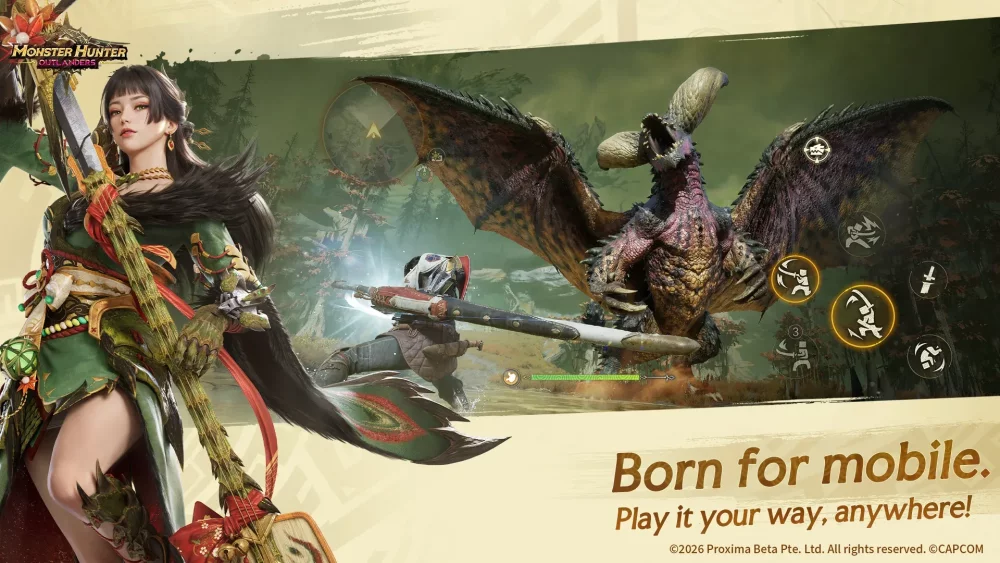
To dominate high-difficulty encounters in Monster Hunter Outlanders using the Great Sword, you must shift your playstyle from constant aggression to calculated, high-damage burst windows. The Great Sword is not a weapon of speed; it is a weapon of intent. By mastering the rhythm of charged attacks and utilizing the weapon’s massive reach to exploit specific monster vulnerabilities, you can maintain high damage uptime despite the weapon’s inherent mobility limitations. This guide breaks down the mechanics, positioning strategies, and tactical decisions required to turn the Great Sword into the most lethal tool in your Monster Hunter Outlanders arsenal.
Understanding Great Sword Charge Mechanics
The core strength of the Great Sword in Monster Hunter Outlanders lies in its ability to deliver massive single-hit damage through the charge mechanic. Unlike faster weapons that rely on sustained, low-impact combos, the Great Sword functions best when you anticipate a monster’s recovery animation and time your strike to land at the exact moment the creature is stationary.
To maximize your output, you must understand the three tiers of charge. While the third tier (the "True" charge) offers the highest damage, it also carries the highest risk of interruption. In high-stakes hunts, avoid the temptation to over-commit to a full three-stage charge unless the monster is downed or trapped. Instead, focus on landing consistent Level 1 or Level 2 charges. The trade-off for this caution is a lower risk of being interrupted, as the Great Sword’s long animation makes you vulnerable to counter-attacks. Prioritizing consistent, medium-strength hits over ambitious, failed full-charge attempts will significantly improve your overall hunt time and survivability.
Positioning for Optimal Weak Point Hits
Success with the Great Sword relies heavily on your ability to track a monster’s head or weak points throughout the fight. Because the weapon features a narrow, linear hitbox, your positioning before the swing determines whether you land a critical hit or merely graze the monster.
Use your movement in the open world to circle the target, keeping your character angled so that your overhead swing trajectory aligns perfectly with the monster’s most vulnerable zone. In party setups, take advantage of moments where the monster is distracted by other hunters. Use this time to reposition behind or directly in front of the target’s weak point. When the monster turns to face an ally, you have a brief window to initiate your charge safely. Developing this "aggro awareness" allows you to spend less time dodging and more time delivering heavy strikes to the monster's most sensitive areas.
The Sheath-Run-Draw Loop
The Great Sword significantly limits your mobility, making stamina management a priority for both defensive evasion and offensive repositioning. You should avoid sprinting constantly, as you will need that stamina to perform emergency rolls or to sheath the weapon quickly when a monster prepares a wide-area attack.
In Monster Hunter Outlanders, the ability to sheath and relocate is just as important as the attack itself. Adopt the "sheath-run-draw" loop:
- Sheath: Keep your weapon sheathed while navigating the field to maintain maximum movement speed.
- Close Distance: Only approach the monster when you have a clear opening or when the monster is locked in an animation.
- Draw Attack: Use a draw-attack (an attack performed immediately after unsheathing) to initiate your engagement, as these often have high motion values and quick start-up times.
- Roll/Sheath: After your strike, immediately roll or sheath to reposition.
Never walk with your weapon drawn unless you are already within striking range and actively charging.
Managing Stagger Thresholds
One of the most effective strategies for the Great Sword is managing stagger thresholds. A stagger occurs when you deal enough damage to a specific limb or the head to force the monster into a temporary state of vulnerability. By focusing all your hits on one area—ideally the head—you can trigger these staggers more frequently, creating a "stagger loop" where the monster is kept in a dazed state.
Monitor the monster’s behavior closely to identify which attacks lead to the longest recovery periods. For example, if a monster performs a powerful "wind-up" move that misses you, that is your primary signal to commit to a full charge. Mastering this timing turns the Great Sword from a slow, cumbersome weapon into a surgical tool capable of locking down even the most relentless monsters through constant, controlled pressure.
Expert Tips for High-Difficulty Bosses
When facing challenging bosses like the Radiant Prismatic Dragon, generic damage-dealing strategies will often fail. To overcome these encounters:
- Study the Recovery: Every massive monster has specific attacks that leave them open for 2–3 seconds. Identify these specific moves and commit your heavy charges only during these windows.
- Don't Fear the Miss: If you commit to a charge and the monster moves, cancel the attack if the game’s mechanics allow, or roll into a repositioning strike. Committing to a full, whiffed charge is the fastest way to lose health.
- Focus on Part Breaks: The Great Sword is the premier weapon for breaking monster parts. Prioritize breaking horns, wings, or tails, as these parts often yield unique materials and can sometimes disable specific monster abilities.
- Utilize Environmental Hazards: Monster Hunter Outlanders environments are interactive. Lure monsters toward traps or environmental hazards that can stun them, providing the perfect window for your most powerful combos.
By focusing on these principles, you will transition from a reactive hunter to an active force on the battlefield, dictating the pace of the hunt through superior timing and precise, heavy-hitting strikes.

Free Monster Hunter Outlanders Codes
Current active codes and how to redeem them.

Michael Smith
Michael covers live-service games, events, reward systems, and efficient daily routines, turning frequent updates into clear actions for players.
COMMUNITY
Player Comments
45 players commented on this guide.
The explanation is clear, especially for beginners.
The tips are practical and easy to follow.
Can you add more details about strategy in a future update?
Nice guide. I am checking the other Monster Hunter Outlanders articles next.