
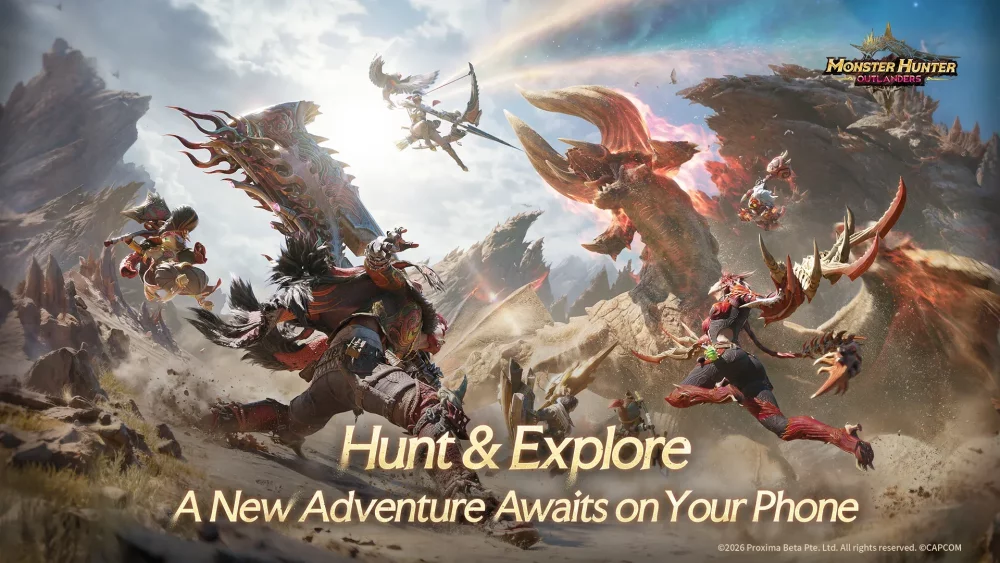
To maximize your damage output and survivability in Monster Hunter Outlanders, you must move beyond basic light and heavy attack strings and master the specific input sequences and timing required for your weapon’s unique special skills. These high-impact maneuvers define your combat role, providing the burst damage necessary to break monster parts, stagger aggressive foes, and maintain offensive pressure. By understanding how to integrate these skills into your standard combat flow, you can significantly reduce hunt times and navigate the game’s most challenging encounters with professional-level precision.
The Mechanics of Weapon-Specific Special Skills
In Monster Hunter Outlanders, every weapon class functions as an extension of your tactical approach. Special skills are not just "ultimate moves"; they are context-sensitive abilities that require deliberate execution.
- Heavy Weapons (e.g., Great Sword, Hammer): These often rely on "Charge" mechanics. You must hold inputs to increase the damage multiplier of the strike. The risk is high, as long-press inputs leave you vulnerable, but the reward is massive stagger potential against even the largest monsters.
- Fast Weapons (e.g., Dual Blades, Sword & Shield): These prioritize rhythmic, rapid-tap inputs. Your special skills in these classes are designed to build up elemental or status damage quickly or to provide high-mobility repositioning.
Understanding your weapon's specific animation lock is the first step toward mastery. If you trigger a high-commitment special skill while a monster is mid-animation for a tail sweep, you will likely pay for that mistake in health. Always study your weapon’s "wind-up" frames in the training area to gauge exactly how much time you have before the damage registers.
Optimizing Skill Activation and Input Buffering
A common mistake among novice hunters is treating special skills as isolated "emergency buttons." Instead, the most effective players weave these skills into their standard attack chains to create a seamless, high-DPS rotation.
This process is known as Animation Canceling. By triggering your special skill command precisely as the final frames of a standard attack are concluding, you bypass the recovery animation of the light or heavy attack. This keeps you mobile and keeps your damage output consistent.
Pro-Tips for Execution:
- Input Buffering: Practice queuing your skill command just before your current attack animation ends. The game’s engine will register the command and execute it the moment your character is able to act, minimizing the window where you are vulnerable to counter-attacks.
- Stamina Management: Never commit your entire stamina bar to a skill if you lack the resources to perform a dodge roll immediately afterward. Always reserve at least 20% of your stamina for an emergency evasion.
- Directional Control: Many special skills in Monster Hunter Outlanders are directional. If you are using a weapon with a lunging strike, ensure your movement stick is pushed toward the monster’s weak point (such as the head or tail) before the animation begins.
Managing Cooldowns and Resource Gauges
Many of the most powerful abilities in Monster Hunter Outlanders are gated by a secondary "Special Meter." Managing this gauge is the difference between a clean hunt and a failed quest.
- Visual Cues: Your UI will provide distinct visual pulses when your weapon is "primed." Do not waste these charges on small, inconsequential monsters. Save them for when the monster is exhausted, trapped, or reeling from a part-break.
- Utility Perks: Many special skills offer "Hyper-Armor" (damage reduction while attacking) or temporary buffs. Check your weapon’s detailed menu to see which skills grant this. Using a skill that offers hyper-armor allows you to trade hits with a monster, ensuring you get your damage off even if the monster attempts to interrupt you with a minor attack.
Adapting to Monster Behavior
In Monster Hunter Outlanders, adaptability is the hallmark of a veteran. A weapon skill that functions perfectly against a slow-moving beast like a Barroth may be completely ineffective against a high-flying or highly mobile target like a Rathalos.
The "Clash" Strategy
Advanced players use special skills to "clash" with monster attacks. If you time your skill’s active hitbox to collide with the monster’s attack hitbox, you can often trigger a "clash" or "counter" animation. This cancels the incoming damage entirely and often creates a massive opening for your team. This requires deep knowledge of the monster's telegraphs—the subtle movements they make before a major attack.
Pre-Hunt Preparation
- Analyze the Matchup: Is the monster fast? Prioritize weapons with short, reactive special skills. Is the monster armored? Prioritize weapons with high-impact, high-stagger special skills that can break through natural defenses.
- Elemental Synergy: Ensure your weapon's elemental type aligns with the monster's weakness. A special skill that hits multiple times is significantly more effective when utilizing elemental damage than a single-hit skill.
- Team Dynamics: If you are playing in a group, communicate your intent. If a Hammer user is focusing on the head for a stun, avoid using skills that might trip or knock the monster away from their target point.
Avoiding Common Mistakes
To accelerate your progression in Monster Hunter Outlanders, be mindful of these three critical pitfalls:
- Over-extending: Using your longest-animation skill when the monster is not properly staggered is the fastest way to get carted. Only use your highest-damage "finisher" skills when you are certain the monster is locked in an animation or incapacitated.
- Ignoring Defensive Utility: Players often prioritize damage-per-second over defensive utility. However, a skill that provides an evasion window can save your life. Learn which of your skills function as both an attack and a dodge.
- Panic Button Syndrome: Never use your special meter just because it is full. Wait for the tactical opening. A well-placed skill during a trap or a stagger is worth triple the damage of a "panic" skill used while the monster is actively targeting you.
By consistently practicing these techniques and analyzing your performance after each hunt, you will transform from a novice hunter into an elite specialist in Monster Hunter Outlanders. Master your rhythm, manage your resources, and always look for the next opening.

Free Monster Hunter Outlanders Codes
Current active codes and how to redeem them.

James Brown
James focuses on Android gaming on PC, emulator setup, controls, performance tuning, and practical troubleshooting for longer play sessions.
COMMUNITY
Player Comments
87 players commented on this guide.
This helped me understand strategy much better.
This saved me time in the early game.
Nice guide. I am checking the other Monster Hunter Outlanders articles next.
Good guide for Monster Hunter Outlanders players. The strategy part was useful.