
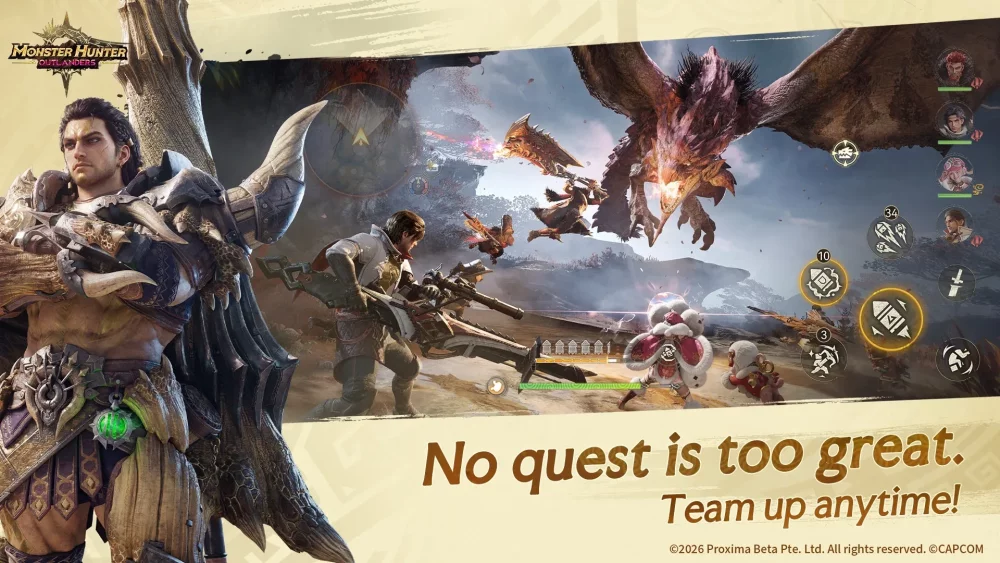
To succeed in Monster Hunter Outlanders, you must look beyond a single main weapon and embrace the game's emphasis on hunter-weapon synergy. Unlike traditional console titles where you might stick to one weapon type, this mobile experience rewards players for building a versatile roster. By focusing on specific hunter-weapon pairings and mastering elemental advantages, you can overcome the unique challenges presented by the game's diverse monster roster and complex open-world encounters.
Diversifying Your Hunter Roster
The core of progression in Monster Hunter Outlanders relies on collecting and upgrading different hunters, each tied to specific weapon types. Because certain monsters are significantly weaker to specific elements or weapon classes, relying on one character will eventually lead to a damage wall. You should prioritize leveling a diverse team that covers multiple weapon archetypes, ensuring you are never caught unprepared when facing monsters with high physical or elemental resistance.
Integrating new hunters into your rotation is essential for long-term survival. As you progress, you will encounter enemies that require specific utility, such as long-range support or high-mobility melee attacks. Developing a well-rounded roster allows you to swap strategies mid-hunt or adjust your composition based on the specific strengths of the monster you are tracking, which is crucial for clearing high-difficulty content efficiently.
Leveraging Weapon-Specific Mechanics
Each weapon in Monster Hunter Outlanders feels distinct, featuring unique special actions that define its combat role. Mastering these mechanics is non-negotiable for maximizing your damage output. For instance, weapons with heavy shield mechanics or parry-based counter-attacks require precise timing, while lighter weapons focus on maintaining high uptime through fluid movement. You must commit to practicing the specific "feel" of these weapons to avoid becoming a liability in team-based hunts.
Understanding the limitations of your chosen weapon is just as important as knowing its strengths. Some weapons may offer high burst damage but leave you vulnerable during long recovery animations. By analyzing these trade-offs, you can better time your dodges and identify the optimal windows for attacking. Always check the character-specific skill descriptions to ensure you are utilizing the full potential of your hunter's unique kit during combat.
Mastering Elemental Weaknesses
Success in Monster Hunter Outlanders is heavily dependent on exploiting the elemental weaknesses of the local fauna. Every monster possesses specific resistances and vulnerabilities that you must account for before engaging. Using a fire-based weapon against a monster resistant to fire is a common mistake that significantly increases hunt times. Instead, study the monster’s behavior and elemental profile to choose the right hunter and weapon element combination.
To manage your resources effectively, focus your crafting materials on upgrading a few key elemental weapons rather than spreading your progress too thin. Aim to have at least one strong elemental option for each major weapon category you use frequently. This targeted approach ensures that your damage output remains competitive as you transition from early-game hunts to more challenging late-game encounters where elemental exploitation becomes the primary path to victory.
Optimizing Combat for Mobile Constraints
The mobile nature of Monster Hunter Outlanders introduces specific challenges, particularly regarding camera control and action execution. To maintain peak performance, you should experiment with your control settings to ensure that your movement and ability triggers feel responsive. Because combat can become chaotic with multiple hunters and large monster hitboxes, mastering the art of positioning is your best defense against taking unnecessary damage during intense, fast-paced encounters.
Take advantage of the game's lock-on features and automated camera adjustments to keep your target in view during high-mobility fights. If you find the default layout difficult, remapping your controls to prioritize your most critical hunter skills can drastically improve your reaction time. Focusing on these technical optimizations allows you to spend less time fighting your device and more time executing the precise, rhythmic combat patterns that the series is famous for.
Strategic Decision-Making: The "Radiant Prismatic Dragon" Benchmark
Advanced encounters, such as the fight against the Radiant Prismatic Dragon, serve as the ultimate litmus test for your preparation. These bosses often feature high-health pools and aggressive attack patterns that punish players who have not optimized their gear. When facing such threats, observe the following protocol:
- Analyze the Monster’s Elemental Profile: Identify the monster's elemental weaknesses through the hunter's codex. Do not engage until you have a hunter equipped with a weapon that exploits these weaknesses.
- Evaluate Hunter Synergy: Does the monster require a ranged hunter to maintain distance, or does it demand a heavy-shield user to soak up unavoidable damage? Match your team composition accordingly.
- Prioritize Defensive Windows: These high-end bosses possess "rage states" where they deal increased damage. Focus on evasion and survival during these windows rather than greedily chasing damage uptime.
- Resource Management: Ensure your equipment is upgraded to the current level cap. In Monster Hunter Outlanders, the difference between a successful hunt and a time-out often comes down to a few percentage points of raw damage.
Avoiding Common Pitfalls
Many players fall into the "Collector’s Trap," where they spend equal resources on every hunter they pull. This is inefficient. Instead, follow these golden rules:
- Don't spread resources thin: Pick one "main" hunter for every primary element (Fire, Water, Thunder, Ice, Dragon) and focus your resources there.
- Don't ignore the "Training Area": Practice your dodge-canceling and combo strings here until they are second nature.
- Don't neglect positioning: The biggest mistake in Monster Hunter Outlanders is standing in front of a monster's face. Always aim for the flanks or the rear, and use the lock-on feature to strafe effectively.
By following these guidelines and treating your hunter roster as a strategic toolset rather than just a list of characters, you will find Monster Hunter Outlanders to be a deeply rewarding experience. Mastery comes from the intersection of preparation, mechanical skill, and the intelligent application of elemental advantages. Keep your gear sharp, your hunters diverse, and your eyes on the monster's tells.

Free Monster Hunter Outlanders Codes
Current active codes and how to redeem them.

Sarah Williams
Sarah specializes in RPG and collection games, explaining team building, character growth, and beginner-friendly ways to avoid expensive early mistakes.
COMMUNITY
Player Comments
124 players commented on this guide.
Nice guide. I am checking the other Monster Hunter Outlanders articles next.
This helped me understand strategy much better.
The explanation is clear, especially for beginners.
This guide answered the exact question I had.