
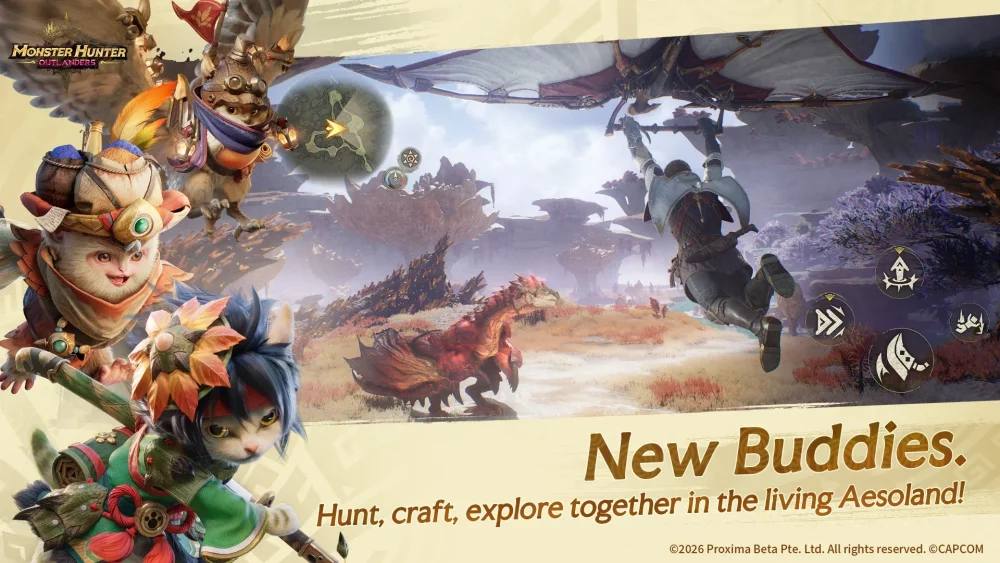
Hunts in Monster Hunter Outlanders take place in a seamless open world rather than isolated, 50-minute instanced quest lobbies. To succeed, track roaming beasts across map sectors, manage your traversal stamina before engaging, gather crafting materials on the move, and actively switch between your party adventurers during battle.
Scout Terrain and Lure Targets to Open Clearings
Large monsters roam persistent map zones without loading screens. Because encounters do not start in flat, pre-cleared battle arenas, engaging a monster wherever you first spot it can create severe disadvantages. Fighting along steep cliffs, near deep water, or on uneven inclines obstructs dodge rolls and disrupts mobile touchscreen camera angles.
Before initiating a fight, take these preparatory steps:
- Observe patrol routes: Watch the monster's path to identify natural chokepoints and nearby hazards.
- Clear hostile wildlife: Eliminate smaller aggressive creatures in the vicinity so they do not interrupt your attack combos or stagger you mid-dodge.
- Draw the target out: Provoke the monster and pull it into a wide, flat clearing where your weapon animations and evasive rolls can execute cleanly without terrain collisions.
Gather Materials and Craft Consumables on the Go
Seamless hunting eliminates routine base-camp item box visits between encounters. To maintain combat readiness across extended exploration sessions, continuously harvest environmental resources while sprinting between map sectors.
Keep free inventory space in your field pouch to support continuous on-the-go crafting:
- Healing Concoctions: Pick native herbs continuously along paths to keep recovery drinks topped off before confronting aggressive monsters.
- Stamina Items: Keep stamina-restoring items ready to replenish the gauge after long climbing or gliding routes.
- Status Cleansers: Carry cleansing herbs to neutralize persistent environmental blights and monster status effects without needing to retreat to a settlement.
Preserve Traversal Stamina for Combat Evasion
Climbing rock faces, sprinting across sectors, and deploying a glider all deplete the exact same stamina pool used for combat dodges and charged weapon attacks. If you exhaust your stamina reaching a high ridge and land right next to an apex predator, you will be unable to evade its opening roar or initial charge.
| Traversal Tool | Exploration Utility | Combat and Stamina Risk |
|---|---|---|
| Glider Deployment | Crosses chasms quickly and tracks fleeing monsters across gaps | High initial stamina cost; leaves no evasion meter if you land directly in combat |
| Cliff Climbing | Accesses elevated shortcuts and vertical vantage points | Leaves you vulnerable while scaling; misjudging height can cause total stamina exhaustion |
| Field Sprinting | Speeds up travel between tracks and resource nodes | Pauses natural stamina regeneration until your hunter stops running |
Pause briefly on flat ledges to let your stamina gauge fully regenerate before gliding down into a monster's territory. When an injured beast retreats across elevated ground, pursue at a steady pace rather than burning your entire bar on continuous sprinting.
Rotate Adventurers to Counter Phases and Preserve Health
The Adventurer system allows you to swap between your custom hunter and recruited party members during both field exploration and active hunts. Cycling through your party members provides two key tactical advantages:
- Health Preservation: When your active hunter takes heavy damage or suffers a debilitating status condition, swap immediately to an off-field adventurer. The damaged unit can recover safely in reserve while you maintain pressure on the monster.
- Damage Type Optimization: Different adventurers carry different weapon classes. Use blunt weapons to break armored monster limbs and induce knockdowns. Once the target collapses, switch to severing or ranged specialists to cut off tails and strike exposed weak points.
Adjust Mobile Camera and Lock-On Settings
Complex open-world terrain can cause erratic camera movement when large monsters maneuver around dense foliage, overhangs, or narrow rock walls. Manual touch sweeping during high-speed attacks frequently leads to missed dodge windows.
Set target lock-on to track the monster smoothly during movement, but keep touch access ready to disengage the lock if the beast backs you against geometry. In heavily wooded areas or canyon passes, expand your camera's field of view so peripheral terrain and incoming tail swipes remain clearly visible.

Free Monster Hunter Outlanders Codes
Current active codes and how to redeem them.

Emily Johnson
Emily writes practical mobile strategy guides with a focus on resource planning, base progression, and the early decisions that shape a long-term account.
COMMUNITY
Player Comments
149 players commented on this guide.
This saved me time in the early game.
I tried this today and it worked better than my old setup.
This guide answered the exact question I had.
The tips are practical and easy to follow.