
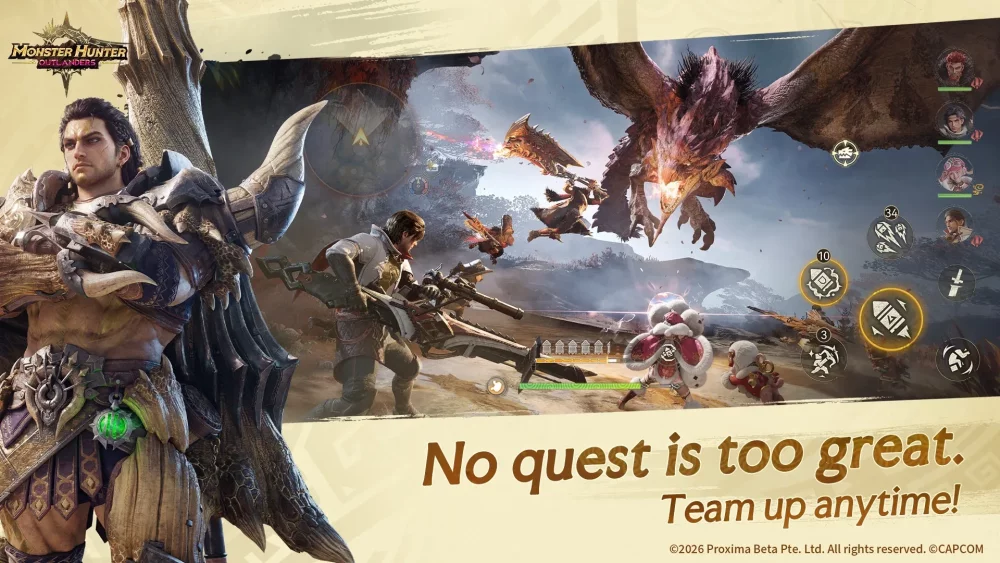
To run a universal five-element build in Monster Hunter Outlanders, equip armor that grants neutral offensive stats and open Visage sockets, then pair universal percentage multipliers with critical hit scaling. This foundation allows you to swap freely between Fire, Water, Thunder, Ice, and Dragon weapons without forging dedicated armor sets for every encounter.
Core Universal Mechanics
Standard elemental builds often rely on flat bonuses locked to a single damage type, such as Fire Attack perks. These bonuses offer zero benefit the moment you swap to an Ice or Thunder matchup.
A universal elemental framework bypasses this restriction by stacking percentage-based amplifiers and critical hit scaling that apply across all five elements:
- Global Elemental Amplifiers: Skills that boost all elemental damage ensure your gear remains fully active regardless of the equipped weapon.
- Elemental Critical Hit Scaling: Converting raw affinity into elemental critical strikes scales your damage output consistently.
- Neutral Gear Foundations: Prioritizing armor pieces with open decoration slots and adaptable Visage sockets keeps your defense and offensive baselines static.
Recommended Universal Skills and Visage Priorities
Equip gear pieces that boost weak-point performance and critical scaling before configuring your Visage sockets.
| Skill Category | Priority Skills | Primary Combat Role |
|---|---|---|
| Core Multiplier | Elemental Exploit, Elemental Surge | Increases elemental damage against monster elemental hitzones |
| Critical Scaling | Critical Element, Affinity Boost | Enables elemental damage to critically strike alongside physical raw damage |
| Visage Resonance | Universal Attack & Element Attunement | Raises base elemental values across all five weapon types |
| Uptime & Utility | Weakness Exploit, Tenderizer | Raises critical strike chance when targeting softened or vulnerable hitzones |
Forge neutral offensive armor pieces first, then install Visages providing universal elemental attunement. This setup scales automatically with any elemental weapon you equip.
Weapon Class Micro-Adjustments
While the core armor pieces and Visages stay identical across weapon archetypes, adjust your secondary socket decorations based on attack speed and resource consumption:
- Fast-Striking Weapons (Dual Blades, Bow, Long Sword): Rapid attack sequences trigger frequent elemental damage procs. Equip secondary decorations for stamina recovery or gauge generation to maintain continuous uptime during monster downs.
- Heavy-Impact Weapons (Greatsword, Hammer, Heavy Bowgun): Heavy strikes and charged finishers capitalize on large motion values. Slot secondary decorations for focus charge speed or recoil mitigation to land your heaviest elemental hits reliably.
Swapping Elemental Matchups
Using a shared armor chassis reduces Zenny costs and saves weapon awakening stones and rare refining ores. When preparing for endgame hunts:
- Identify the target monster's primary elemental vulnerability.
- Forge or select the matching elemental weapon within your preferred weapon archetype.
- Switch weapons at the camp loadout menu before departing on the hunt.
Because your multipliers, critical scaling, and Visage resonance apply globally, your damage scaling reaches full effectiveness immediately upon swapping weapons.
Limitations and Trade-Offs
While standardizing your loadout saves materials, consider the following trade-offs when tackling late-game hunts:
- Peak DPS Difference: Fully specialized, single-element monster sets can deal roughly 5% to 8% more peak damage against their dedicated matchup than a universal setup.
- Hitzone Reliance: Multipliers like Elemental Exploit require striking vulnerable monster parts; hitting resistant hitzones eliminates your bonus damage.
- Stat Caps: Stacking raw elemental attunement without sufficient affinity causes sharp diminishing returns, leaving physical damage checks unfulfilled. Keep affinity high enough to trigger Critical Element consistently.

Free Monster Hunter Outlanders Codes
Current active codes and how to redeem them.

Emily Johnson
Emily writes practical mobile strategy guides with a focus on resource planning, base progression, and the early decisions that shape a long-term account.
COMMUNITY
Player Comments
87 players commented on this guide.
The explanation is clear, especially for beginners.
Nice guide. I am checking the other Monster Hunter Outlanders articles next.
This helped me understand strategy much better.
This saved me time in the early game.