
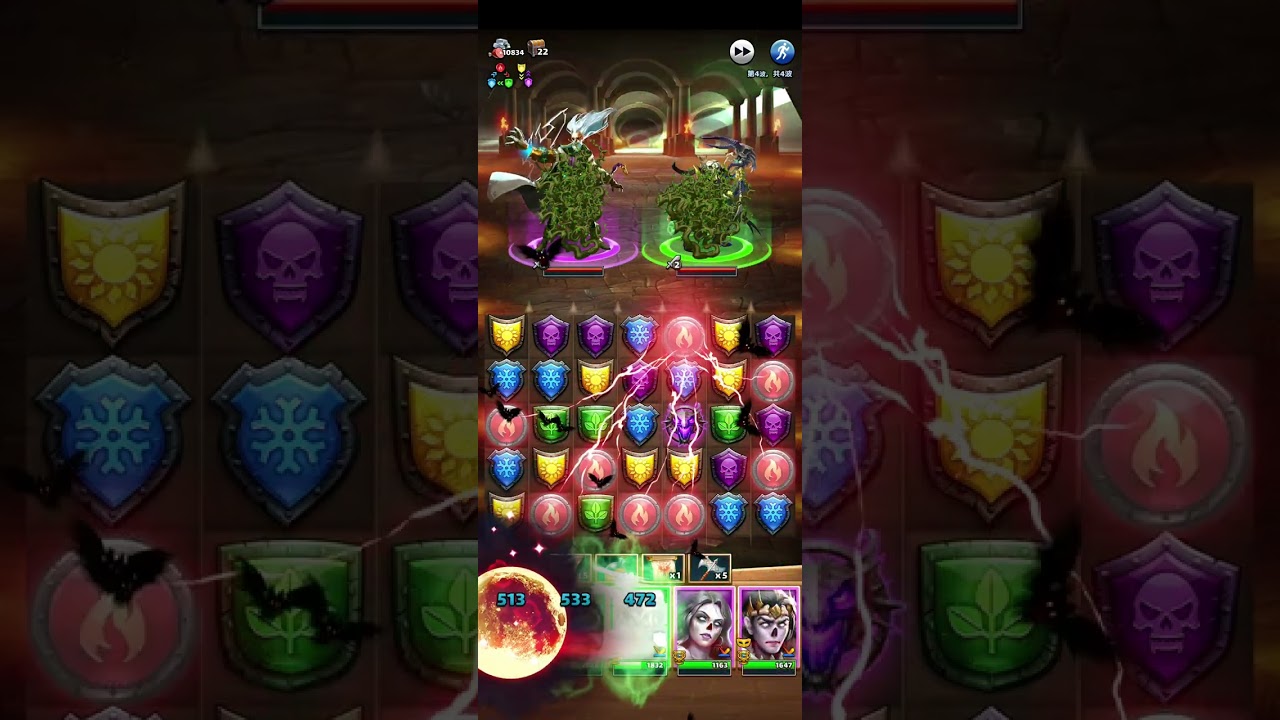
The Trial of Shadows in Myths of Moonrise represents a significant skill check for players, requiring more than just high-level units to overcome. To clear the medium-difficulty encounter, you must treat the match-three board as a tactical weapon rather than a simple puzzle. Success relies on your ability to manipulate the board to charge your most critical hero abilities while timing their deployment to counter the boss's specific attack patterns. This guide provides the strategic framework needed to dismantle the boss's defenses, keep your squad healthy, and secure your rewards.
Mastering Hero Ability Timing and Cooldowns
In the Trial of Shadows, firing your abilities the moment they charge is often a tactical error. Bosses in this mode frequently possess "enrage" thresholds or high-damage phases triggered by their health percentage.
- The Burst Window Strategy: Hold your offensive skills until you have a clear path to deal massive, concentrated damage. By timing your strikes to coincide with board combos, you can push a boss through a "danger phase" (where they deal increased damage) in a single turn, effectively skipping their most lethal attack patterns.
- Staggered Utility: Avoid the common mistake of firing all healing or shielding abilities at once. If your squad has multiple supports, rotate their skills to ensure you have a constant defensive buff active. This prevents the boss from landing a "killing blow" during a period where your heroes are vulnerable and waiting for skill recharges.
- Interrupting Attacks: Always monitor the boss’s action counter. Many boss encounters allow you to interrupt or mitigate incoming spikes by timing your crowd-control abilities just before they act.
Optimizing Board Control and Tile Manipulation
The board is your primary resource for energy generation. If you match tiles randomly, you are leaving your hero energy gains to chance. Expert play requires a focus on "color-focused" matching.
- Prioritize Elemental Advantages: Identify which heroes in your squad are the primary damage dealers and focus your matches on their specific colors. This ensures their special skills are ready significantly faster than your secondary utility heroes.
- Creating High-Impact Tiles: Focus on creating four-tile (Cross/Bomb) or five-tile (Diamond/Color-matching) combos. In the Trial of Shadows, these are not just for damage; they are essential for clearing board clutter. If the board is stagnant or lacks useful matches, use these special tiles to force a board reset, which can create sudden, massive combo opportunities.
- Vertical vs. Horizontal Thinking: When playing Myths of Moonrise, prioritize matches in the lower half of the board. Clearing bottom-row tiles causes more tiles to shift, increasing the probability of "accidental" cascades and extra combos that generate free energy for your heroes.
Squad Survivability and Defensive Mechanics
If your team is consistently falling before the boss hits 50% health, your problem is likely a lack of sustained mitigation. You need to transition from a purely offensive mindset to a "sustain-first" strategy.
- Telegraph Reading: Observe the boss's animations and action indicators. When a heavy attack is telegraphed, your priority shifts from dealing damage to ensuring your health pool is topped off or your defense buffs are active. If you lack the healing to survive, use your turn to match tiles that grant defensive buffs rather than offensive ones.
- Composition Adjustments: If a specific boss is consistently overwhelming your front line, swap out a secondary damage dealer for a utility hero. In Myths of Moonrise, a hero with a damage-reduction skill or a cleansing effect (to remove debuffs) is often more valuable than a hero who deals 10% more raw damage but dies in two hits.
- The Health Threshold Rule: Never let your heroes drop below 30% health if the boss has an area-of-effect (AoE) attack ready. If your team is fragile, consider using "Health Items" or defensive abilities preemptively rather than waiting for your heroes to reach critical health.
Strategic Trade-offs: Speed vs. Precision
There is a common misconception that faster matching leads to better results. In the Trial of Shadows, speed can lead to sloppy moves that cost you the fight.
- Deliberate Pace: Take your time to survey the board for the most efficient move. A move that creates a 3-match is fine, but a move that sets up a 5-match or aligns a special tile is superior. Ask yourself: "Does this move help me reach a skill threshold, or is it just wasting a turn?"
- Resource Management: If you fail the medium trial, do not immediately attempt it again with the same strategy. Analyze where your team failed. Did you run out of health? Did your abilities fail to charge in time? Use the rewards from lower-level dailies to upgrade your core team's level. The Trial of Shadows is a performance gate; your gear and hero levels are the floor, but your strategy is the ceiling.
- Energy Efficiency: Keep track of how much energy your heroes need. If a hero is at 90% energy, do not waste a long combo of their color; save that combo for after they have fired their skill to start the next charge cycle immediately.
Common Mistakes to Avoid
Even experienced players fall into traps that make the Trial of Shadows unnecessarily difficult. By avoiding these pitfalls, you can significantly increase your win rate:
- Ignoring the Boss’s Element: Always check the boss’s elemental typing before entering. Bringing a team weak to the boss's element will result in your heroes taking significantly more damage.
- Over-relying on Auto-Battle: While Myths of Moonrise has automation, the AI does not hold skills for the right moment. Manual control is mandatory for the Trial of Shadows, especially when juggling cooldowns or waiting for the right "burst window."
- Wasting Special Tiles: Do not detonate special tiles (like bombs) immediately if they are not hitting the boss or helping you clear a path to charge a key ability. Save them for when you need a board reset.
- Neglecting Synergy: Ensure your hero skills complement each other. For example, a hero that applies an "Armor Break" debuff should always be used just before a high-damage, single-target skill hero to maximize your damage output.
By mastering these elements—board manipulation, skill timing, and proactive health management—you will find the Trial of Shadows becomes a consistent source of progression in Myths of Moonrise. Focus on the mechanics, respect the boss’s attack cycles, and always play with the next three turns in mind.

Free Myths of Moonrise Codes
Current active codes and how to redeem them.

Michael Smith
Michael covers live-service games, events, reward systems, and efficient daily routines, turning frequent updates into clear actions for players.
COMMUNITY
Player Comments
60 players commented on this guide.
This guide answered the exact question I had.
The explanation is clear, especially for beginners.
Can you add more details about heroes in a future update?
The tips are practical and easy to follow.