
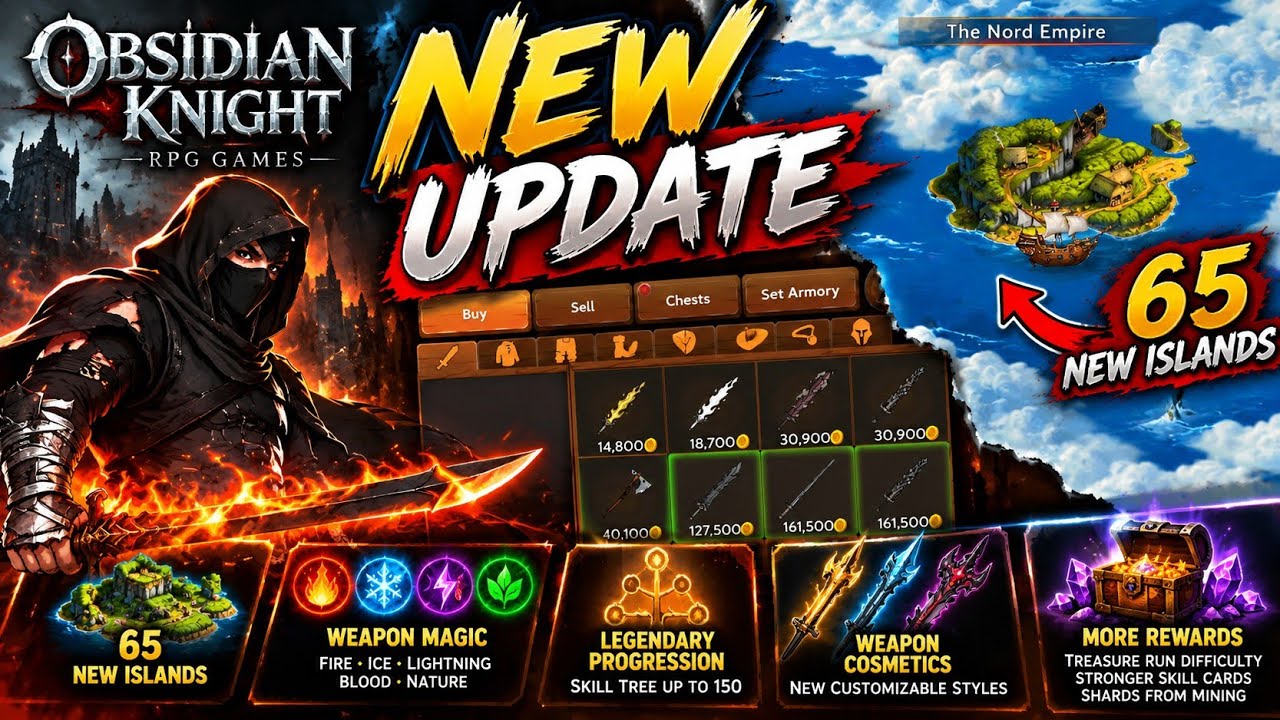
To progress through the 65 new islands in Obsidian Knight: Roguelike RPG, equip your primary weapon with area-of-effect (AoE) Weapon Magic to bypass heavy physical armor, funnel dense mob waves into map chokepoints, and prioritize offensive weapon upgrades over defensive armor.
How to Progress Through the 65 New Islands
The 65 new islands form a linear progression ladder featuring multi-wave skirmishes that culminate in an island boss. Enemies gain substantial health, higher movement speeds, and elite affixes as you climb.
Follow these pacing rules to avoid stalling:
- Benchmark your wave clear speed: If a standard mob wave takes longer than 15 to 20 seconds to eliminate, stop pushing forward. Your damage output is trailing behind the zone's health scaling.
- Watch for elite monster traits: High-tier islands introduce elites with projectile reflection, shields, and life drain. Identify these visual modifiers before committing heavy bursts to prevent lethal counter-damage.
- Use terrain bottlenecks: Island layouts contain narrow bridges and cliff edges. Back up to pull advancing swarms through these narrow corridors to maximize your AoE coverage and prevent enemies from flanking you.
- Step back when hitting boss walls: If an island boss defeats you, do not spend rare consumables or revives on marginal attempts. Drop back two to three islands and farm fast, consistent stages for gold and enhancement catalysts.
Matching Weapon Magic to Your Weapon Type
Weapon Magic adds castable spells or proc-based elemental effects directly to your main weapon, delivering spell damage that bypasses conventional enemy physical armor. Match your magic affixes to your weapon's attack speed to get the most value out of your loadout:
- Fast weapons (daggers, one-handed blades): Use hit-count magic procs. Rapid attack speeds trigger elemental procs frequently, providing consistent damage output against swarms.
- Heavy weapons (two-handed greatswords, hammers): Use damage-multiplying magic spells. These abilities scale off high base damage numbers, transforming slow swings into broad, high-damage strikes.
- Affix priority: Favor area effects such as chain lightning, burning patches, or frost explosions over single-target affixes. Single-target procs clear dense mob waves too slowly on higher-tier islands.
Combat Tactics Across Island Waves
Mob density rises significantly after the first ten islands, making basic kiting ineffective in open areas. Use the following tactical sequence to manage spawns:
| Combat Phase | Primary Threat | Tactical Priority | Recommended Action |
|---|---|---|---|
| Initial Wave Spawn | High-speed swarmers | Crowd control | Funnel mobs through bridges or bottlenecks; trigger AoE Weapon Magic immediately. |
| Mid-Wave Elite Reinforcements | Shielded or buffing champions | Target separation | Pull fodder away from elites, then activate burst magic spells to pierce shields. |
| Island Boss Encounter | High burst damage and floor hazards | Hazard avoidance | Circle-strafe boss attack animations; deal steady chipping damage rather than trading hits. |
Save your primary Weapon Magic cooldowns when finishing off low-health stragglers at the end of a wave. Hold major spell triggers until the next wave portal opens so you can wipe out the frontline before ranged enemies position themselves.
Resource Allocation and Upgrade Priorities
Island progression requires managing higher enhancement costs for gear and magic sockets. Allocate your materials strictly in this order:
- Weapon and Magic sockets: Invest the bulk of your enhancement currency into your primary weapon and its Weapon Magic ranks. Defensive stats on chest armor and shields only postpone defeat if your damage cannot eliminate swarms quickly.
- Armor and shields: Direct leftover materials to defensive equipment only after your clear speeds meet the 15-to-20-second per wave standard on your current island tier.
Free Obsidian Knight: Roguelike RPG Codes
Current active codes and how to redeem them.

James Brown
James focuses on Android gaming on PC, emulator setup, controls, performance tuning, and practical troubleshooting for longer play sessions.
COMMUNITY
Player Comments
138 players commented on this guide.
This helped me understand strategy much better.
This saved me time in the early game.
The tips are practical and easy to follow.
I tried this today and it worked better than my old setup.