
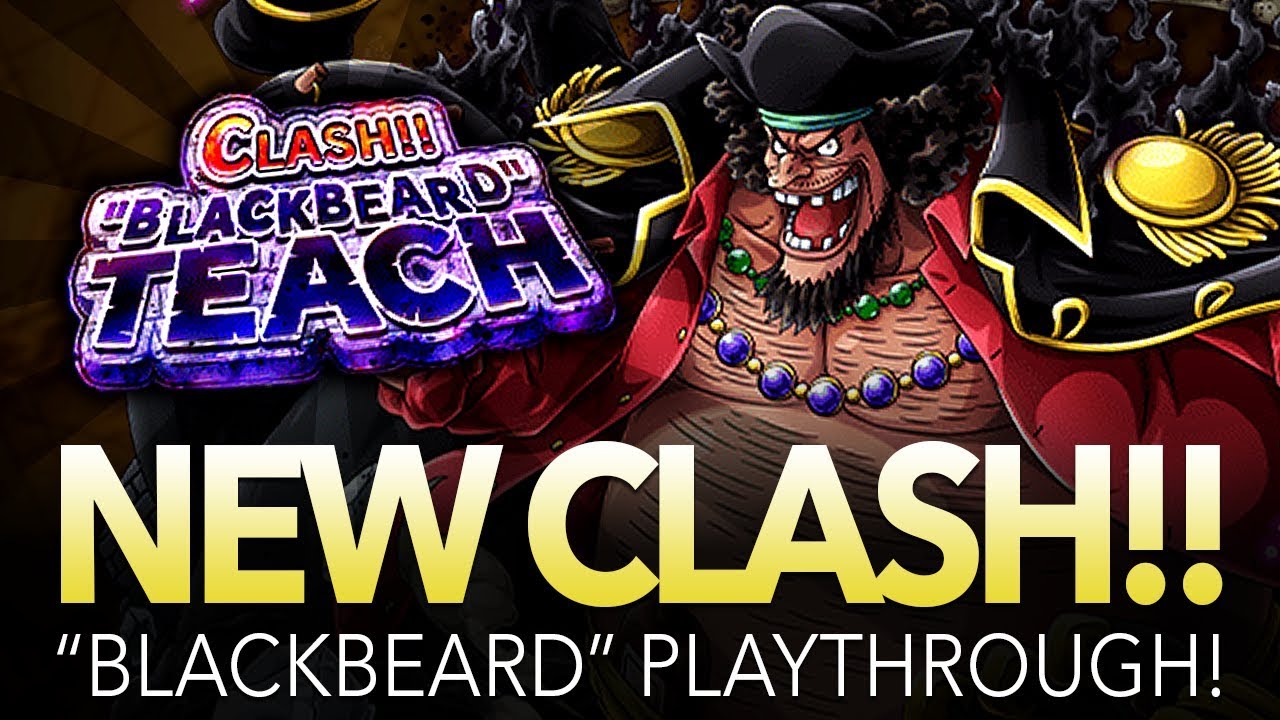
The 60-Stamina Blackbeard Clash in ONE PIECE TREASURE CRUISE-RPG remains one of the most iconic "gear check" encounters for veteran and intermediate players alike. Unlike standard story stages, Blackbeard acts as a punishing gatekeeper that requires precise turn management, heavy burst damage, and a deep understanding of crew synergy. To emerge victorious, you must transition from a casual playstyle to a calculated, stage-by-stage execution strategy that prioritizes PSY-type efficiency and defensive utility.
Understanding the Boss Mechanics
Blackbeard is not merely a high-HP sponge; he is a tactical encounter that rewards players who respect his attack patterns. Upon entering the final stage, Blackbeard will immediately apply debuffs or preemptive strikes that can cripple unprepared teams. His primary threat is his massive damage output, which often scales as his health drops.
The fight is divided into two distinct phases: the "Stall" and the "Burst."
- The Stall Phase: The preceding stages are designed to drain your health and force you into mistakes. You must identify which mobs have low turn counts and prioritize them to avoid taking unnecessary damage. The goal is to reach the boss with all special abilities fully charged.
- The Burst Phase: Once you trigger the boss fight, you have a limited window of turns before Blackbeard executes his most devastating attacks. If you cannot defeat him within this threshold, his counter-attacks or enrage mechanics will almost certainly result in a crew wipe.
Building a Burst-Oriented PSY Crew
Because Blackbeard is a DEX-type character, building a team centered on PSY units is the most effective way to gain a natural type-advantage multiplier. However, type advantage alone is rarely enough for the 60-Stamina variant. You need a multiplicative damage structure.
Your crew should focus on the "Big Three" of damage boosting:
- ATK Boosters: Units that increase your team's base attack (e.g., x2 or higher).
- Orb Boosters: Units that amplify the effectiveness of matching orbs.
- Condition/Affinity Boosters: Units that provide color affinity or conditional damage (e.g., damage against delayed enemies or poisoned enemies).
Recommended Team Archetype:
- Captain: A PSY-lead that provides a flat ATK boost and HP recovery.
- Utility/Sub: A damage-nullifier or damage-reducer to survive Blackbeard’s initial onslaught.
- Orb Manipulator: A unit that guarantees matching PSY orbs for your hard hitters.
- Friend Captain: A high-tier booster that complements your lead (e.g., another PSY captain with a massive damage special).
Managing Special Ability Timing
The most common mistake in ONE PIECE TREASURE CRUISE-RPG is "panic firing" specials. In the Blackbeard clash, every special must be part of a single, cohesive combo. If you use your orb booster on turn one and your ATK booster on turn two, you are effectively wasting the potential of both.
The Golden Rule of Bursting: All multipliers must be active on the same turn. When you reach Blackbeard, ensure your "Orb Manipulator" goes first to set up your board. Follow this with your utility buffs (like damage mitigation or conditional damage), and save your primary ATK and Orb boosters for the very last step. By stacking these multipliers, you turn a standard attack into a massive burst that can delete millions of HP in a single turn.
Mitigating Boss Damage and Debuffs
Blackbeard is notorious for his ability to "Lock" or "Despair" captains, which effectively kills your damage output and health recovery. If your team does not have a reliable way to clear these debuffs, your run will likely end in failure regardless of your damage output.
- Bind/Despair Recovery: Always include at least one unit capable of reducing these debuffs. Many players overlook this and find themselves unable to use their specials because their captains are bound.
- Damage Nullification: If you cannot one-shot Blackbeard, you need a "Damage Nullification" or "Damage Reduction" special. These are critical for surviving his post-threshold attacks. If you see his attack timer drop to one, and you haven't secured the kill, trigger your defensive special immediately to buy yourself the extra turn needed for the finishing blow.
Common Mistakes and How to Avoid Them
Even with a strong team, small tactical errors can lead to defeat. Avoid these common pitfalls to improve your clear consistency:
- Ignoring the Enrage Timer: Many players focus only on damage and forget that Blackbeard will often increase his damage output after falling below 50% or 20% health. Always calculate if your burst is enough to finish him from his current threshold.
- Poor Orb Luck: Never rely on "RNG" (Random Number Generation) to give you matching orbs. If your team depends on matching orbs for a win, you must bring a unit that manually changes orbs to your desired type.
- Over-Stalling: Stalling is good, but waiting too long can lead to taking unnecessary chip damage from mobs. Use your specials early in the side stages if it prevents you from taking a hit that would put your health below your Captain's ability threshold.
Final Decision: Is Your Team Ready?
Before attempting the 60-Stamina difficulty, perform a "dry run" on the 30 or 40-stamina versions. If you are struggling to maintain your health or if your specials are not ready by the final stage, your team’s cooldowns are too high or your stalling strategy is flawed.
Focus on maxing out the special level of your utility units first. In ONE PIECE TREASURE CRUISE-RPG, a team with max-level specials is infinitely more powerful than a team with high-level stats but long cooldowns. Once you have the ability to chain your buffs consistently, the 60-Stamina Blackbeard Clash shifts from an impossible challenge to a consistent farming opportunity. Always keep an eye on your team's HP thresholds and ensure your defensive specials are ready to fire the moment you enter the boss chamber.
Free ONE PIECE TREASURE CRUISE-RPG Codes
Current active codes and how to redeem them.

Emily Johnson
Emily writes practical mobile strategy guides with a focus on resource planning, base progression, and the early decisions that shape a long-term account.
COMMUNITY
Player Comments
152 players commented on this guide.
Good guide for ONE PIECE TREASURE CRUISE-RPG players. The strategy part was useful.
The tips are practical and easy to follow.
The explanation is clear, especially for beginners.
Can you add more details about strategy in a future update?