
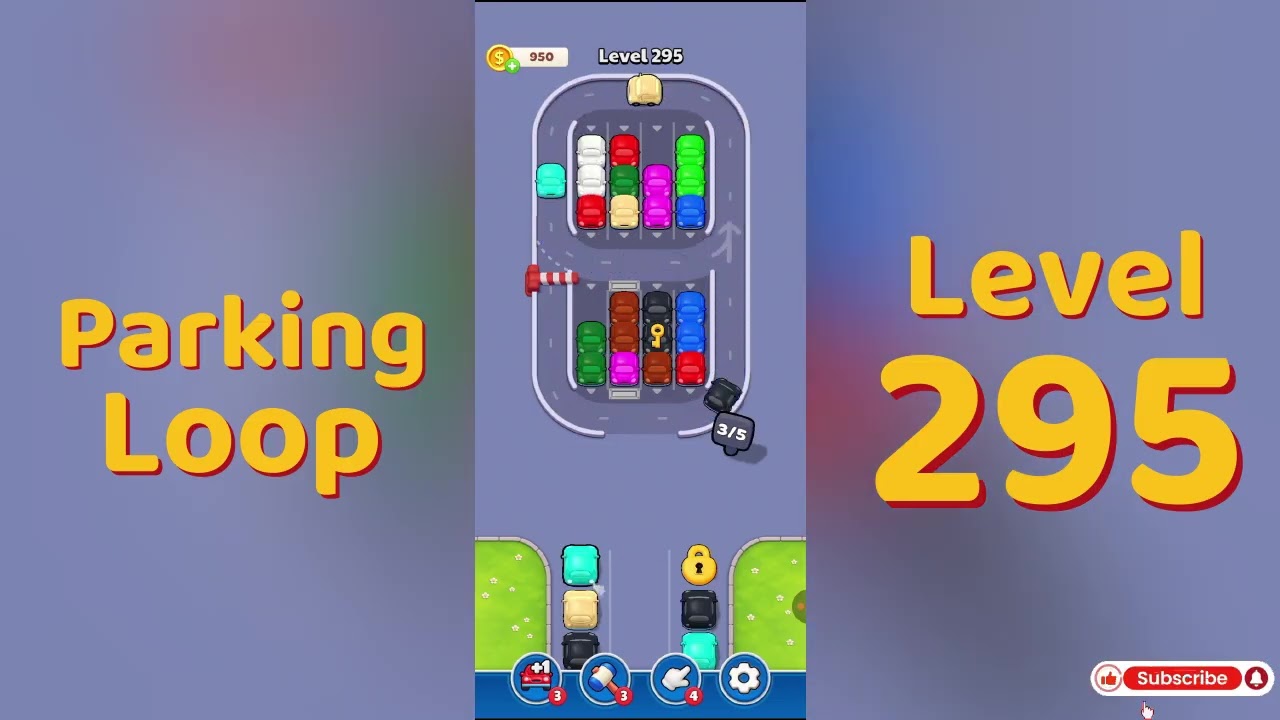
To beat Level 295 in Parking Loop, clear the outer perimeter vehicles first to open the circulation lane, then release lead tandem cars to expose the trapped interior slots. Because vehicles move only in a straight line along their forward heading and collide instantly upon contact, you must peel away outer layers before attempting to move deeply nested center cars.
Vehicle Clearance Order by Phase
Level 295 packs vehicles into double-parked, bumper-to-bumper bays feeding into a single perimeter loop. Releasing an interior car prematurely causes a collision with the blocking vehicle directly in front of it. Work from the outside inward using this sequence:
| Phase | Target Stalls | Vehicle Type | Primary Objective |
|---|---|---|---|
| Phase 1: Outer Flanks | Direct perimeter bays | Edge sedans and compacts | Open immediate entry lanes into the loop track. |
| Phase 2: Lead Tandem Units | Front bays of center rows | Intermediate lead vehicles | Vacate forward slots to expose trapped rear cars. |
| Phase 3: Corner Anchors | Tight corner stalls | Angled utility or longer cars | Eliminate sharp turn bottlenecks near merge points. |
| Phase 4: Trapped Rear Units | Deep interior tandem slots | Boxed-in secondary vehicles | Drive out through newly cleared frontline corridors. |
| Phase 5: Center Evacuation | Remaining middle bays | Lingering lot vehicles | Drain final units once loop congestion clears. |
In Phase 1, tap only vehicles whose straight travel paths into the loop track are completely unobstructed. Once those vehicles merge and exit off-screen, the lead cars in secondary rows gain open runways. Clearing those lead vehicles in Phase 2 unblocks the rear tandem stalls in Phase 4.
Loop Merge Timing and Startup Delay
Vehicles do not accelerate instantly in Parking Loop. When tapped, a car pauses briefly as it rolls from a stop into the moving lane. Launching a car as circulating traffic passes the stall entrance often leads to a side-impact collision.
Use these rules to time clean merges:
- Wait for the rear bumper: Launch your vehicle only after the rear bumper of a circulating car clears your stall opening. This timing gives you the widest possible gap before the next circulating car approaches.
- Account for vehicle length: Station wagons and longer utility vehicles take more time to fully enter the loop track. Reserve wider gaps for long vehicles than you would for compact sedans.
- Pace consecutive taps: Avoid flooding the outer lane. Limit active circulating traffic to two or three cars at a time so following distances remain manageable.
- Allow off-ramp drainage: Let circulating traffic clear off-screen before releasing subsequent batches from center bays.
Collision Traps to Avoid
Two common failure points cause restarts on Level 295:
- Simultaneous merge collisions: Tapping two cars on opposite sides of the lot at the same time often causes them to meet at a shared loop corner. Tap one vehicle at a time and verify entry before committing the next move.
- Clipping stationary bumpers: Ensure the entire path is visually clear before dispatching a vehicle. Even if a lane looks open, an adjacent vehicle's corner bumper can clip the exiting car's path, triggering an immediate crash.
Free Parking Loop Codes
Current active codes and how to redeem them.

Michael Smith
Michael covers live-service games, events, reward systems, and efficient daily routines, turning frequent updates into clear actions for players.
COMMUNITY
Player Comments
85 players commented on this guide.
I wish I had read this before upgrading the wrong thing.
The tips are practical and easy to follow.
This helped me understand strategy much better.
Good guide for Parking Loop players. The strategy part was useful.