
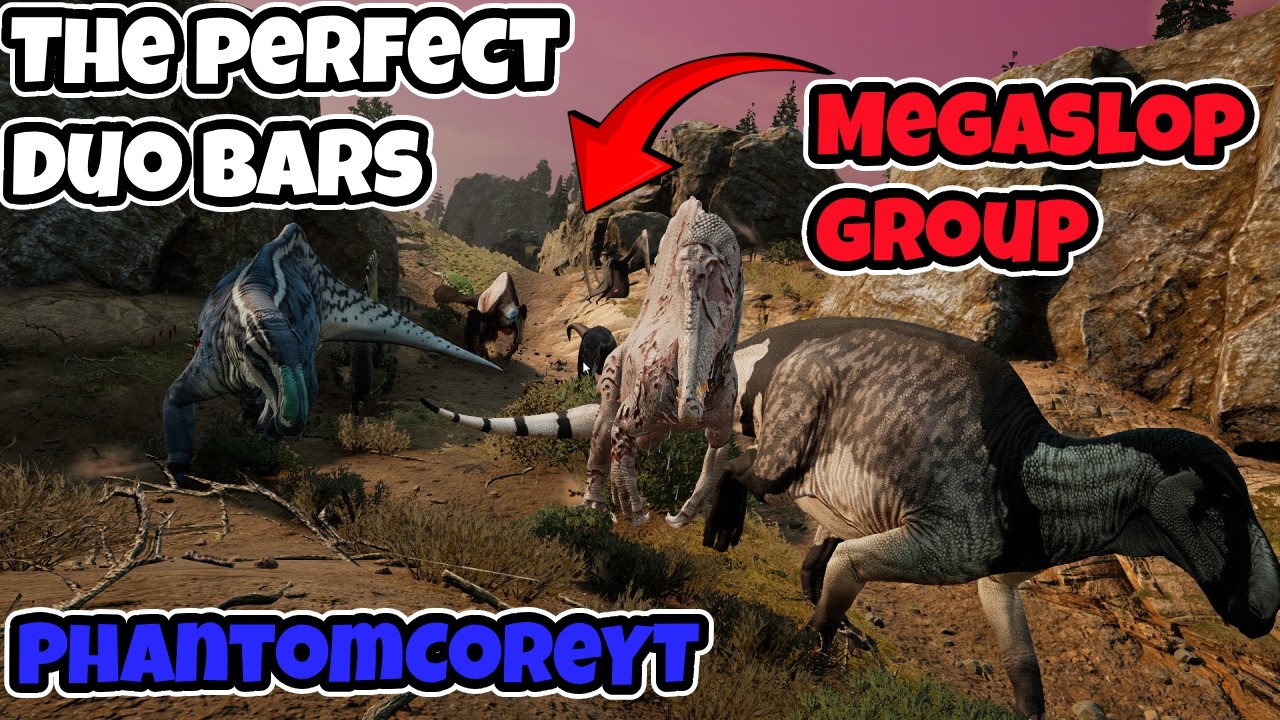
To run an effective Barsboldia duo on Path of Titans official servers, maintain a tight V-shaped formation with your tails angled outward, alternate Tail Slams to cover recovery animations, and refuse to chase baiting carnivores. Two adult Barsboldias take up five group slots each, completely filling the standard 10-slot official server group cap. This setup concentrates immense combat weight into a fortified frontline, but it eliminates room for external scouts or healers, making self-sufficiency and mutual protection essential.
Core Ability Loadouts and Roles
Barsboldia relies on high combat weight and rear-facing burst damage to punish aggressive predators. Because friendly fire is active on official servers, both players must equip complementary offensive and utility abilities that protect each other without causing accidental team damage.
| Ability | Primary Role | Stamina Cost | Duo Application |
|---|---|---|---|
| Tail Slam | Heavy burst damage | High | Stagger usage between partners to punish enemy attack lunges. |
| Tail Attack | Rapid disruption and defense | Low | Clear agile pests and maintain pressure without draining stamina. |
| Stomp / Headbutt | Frontal defense | Moderate | Deter carnivores attempting to head-trade or slip between heads. |
Equip Tail Slam as your primary deterrent against apexes like Tyrannosaurus rex and larger sub-apexes. Pair it with the standard Tail Attack so you have an immediate, low-stamina strike against agile harassers like Megalania. Keep Headbutt or Stomp on your front bar strictly to contest predators attempting to pincer your forward hitbox, but avoid face-trading whenever possible.
Defensive Formations and Terrain Anchors
Fighting side by side invites catastrophic friendly fire from wide Tail Slam swings. Instead, position both dinosaurs in an interlocking V-formation:
- Angle both heads inward facing each other and point tails outward to establish an overlapping 220-degree defensive sweep.
- When an enemy carnivore circles behind one partner to dodge a swing, they rotate directly into the strike zone of the second partner.
- Keeping heads close together maintains line-of-sight between teammates, preventing accidental blind hits into each other's flanks.
When fighting in open environments such as Grand Plains or near Impact Crater, move toward defensive terrain before taking heavy damage:
- Cliff faces and rock outcrops: Back your flanks against solid barriers to remove rear-flank angles and force predators across your tail arcs.
- Deep water edges: Waterlines block circling movement from terrestrial carnivores while keeping your tail reach unobstructed.
- Narrow ravines: Funneling attackers into narrow terrain strips pack-hunting carnivores of their agility and forces them into concentrated heavy strikes.
Tail Slam Timing and Cooldown Coverage
A solo Barsboldia is vulnerable after casting Tail Slam because agile predators can bait the wind-up, step out of range, and rush inward during the recovery frames. A coordinated duo eliminates this vulnerability by staggering attacks:
- The Bait Swing: Partner A commits to a Tail Slam while Partner B holds position with Tail Attack ready.
- The Counter-Strike: If the predator avoids Partner A's slam and lunges in to punish the recovery window, Partner B unleashes a readied Tail Slam into the incoming attacker.
- Reset and Repeat: Partner A recovers and prepares basic Tail Attacks while Partner B resets their heavy attack.
Alternating heavy hits prevents safe entry windows for attackers and keeps stamina expenditure manageable over protracted engagements.
Stamina Management and Chasing Pitfalls
Barsboldia has high combat weight, which causes sprinting stamina to deplete quickly. Its trot speed cannot catch fleeing sub-apex carnivores such as Daspletosaurus or Suchomimus.
Never sprint after wounded carnivores that retreat from your formation. Carnivore packs frequently sacrifice health on a bait runner to lure one Barsboldia away from safety. Once separated, the sprinting Barsboldia quickly exhausts its stamina bar, losing turn speed and the ability to execute Tail Slams. Maintain your position, let fleeing enemies leave, and force opponents to burn their own stamina pushing your defensive perimeter.
Bleed Recovery and Defensive Rest Cycles
Pack predators like Ceratosaurus and Concavenator rely on bleed stacks to deplete Barsboldia's large health pool over time. Moving while heavily afflicted accelerates bleed damage. When one partner sustains critical damage or high bleed, initiate a defensive rest rotation:
- Draw Attention: The healthy partner steps slightly forward, utilizing vocal calls and positioning to pull the enemy pack's focus.
- Sit and Clear: The injured partner maneuvers directly behind the shielding teammate and sits down. Sitting substantially increases bleed recovery speed and initiates health regeneration.
- Screen Harassers: The standing partner maintains continuous Tail Attacks across the resting partner's perimeter, denying small carnivores the ability to sprint in and interrupt the rest.
- Swap Roles: Once the resting Barsboldia clears all status ailments and restores safe health levels, they stand and prepare to cover the defensive partner if needed.
Free Path of Titans Codes
Current active codes and how to redeem them.

Sarah Williams
Sarah specializes in RPG and collection games, explaining team building, character growth, and beginner-friendly ways to avoid expensive early mistakes.
COMMUNITY
Player Comments
160 players commented on this guide.
The explanation is clear, especially for beginners.
Can you add more details about strategy in a future update?
I wish I had read this before upgrading the wrong thing.
This saved me time in the early game.