
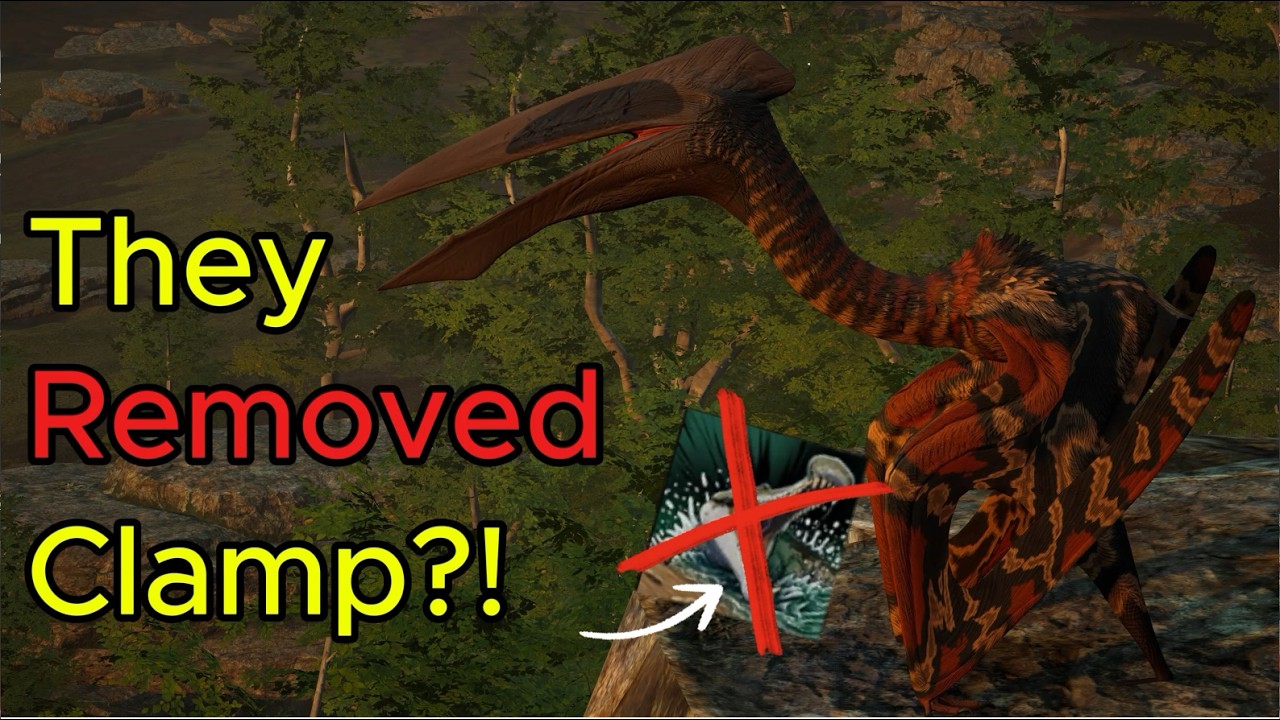
With the Clamp ability temporarily removed by Alderon Games to resolve physics and carrying glitches, Hatzegopteryx players in Path of Titans cannot grab, carry, or drop targets. To stay competitive, you must reconfigure your head slot for direct damage, trade hits using your standing beak reach, and adapt your flight passes into quick hit-and-run strikes.
Head Slot Replacements: Peck vs. Flail
Disabling Clamp frees your head slot for direct offensive abilities. Because you cannot incapacitate opponents with a hold, your damage output depends on tracking targets precisely and managing stamina during exchanges.
| Ability Choice | Primary Function | Stamina Demand | Ideal Target Matchup |
|---|---|---|---|
| Peck | Rapid frontal poke | Very Low | Mid-tier carnivores and sustained trades |
| Flail | Wide-arc cleave | Moderate | Fast flankers and agile light carnivores |
| Peck Barrage | Multi-hit burst | High | Stationary, cornered, or heavily slowed targets |
- Peck serves as the most dependable baseline attack. Its low stamina cost leaves your reserves intact for emergency takeoffs, making it the safest choice for drawn-out ground engagements.
- Flail compensates for turning limitations by hitting targets along a broader frontal arc. Use it when fighting agile dinosaurs that attempt to circle beneath your wing joints.
- Peck Barrage delivers heavy burst damage but drains stamina rapidly. Reserve it for moments when an opponent is trapped against terrain or caught during an attack recovery frame.
Ground Combat and Spacing Tactics
Without Clamp, Hatzegopteryx must be played as a spacing-focused reach brawler on land. You can no longer pick up smaller threats to remove them from a fight, so you must use your towering height and beak range to strike while keeping opponents outside their biting distance.
- Walk instead of sprinting: Ground sprinting rapidly drains a Hatzegopteryx's stamina pool. Preserve your gauge so you always have enough energy to initiate flight when an engagement turns unfavorable.
- Zone with downward pecks: Keep your camera centered on approaching opponents and strike at maximum beak reach. If an enemy lunges and misses, hit them during their recovery animation and immediately take a step back.
- Anchor against terrain: Backing against steep rocks or cliffs prevents smaller predators from circling behind your turning radius, forcing them directly into your frontal strike zone.
Adjusting Flight and Dive-Bomb Passes
The removal of the clamp-and-drop tactic eliminates guaranteed fall damage against prey. Low-altitude flight must shift entirely to shallow hit-and-run strafing runs.
- Approach at shallow angles: Steep vertical dives bleed momentum and leave your large hitbox exposed near the ground. Approach from behind your target along a gentle downward slope.
- Deliver single-pass strikes: Line up your head attack, strike as you skim above the target, and immediately pitch upward into a climbing bank. Do not linger on the ground after an airborne attack.
- Reserve takeoff stamina: Never expend your entire stamina bar on offensive flight. Always retain enough energy to reach elevated terrain, such as rock pillars or high ridge crests, where grounded carnivores cannot follow while you rest.
Matchup Adjustments
Small and agile carnivores like Latenivenatrix and Deinonychus are significantly more dangerous without Clamp, as they no longer risk being carried aloft. Avoid fighting swarms in open plains; move immediately to defensive obstacles to limit their flank routes.
Mid-tier carnivores, including Ceratosaurus, Concavenator, and Metriacanthosaurus, will challenge grounded Hatzegopteryx more aggressively because they do not have to respect grab disruption. If you cannot establish a health advantage through aerial hit-and-run passes, disengage to a high perch rather than committing to an extended ground duel against high-damage bleeders or bone breakers.
Free Path of Titans Codes
Current active codes and how to redeem them.

Emily Johnson
Emily writes practical mobile strategy guides with a focus on resource planning, base progression, and the early decisions that shape a long-term account.
COMMUNITY
Player Comments
131 players commented on this guide.
This guide answered the exact question I had.
Can you add more details about strategy in a future update?
This helped me understand strategy much better.
The explanation is clear, especially for beginners.