
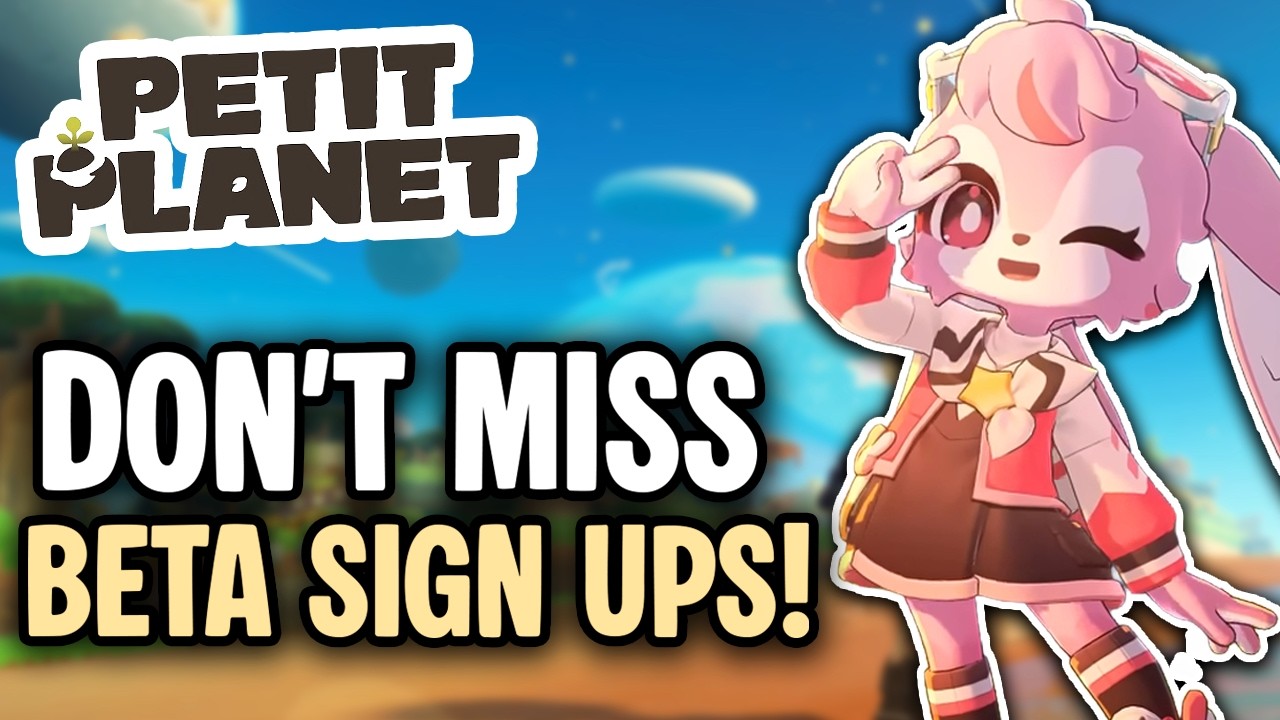
Securing access to the Petit Planet Stardrift beta requires a strategic approach centered on real-time monitoring of developer communications and proactive registration. Because these testing windows are limited-time events, players must be prepared to act immediately when sign-up forms go live. By following official social media channels, analyzing trailer content for mechanical clues, and understanding the specific goals of the Stardrift phase, you can ensure your participation is both successful and impactful.
How to Secure Your Spot in the Stardrift Beta
The most reliable method to gain entry into a Petit Planet beta test is through the developer’s primary social media hubs. These platforms serve as the single source of truth for registration links, server uptime, and eligibility requirements.
- Follow Official Channels: Ensure you are following the verified Petit Planet X (formerly Twitter) account, Discord server, or official website blog.
- Enable Notifications: Because beta slots often fill up on a first-come, first-served basis, turn on "Post Notifications" for official accounts to get an immediate alert the moment a sign-up link drops.
- Complete Registration Early: Do not wait to sign up. Forms often require basic hardware specifications or account details; have this information ready to avoid delays that could cost you a spot.
- Verify Your Access: Once you receive a confirmation email or Discord role, follow the specific instructions regarding client installation. Avoid third-party "beta key" sites, as these are often phishing attempts.
Decoding the Stardrift Test Scope
The Stardrift phase is not a demo; it is a technical stress test. Petit Planet developers use these sessions to evaluate specific systems, such as terrain navigation physics, movement optimization, and server load balancing.
When you log in, understand that your experience may deviate from the "finished" game. Developers frequently strip away non-essential content to focus player activity on the systems under scrutiny. If the Stardrift test introduces a new traversal mechanic, you may find that progression in other areas is artificially accelerated or locked entirely. This is by design, as the goal is to get players into the new systems as quickly as possible to generate telemetry data.
Leveraging Trailer Insights for Gameplay Preparation
Every Petit Planet trailer released alongside a beta announcement is a roadmap for what you should be testing. Before you dive into the game, analyze the footage for:
- Environmental Interaction: Does the character interact with terrain in a new way? If the trailer shows a new climbing or gliding mechanic, that is likely the primary focus of the test.
- UI/HUD Changes: Look for new icons or resource bars. If you see them in the trailer, they will be part of the feedback loop you are expected to navigate.
- Aesthetic Shifts: New biomes often come with unique physics variables. If the trailer highlights a snowy region, expect "slippery" movement mechanics that the developers need you to break or refine.
By identifying these elements early, you can spend your limited testing time stress-testing these specific systems rather than wandering aimlessly.
Managing Expectations for Beta Instability
Participating in the Petit Planet Stardrift beta means accepting that the build is subject to crashes, "soft-locks," and performance issues. These are not signs of a bad game; they are the intended output of a beta environment.
- Performance Drops: Expect frame rate fluctuations. The game is likely running in a debug mode that prioritizes data logging over graphical optimization.
- Maintenance Windows: Developers may push patches in the middle of a play session to fix game-breaking bugs. Always keep an eye on the official Discord announcements for server status updates.
- Feature Gaps: Do not be surprised if the "full" game experience feels limited. You are playing a slice of the game, not the final product.
Strategic Contribution: How to Give Actionable Feedback
The true value of a Petit Planet tester is not just playing the game, but identifying why something feels "off." When you encounter a bug or a frustrating movement mechanic, do not simply report that it is "broken." Use the following framework to provide feedback that actually helps the developers:
- The "Repro" Steps: List exactly what you were doing when the issue occurred. (e.g., "I jumped off a ledge while holding the Interact button, and the character became stuck in a falling animation.")
- The Expected vs. Actual Result: Explain what you thought would happen versus what actually happened.
- The Context: Provide a screenshot or video if possible. Visual evidence of a terrain glitch is worth more than a dozen lines of text.
- The "Feel" Factor: If a mechanic feels sluggish or unresponsive, describe the sensation. Is it the input latency, the animation length, or a lack of visual feedback?
Common Mistakes to Avoid During the Beta
New testers often fall into traps that hinder their effectiveness and enjoyment. Avoid these common pitfalls to maximize your time in Petit Planet:
- Ignoring the "Known Issues" List: Most beta builds include a document detailing bugs the developers are already aware of. Reporting these "known issues" creates unnecessary noise and makes it harder for the team to find new, unique bugs.
- Focusing Only on Visuals: While the graphics are important, beta testing is about the systems. If you find a way to break the movement physics, that is a high-priority discovery that helps the team polish the core traversal experience.
- Hoarding Feedback: Don't wait until the end of the beta to report issues. The development cycle is fast; reporting a bug on the first day gives the team more time to iterate on a fix before the beta window closes.
Why Your Participation Matters
The Stardrift phase is the bridge between the conceptual stage and the polished final product of Petit Planet. By participating, you are essentially acting as a remote member of the development team. The data gathered during these tests—your movement paths, your failure points, and your feedback on the core loops—directly informs the balancing adjustments in the final release.
Approach the beta as a puzzle. You are not just a player; you are a researcher. By systematically exploring the terrain and challenging the limits of the game's movement systems, you play an active role in shaping the final version of the Petit Planet experience. Stay alert, follow the official channels, and keep your feedback precise to ensure you get the most out of every testing cycle.

Free Petit Planet Codes
Current active codes and how to redeem them.

Sarah Williams
Sarah specializes in RPG and collection games, explaining team building, character growth, and beginner-friendly ways to avoid expensive early mistakes.
COMMUNITY
Player Comments
45 players commented on this guide.
This helped me understand strategy much better.
I wish I had read this before upgrading the wrong thing.
This guide answered the exact question I had.
Nice guide. I am checking the other Petit Planet articles next.