
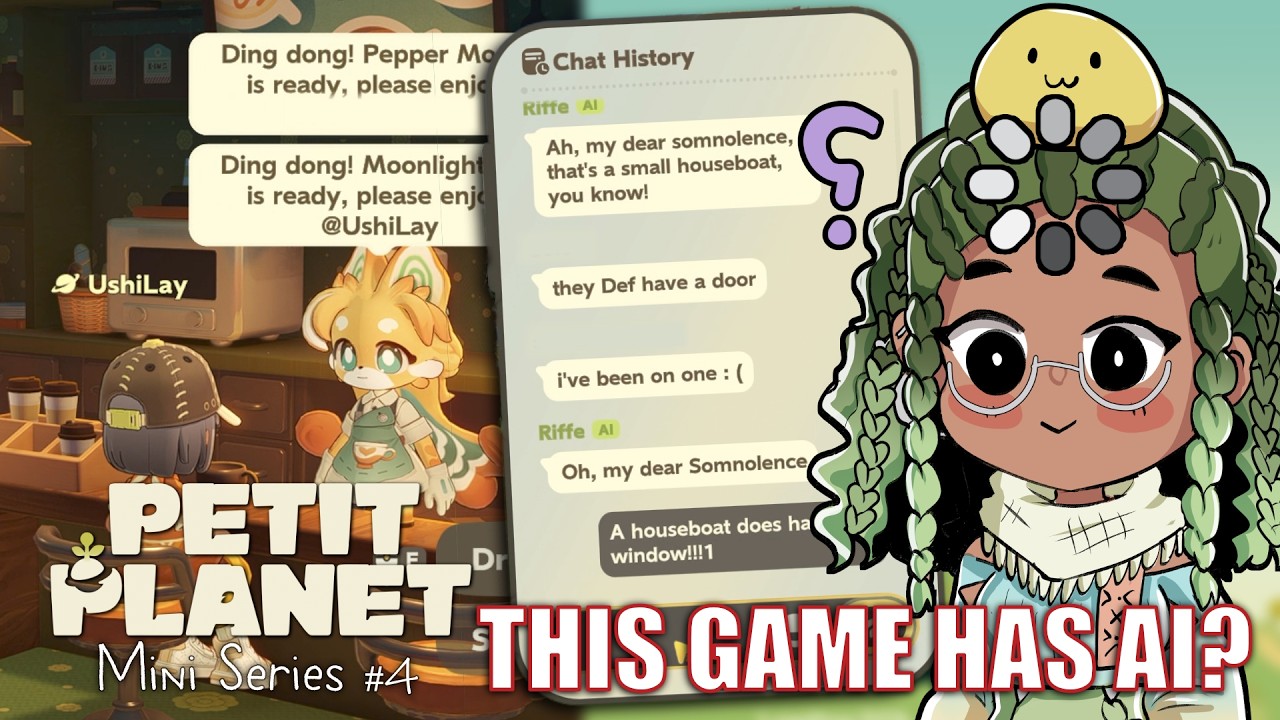
In Petit Planet, the NPCs are not merely static quest dispensers; they are reactive components of a living, breathing simulation. Because the game emphasizes environmental discovery and creative traversal, the AI governing NPC interaction is designed to prioritize world-building and context over direct, linear instruction. For players looking to maximize their efficiency during the beta, understanding how to read these AI patterns is essential.
By distinguishing between "ambient" flavor text and actual mechanical quest triggers, you can significantly reduce time spent in dialogue menus and focus on the creative exploration that defines the Petit Planet experience.
Understanding the Architecture of NPC Dialogue Loops
The primary challenge in Petit Planet is that NPCs operate on multi-layered dialogue loops. When you approach a character, their initial response is often determined by the current state of the world or your recent proximity to specific environmental objects.
NPCs generally follow a three-tier dialogue hierarchy:
- Contextual Greeting: Determined by your current inventory, recent activities, or time of day.
- Objective-Driven Script: The specific set of lines that lead to a quest update or resource discovery.
- Ambient Loop: A series of repetitive, atmospheric statements designed to simulate character personality.
To optimize your playtime, you must stop attempting to exhaust every dialogue option. Once an NPC begins repeating phrases about the "weather," "island history," or "local wildlife," you have reached the end of their functional script. Recognizing these "exit points" prevents you from becoming stuck in social loops that yield no mechanical progress.
Identifying Key Quest Triggers
In a game as expansive as Petit Planet, the AI often gates critical information behind specific "Trigger-Based Constraints." These are not always signaled by a traditional quest marker; instead, they require the player to demonstrate a specific behavior or possess a specific item.
To identify if an NPC has a hidden task for you, watch for these specific indicators:
- Inventory-Sensitive Prompts: If an NPC’s greeting changes when you equip a specific tool or carry a rare resource, they are likely waiting for you to demonstrate mastery of that item.
- Proximity and Posture: Some NPCs will shift their gaze toward interactive objects when you are nearby. If an NPC looks at a nearby workstation, it is a subtle hint that you should interact with that station to trigger the next progression step.
- Time-Gated Cycles: Certain NPCs are only "active" participants in the story during specific daylight or nighttime cycles. If an NPC seems unresponsive or offers only generic flavor text, try returning during a different time of day.
How to Manage Expectations for AI Responsiveness
Petit Planet utilizes an AI system that prioritizes social simulation. Unlike traditional RPGs where an NPC might provide a clear "Go here, do this" instruction, the AI in Petit Planet reacts to who you are and what you have done.
If you find yourself lost, do not expect the NPC to provide a direct navigation beacon. Instead, treat their feedback as a guide to the island’s current state. If an NPC complains about a lack of resources in a specific area, this is your cue that the game’s internal logic is directing you toward that region for exploration. By learning to interpret these "social hints," you move from being a passive player to an active participant in the island's ecosystem.
Strategies for Efficient Progression
To streamline your daily sessions, you should adopt a "filter-first" approach to all NPC interactions. Here are three expert strategies for managing your time:
1. The "Silence" Technique
If an NPC starts reciting lore or atmospheric dialogue, back out of the conversation immediately. In Petit Planet, dialogue is not a prerequisite for progression; your actions (gathering, building, navigating) are. If the dialogue isn't offering a specific choice that changes your quest log, it is purely cosmetic.
2. Track Your "Social Triggers"
Keep a small log of which NPCs respond to which activities. If you find that a specific NPC reacts positively when you build near them, use that character as a reliable source of "passive" quest triggers later in the game. The AI often tracks your history with them, meaning they will eventually offer more substantial requests as your "reputation" or interaction history grows.
3. Leverage Environmental Context
Always interact with the environment before initiating a conversation with a nearby NPC. If you have just completed a complex traversal challenge or gathered a rare material, the NPC’s dialogue is significantly more likely to include a quest update or a valuable hint. Completing tasks first changes the "contextual greeting" tier of the AI, often unlocking the next stage of your progression path automatically.
Common Mistakes to Avoid
Players new to the Petit Planet beta often fall into the trap of treating the AI like a static dialogue tree. Avoiding these errors will save you hours of redundant gameplay:
- Over-Communicating: Spending time in every available dialogue branch. This is the fastest way to lose momentum. Treat dialogue as a utility, not a narrative reward.
- Ignoring Non-Verbal Cues: NPCs often telegraph their readiness to interact through animations—such as pacing, looking at items, or changing their physical position—rather than text. If an NPC stops their ambient animation, it is often a sign they are ready to engage with a player-initiated action.
- Forcing Interactions: If an NPC is locked into a specific ambient cycle, do not try to "break" it by reloading or spamming prompts. Simply walk away and perform an unrelated task. This resets the AI's proximity trigger, allowing for a fresh interaction once you return.
Conclusion: Playing the System
Mastering Petit Planet requires a shift in mindset. You are not just a player navigating a map; you are a user interacting with a reactive AI architecture. By identifying the cadence of dialogue loops, respecting the limitations of ambient responses, and using your actions as the primary catalyst for progression, you will find that the world of Petit Planet becomes much more efficient to navigate.
Focus on the why behind an NPC’s response rather than the what. Once you understand that the AI is watching your behaviors, you can begin to guide the NPCs toward the interactions you need. Use these strategies during your next session to cut through the social noise and focus on what truly matters: mastering the terrain and building your legacy on the planet.

Free Petit Planet Codes
Current active codes and how to redeem them.

Emily Johnson
Emily writes practical mobile strategy guides with a focus on resource planning, base progression, and the early decisions that shape a long-term account.
COMMUNITY
Player Comments
97 players commented on this guide.
Can you add more details about strategy in a future update?
This saved me time in the early game.
The tips are practical and easy to follow.
Good guide for Petit Planet players. The strategy part was useful.