
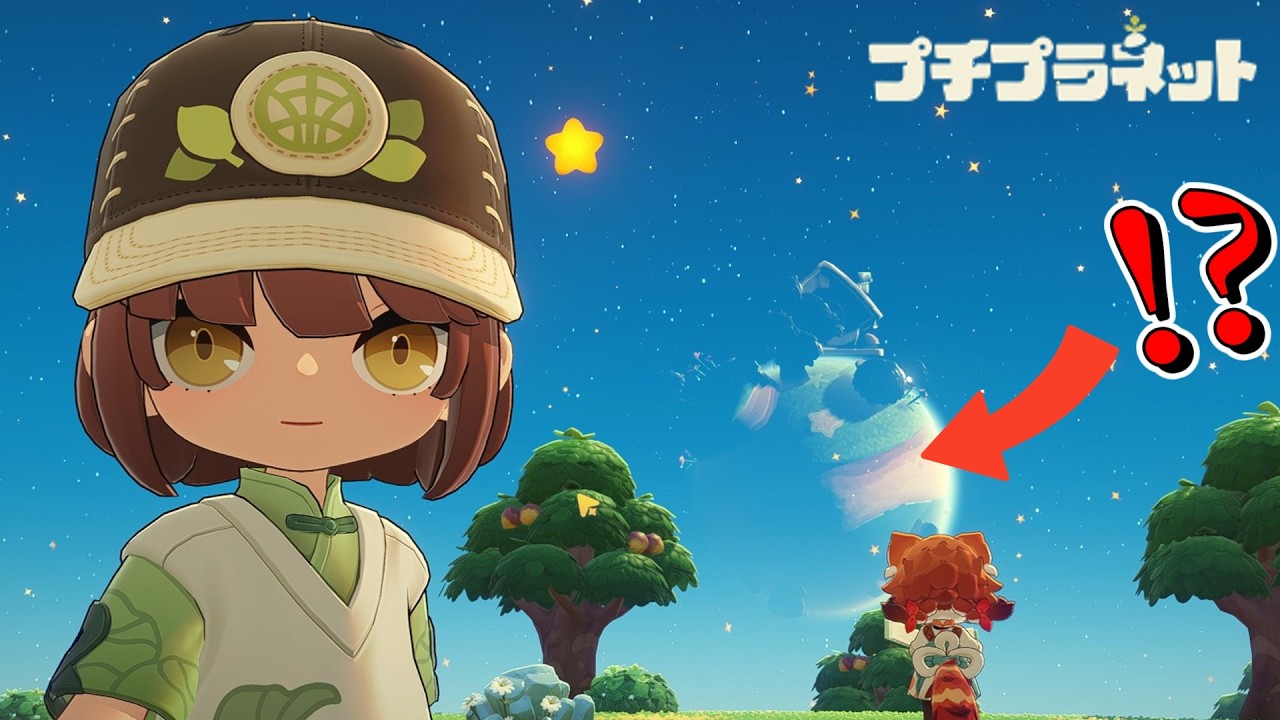
To successfully solve the intricate environmental puzzles in Petit Planet, you must shift your perspective from simple exploration to active spatial manipulation. The key to bypassing obstacles lies in identifying the relationship between object physics and the game’s dynamic terrain. Whether you are navigating vertical cliffs or uncovering secret pathways, success is achieved by observing environmental triggers, stacking interactable objects with precision, and sequencing actions to create chain reactions.
Understanding Object Interaction and Physics
In Petit Planet, the world is not merely a static backdrop; it is a reactive engine waiting for you to manipulate its components. Unlike traditional life-sims where items are purely decorative, objects in this world possess distinct mass, momentum, and friction profiles.
When you encounter an environmental hurdle, start by evaluating the physics of nearby items. If an object can be pushed, pulled, or rotated, it is almost certainly a puzzle component.
- Mass and Momentum: Heavier objects are designed to act as anchors or pressure plates. If you see a platform that refuses to stay lowered, look for a heavy, immovable object nearby that can be dragged onto a pressure switch.
- Kinetic Objects: Lighter, smaller items are often meant to be moved across longer distances to strike switches on elevated platforms. Use these to trigger mechanisms that are otherwise out of reach.
- The "Ghost" Marker System: Always look for faint outlines on the ground or within the terrain. These markers indicate exactly where an object must be placed to trigger a transformation, such as revealing a hidden staircase or opening a sealed gate.
Mastering Spatial Manipulation Techniques
Spatial manipulation is your most powerful tool for traversing the diverse biomes of Petit Planet. Many areas feature verticality that cannot be conquered by standard jumping alone. Instead of searching for a path around, you should look for "building blocks" or environmental debris that can be repurposed.
Expert Stacking Strategy
When stacking items to reach vantage points, stability is more important than raw height.
- Foundation First: Always place your widest or heaviest object at the base.
- Wedge Mechanics: If an object is wobbling, use smaller, flatter items to "wedge" it in place. This prevents the physics engine from resetting the object’s position.
- The 360-Degree Rule: Before committing to a climb, perform a full camera rotation. Many puzzles feature levers or triggers that are only visible from a specific, high-altitude angle. If you are stuck, return to the ground and look up—the solution is often hidden in plain sight from a different perspective.
Navigating Complex Environmental Transitions
The most rewarding puzzles in Petit Planet involve multi-stage environmental transitions. These require a methodical, reverse-engineered approach. When you see a mechanism that requires a sequence of actions, don't just start moving objects.
Follow these steps to solve multi-stage puzzles:
- Identify the End Goal: Find the final gate or reward location first.
- Work Backward: Trace the path of the mechanism. If a canal needs water to lift a platform, follow the canal back to the water gate. Find what blocks the gate, and clear that first.
- Clear the Workspace: A common mistake is leaving debris near a sliding mechanism. Even a small rock can collide with the hitbox of a moving platform, causing the puzzle to stall. Always clear a path for the movement of objects before activating the final switch.
Optimizing Tool Usage for Puzzles
Your tools in Petit Planet are essential for precise manipulation. You will often need to switch between your primary gathering tools and utility tools to handle objects that are otherwise unreachable.
- The Pull-and-Move Combo: If you have an object that needs to be moved onto a platform, use your pull tool to drag it as close as possible, then stand on the platform to manually nudge it into place. This saves time and minimizes the risk of the object falling off the edge.
- Tool Durability: Always check your tool’s durability before tackling a complex puzzle. Some heavy objects require a specific "impact" level to move effectively. If you are struggling to shift a heavy boulder, your tool might be under-leveled, leading to physics glitches where the object merely "jitters" rather than moving.
- Rapid Toggling: Organize your hotbar so that your interaction tools and movement-utility tools are adjacent. This allows for fluid transitions during time-sensitive puzzles where rapid inputs are required to keep a gate open while you move through it.
Troubleshooting Common Obstacles
If a puzzle seems "stuck" or unresponsive, it is rarely a technical bug. Instead, check for these common player errors:
- Sequence Order: Most puzzles in Petit Planet are sequential. If you haven't triggered the first switch, the second will not work. Retrace your steps.
- Environmental Conditions: Some mechanisms are tied to the game’s day/night cycle. If a glowing panel isn't responding, try waiting until nightfall; many puzzles in the game require specific lighting conditions to activate.
- Hidden Obstructions: Check for foliage or small, overlooked items that might be clipping into the mechanism. The game’s engine is highly sensitive to collision; a single leaf can block a pressure plate from fully depressing.
- The "Reset" Function: If an object has been moved to a location where it cannot be retrieved, use the game’s "Reset" option. This will return all interactable items in the current zone to their default starting positions, allowing you to try again without consequence.
Strategic Decisions: When to Solve and When to Return
Not every puzzle is meant to be solved the moment you find it. Petit Planet encourages a "return-later" philosophy. If you lack the necessary tools or have not yet unlocked a specific character ability that aids in movement, mark the location on your map and move on.
Trying to force a solution with low-tier equipment is the primary cause of frustration. By progressing through the main quest, you will gain access to better tools that make these environmental puzzles significantly easier. Remember: the game is a slow-life experience. There is no rush to complete every challenge immediately. Take the time to enjoy the environment, gather resources, and return to difficult puzzles once you are better prepared. With the right tools and a clear understanding of the game's physics, no obstacle in Petit Planet will remain an enigma for long.

Free Petit Planet Codes
Current active codes and how to redeem them.

Emily Johnson
Emily writes practical mobile strategy guides with a focus on resource planning, base progression, and the early decisions that shape a long-term account.
COMMUNITY
Player Comments
57 players commented on this guide.
This helped me understand strategy much better.
This saved me time in the early game.
The tips are practical and easy to follow.
The explanation is clear, especially for beginners.