
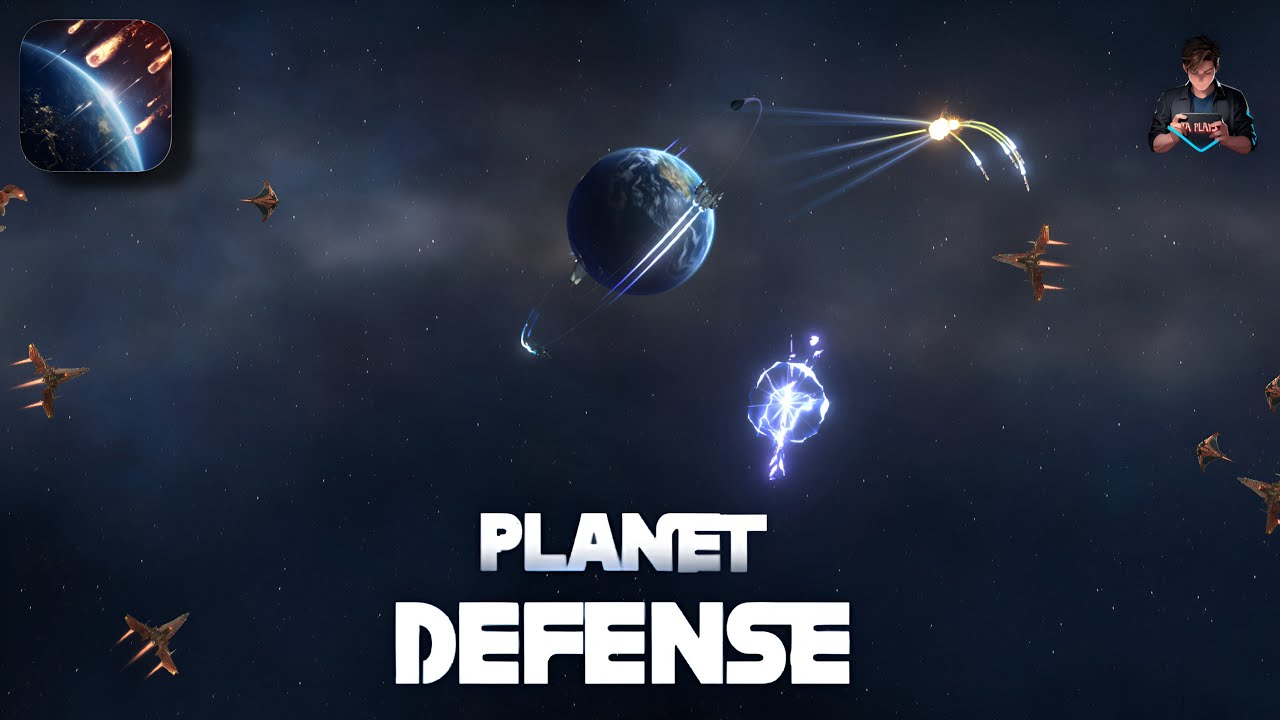
To survive the early waves in Planet Defense: Space TD game, concentrate your initial kinetic turrets on outer orbital slots along visible enemy approach paths, then upgrade existing units to rank two rather than filling the grid with weak platforms. Keeping your inner orbital ring clear for reactionary weapons and utility structures ensures your core remains protected if fast scouts breach the frontline.
Orbital Layout and Turret Roles
Hostile ships warp in along fixed vectors heading directly toward your planetary core. Placing defenses evenly around the entire planet dilutes your firepower. Instead, anchor your outer perimeter at active entry points to destroy incoming scout ships before they assemble into dense attack groups.
Assign each turret type to an orbital band suited to its range and damage delivery:
| Turret Type | Primary Target Role | Recommended Ring | Core Function |
|---|---|---|---|
| Kinetic Cannon | Fast scouts and light interceptors | Outer Orbit | High fire rate, rapid target acquisition |
| Laser Beam Emitter | Shielded cruisers and elite targets | Mid Orbit | Continuous beam damage that penetrates shields |
| Missile Battery | Clustered swarms | Mid or Inner Orbit | Long-range area-of-effect explosive salvos |
| Core EMP Disruptor | Breaching hostiles | Inner Core Perimeter | Slows enemy advance to buy targeting time |
After placing your weapons, adjust their target priorities to match their functions:
- Set Kinetic Cannons to target the closest enemy: This clears agile lead ships and prevents leaks through your forward line.
- Set Missile Batteries to target the strongest enemy or largest cluster: This ensures splash damage hits high-density packs rather than lone stragglers.
- Direct Laser Beam Emitters toward high-durability threats: Continuous melting damage strips elite units and heavily shielded hulls before they enter striking range.
Energy Management and Upgrade Priorities
Defeating hostile ships yields combat energy dynamically. Spending your entire reserve immediately on basic turrets leaves you with underpowered defenses against escalating waves.
- Push frontline units to rank two or three first: Upgrading an established kinetic turret offers higher damage per second than building multiple rank-one cannons in low-impact locations.
- Increase weapon range early: Expanding targeting range allows individual batteries to cover adjacent flight paths, creating overlapping kill zones without consuming additional slots.
- Preserve an emergency energy reserve: Keep a baseline energy balance during active rounds so you can build emergency fallback structures or trigger repairs if ships penetrate the perimeter.
- Prepare for elite waves in advance: Check wave indicators and save energy to deploy or upgrade heavy laser and missile platforms before armored command vessels enter orbit.
Manual Skill Timing for Swarms
Automated defenses can become overwhelmed when multi-vector swarms appear simultaneously. The planetary command station provides manual tactical abilities, including orbital strikes, targeted electromagnetic pulses, and shield overcharges.
- Deploy orbital strikes at choke points: Drop strikes slightly ahead of clustered enemy groups when carriers shield smaller escorts, clearing the swarm in a single blast.
- Use EMP pulses defensively: If fast ships slip past the outer ring and approach the core, activate an EMP to stall their advance while inner turrets eliminate them.
- Hold shield overcharges for boss encounters: Trigger defensive shielding only during concentrated damage spikes from elite cruisers rather than standard skirmishes.

Free Planet Defense: Space TD game Codes
Current active codes and how to redeem them.

James Brown
James focuses on Android gaming on PC, emulator setup, controls, performance tuning, and practical troubleshooting for longer play sessions.
COMMUNITY
Player Comments
136 players commented on this guide.
The tips are practical and easy to follow.
I wish I had read this before upgrading the wrong thing.
Good guide for Planet Defense: Space TD game players. The early game part was useful.
This guide answered the exact question I had.