
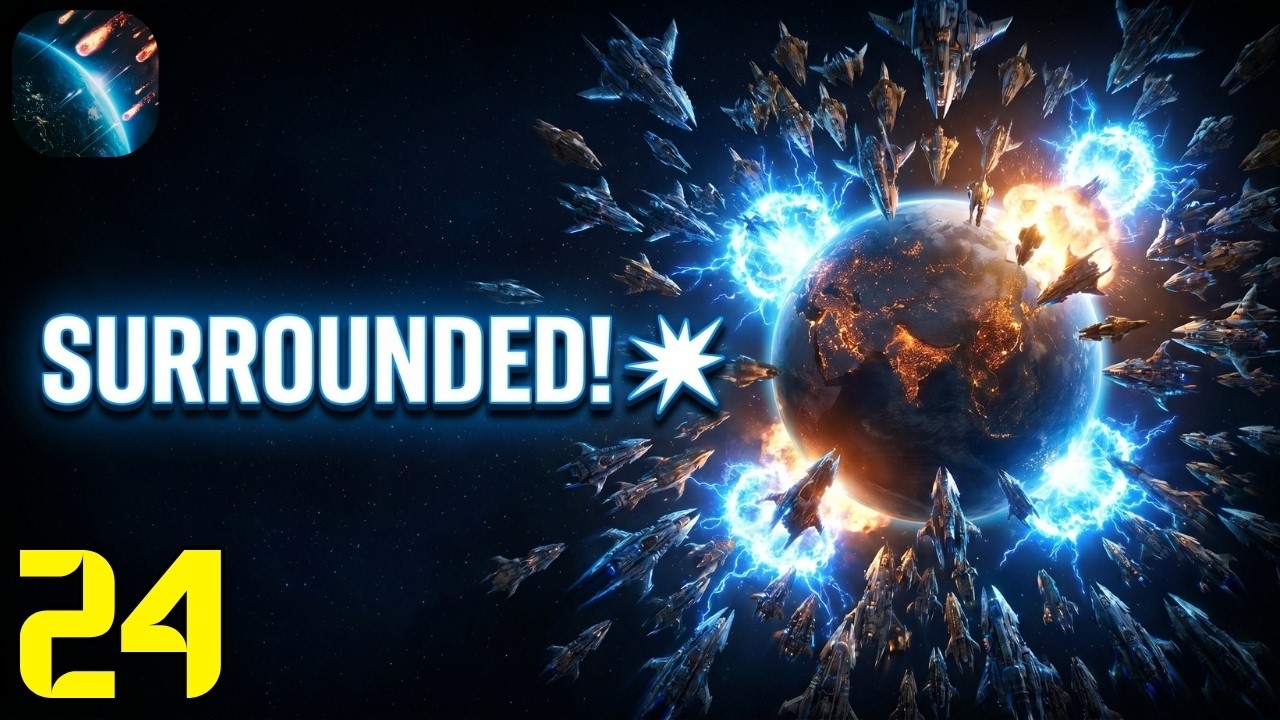
To survive massive multi-directional fleet encirclements in Planet Defense: Space TD game, abandon directional choke points in favor of balanced 360-degree radial coverage. When hundreds of enemy ships attack simultaneously from every orbital vector, concentrated single-quadrant batteries fail because swarm clusters bypass your firing lines and directly bombard your planetary core. Surviving requires interlocking firing arcs, high-cadence area weapons, and disciplined shield cycling.
Establish Symmetrical Radial Coverage
Massive fleet waves spawn strike craft across the entire orbital perimeter. Leaving even a narrow gap in coverage allows hostile squadrons to slip inside minimum engagement ranges and deliver uninterrupted damage to the planet.
- Divide your perimeter evenly: Space your foundational point-defense turrets at symmetrical intervals across your defensive rings or planetary surface.
- Create interlocking firing arcs: Position adjacent turrets close enough so their ranges overlap, ensuring every incoming vector is covered by at least two defensive structures.
- Maintain tracking speed: Interlocking zones keep agile escort ships under continuous fire as they orbit close to the planetary core.
Combine Rapid-Fire Kinetics with Area Damage
Slow-firing, single-target heavy artillery cannot cycle quickly enough to manage dense swarms. High rate of fire and explosive splash damage take priority over single-shot alpha strikes during full encirclements.
- Rapid-Fire Point Defense: Deploy kinetic Gatling turrets to eliminate low-durability fighters and interceptors before they reach torpedo range. Set their targeting priority to the closest threats.
- Flak and Cluster Munitions: Position area-of-effect missile or flak platforms to damage tightly grouped flight formations upon entry, reducing their health so baseline turrets can finish them off.
- Mid-Range Heavy Batteries: Dedicate heavier weapons specifically to the highest-durability hulls rather than letting them waste slow reload cycles on swarm escorts.
Cycle Shields to Absorb Peak Damage
Passive planetary hull armor will deteriorate quickly under multi-angle bombardment. Your planetary energy shield provides the primary buffer, but leaving it active continuously will exhaust energy reserves and trigger prolonged blackout cooldowns.
| Defensive Layer | Tactical Role in Encirclements | Primary Vulnerability |
|---|---|---|
| Outer Kinetic Buffer | Destroys light strike craft at long-to-medium range | Fails if swarms breach the outer line |
| Orbital Flak Net | Softens tightly packed clusters on entry | Low single-target damage against armored hulls |
| Planetary Energy Shield | Absorbs simultaneous bombardment spikes | Rapid capacitor drain under continuous 360° fire |
| Core Structural Hull | Serves as final buffer during shield reboots | Suffers permanent attrition without repair cycles |
Hold active shield enhancements while outer batteries engage lone advance scouts. Trigger shield overcharging only when the main enemy formation enters primary firing range to absorb initial missile and plasma salvos.
Balance Upgrades and Target Fleet Carriers
Concentrating all scrap and energy into a single high-tier turret leaves opposing quadrants vulnerable to sudden warp-ins. Maintain operational balance and eliminate spawn sources using these steps:
- Distribute baseline upgrades: Upgrade the fire rate and tracking speed of existing baseline turrets across all sectors before buying expensive super-heavy emplacements.
- Overclock under pressure: If a specific sector is pressured mid-wave, apply localized fire-rate and range overclocks to active turrets rather than dropping un-upgraded new towers that lack immediate stopping power.
- Snipe carrier vessels: Locate capital carriers and motherships holding position outside standard perimeter range. Direct long-range beam weapons or focused missiles to destroy them immediately, stopping the continuous deployment of fresh strike craft and allowing your perimeter to stabilize.
Free Planet Defense: Space TD game Codes
Current active codes and how to redeem them.

Michael Smith
Michael covers live-service games, events, reward systems, and efficient daily routines, turning frequent updates into clear actions for players.
COMMUNITY
Player Comments
54 players commented on this guide.
I wish I had read this before upgrading the wrong thing.
Nice guide. I am checking the other Planet Defense: Space TD game articles next.
Can you add more details about base building in a future update?
Good guide for Planet Defense: Space TD game players. The base building part was useful.