
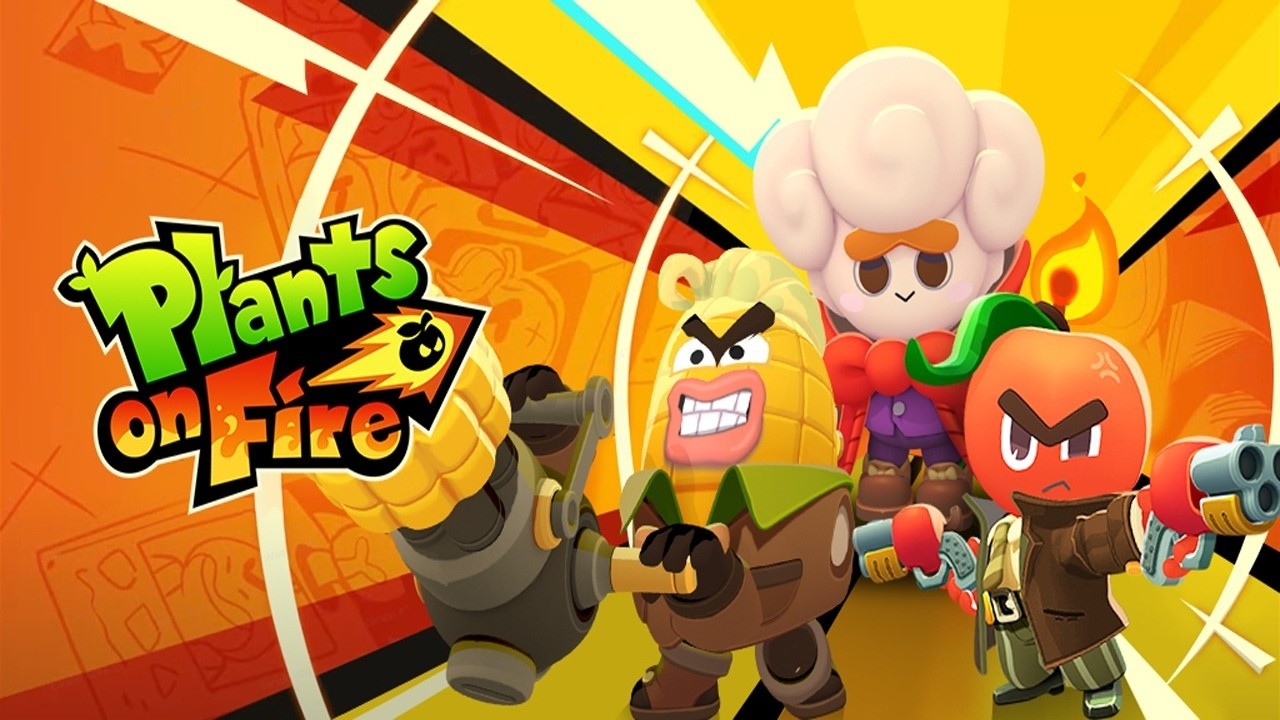
Achieving success in Plants on Fire requires more than just raw firepower; it demands a disciplined approach to unit deployment, real-time board optimization, and strategic foresight. In this tactical defense game, your grid is your most precious resource. Players who treat their board like a dynamic puzzle—constantly merging to clear space and scaling unit power—will consistently outperform those who simply spam units.
To master the meta, you must transition from reactive placement to proactive management. This guide breaks down the mechanics you need to dominate the leaderboard and survive the most intense boss encounters.
The Power of Unit Synthesis: Scaling Your Defense
The core mechanic of Plants on Fire is unit synthesis. Merging two identical plants is not merely a space-saving measure; it is the primary way to scale your damage output to match the exponential health growth of enemy mobs.
- Tier Progression: Higher-tier units provide disproportionately higher damage and utility compared to two separate lower-tier units. Always prioritize merging when you have two identical low-level plants on the board.
- The "Space Tax": Every grid slot occupied by a Level 1 plant is a potential "dead zone." If your board is cluttered with low-tier units, you lose the ability to summon new, potentially game-changing plants from your deck.
- Strategic Timing: Avoid merging during the peak of an enemy spawn if it leaves your front line vulnerable. Instead, look for the natural "lulls" in waves to perform your consolidations, ensuring you always have enough active fire to keep the lane clear.
Mastering Grid Management: Preventing Bottlenecks
Grid management is the most critical constraint in Plants on Fire. A full board of weak units is a recipe for defeat, as it prevents you from adapting to the specific enemy types currently appearing on the screen.
Effective grid management follows a simple rule: If a unit isn’t contributing to an kill, it’s a liability.
- Centralize Power: Place your highest-tier, high-damage units in central or forward positions. This allows them to maximize their range and area-of-effect (AoE) capabilities.
- Clear the Clutter: If you have a unit that is out of range or underperforming, it is the first candidate for a merge. Do not be afraid to sacrifice a lower-tier unit to clear a slot for a potential high-tier spawn.
- The Peripheral Strategy: Keep utility plants (slowers or debuffers) on the edges or in the rear, depending on their specific attack patterns, to ensure your primary damage dealers have an unobstructed line of sight to the center of the lane.
Balancing Aggression and Defensive Stability
A common mistake in Plants on Fire is over-investing in raw damage while ignoring crowd control. Survival in later stages depends on your ability to manipulate enemy movement.
- The Slower-Attacker Synergy: Always pair your crowd-control units (those that freeze, slow, or stun) with your highest-damage units. By forcing enemies to bunch up in a "choke point," you allow your splash-damage units to hit multiple targets simultaneously.
- Wave Indicator Awareness: Always keep one eye on the upcoming wave indicator. If a wave of fast, low-health units is approaching, prioritize high-fire-rate units. If a slow, high-health "tank" enemy is coming, shift your focus to high-damage, armor-piercing units.
- The "Stop-Loss" Strategy: When you encounter a difficulty spike, stop spending currency on random summons. Use your remaining resources to upgrade existing units or clear space for a key merge. Trying to "out-summon" a wave that is already overwhelming your defense rarely works; you must pivot to higher-tier units immediately.
Adapting to Meta Changes and Boss Mechanics
Plants on Fire is a living game, and the meta shifts as new units are released or existing ones are balanced. Staying competitive requires adapting to these changes.
Identifying Boss Patterns
Bosses in Plants on Fire are not just bullet sponges; they have unique mechanics that punish poor positioning.
- Area-of-Effect (AoE) Bosses: If a boss destroys units in a specific radius, you must spread your high-tier units across the board to prevent a total wipeout.
- Fast-Moving Bosses: If a boss moves quickly, you must prioritize slowing units above all else. Your goal is to force the boss to stay within your "kill zone" for as long as possible.
Utilizing Redeemable Codes
Developers frequently drop redeemable codes that grant currency or rare units. These are vital for free-to-play (F2P) players to keep pace with the meta. Always keep an eye on official community channels (Discord, social media) for these drops. Use the currency gained from these codes to expand your collection rather than spending it on temporary boosts, as a wider roster gives you more flexibility to counter specific level challenges.
Common Mistakes to Avoid
- The "Full Board" Trap: Players often feel safer when every grid slot is full. In reality, a full board of Level 1 units is the worst state you can be in. It prevents you from reacting to the game’s RNG (random number generation) and locks you out of upgrades.
- Ignoring the Wave Timer: Don't get complacent during the start of a round. Use the early, easy waves to set up your core defensive structure. If you are scrambling to set up during the mid-game, you have already lost the efficiency battle.
- Neglecting Utility: Damage is important, but if the enemies reach your base, your damage doesn't matter. Never underestimate the value of a single, well-placed "slower" unit—it can increase the effective DPS of your entire board by keeping enemies in range longer.
Summary Checklist for Victory
- Synthesize First: Merge identical units early and often to maintain high-tier dominance.
- Optimize Grid Space: Never let a weak unit occupy a slot that could be used for a higher-tier entity.
- Synergize Effects: Always pair slow/debuff units with your heavy hitters.
- Watch the Wave: Adjust your strategy based on the specific enemy types listed in the upcoming wave indicator.
- Stay Flexible: Adapt your board layout to counter specific boss mechanics rather than sticking to a rigid, one-size-fits-all formation.
By applying these strategies, you’ll find that Plants on Fire becomes much more manageable. Focus on the math of your board, keep your grid clean, and always prioritize the synthesis of your front-line defenders to ensure nothing makes it past your gates.

Free Plants on Fire Codes
Current active codes and how to redeem them.

Michael Smith
Michael covers live-service games, events, reward systems, and efficient daily routines, turning frequent updates into clear actions for players.
COMMUNITY
Player Comments
90 players commented on this guide.
The explanation is clear, especially for beginners.
This saved me time in the early game.
I wish I had read this before upgrading the wrong thing.
This helped me understand strategy much better.