
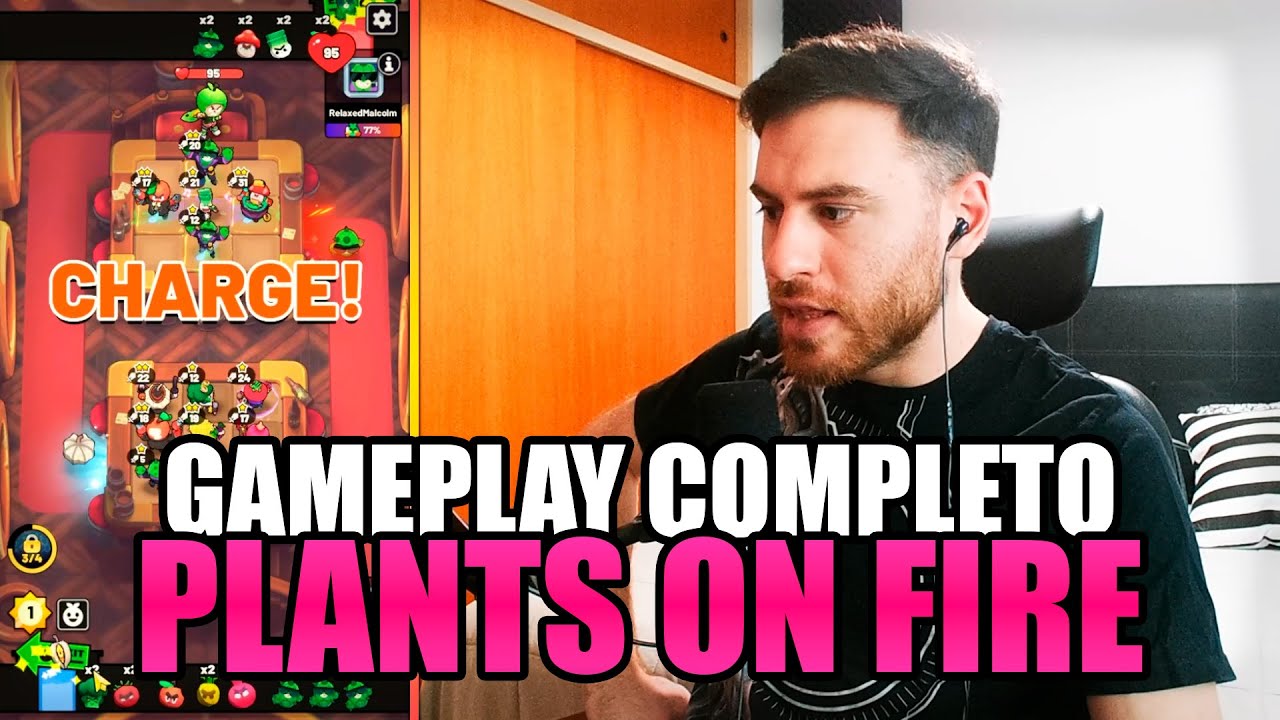
Winning in Plants on Fire requires more than just placing towers; it demands a deep understanding of the delicate balance between resource management and tactical aggression. In the high-stakes world of this tower defense PvP title, your ability to control the flow of the match—often called "wave control"—is what separates casual players from top-tier competitors. To dominate, you must prioritize early-game economic scaling while applying constant, surgical pressure to your opponent's lanes, forcing them into inefficient spending and board congestion.
The Foundation: Early-Game Economic Scaling
The first two minutes of a match in Plants on Fire dictate the trajectory of the entire game. Your primary goal is to establish a self-sustaining economy that generates enough currency to cycle through your deck rapidly.
Rather than saving your resources for high-tier "boss" plants early on, focus on deploying low-cost, high-utility units. These units act as your economic engine. By filling your initial grid slots, you create a baseline defense that allows you to survive while you invest in the upgrades that matter.
Expert Tip: Think of your grid as a resource investment. If you aren't actively merging or replacing low-value units, your grid is essentially losing value every second. Keep your board active to ensure you are always drawing new cards, which provides the versatility needed to counter unexpected enemy unit compositions.
Executing Precise Lane Pressure
Lane pressure is the primary offensive mechanism in Plants on Fire. A common beginner mistake is focusing exclusively on one "super lane." While this might stop enemy minions temporarily, it allows your opponent to ignore that lane and build a massive, unchecked economy elsewhere.
Instead, distribute your units across all lanes to force your opponent to respond across the entire board. When an opponent is forced to split their attention and spending, they are statistically more likely to make positioning errors.
- The "Weak Link" Strategy: Identify which lanes your opponent is neglecting. If you see a lane with minimal defense, flood it with your most aggressive units.
- Forcing Desperation: Once you force a breakthrough in a neglected lane, your opponent will often panic-spend to stabilize. This is your cue to rotate your focus or ramp up your economy while they waste resources on a losing battle.
Strategic Merging and Board Efficiency
In Plants on Fire, merging is not just an upgrade; it is a board management tool. Many players fall into the "Merge Trap"—merging every time the option becomes available. This is a critical error that leads to a stagnant board and a lack of firing density.
Rules for Optimal Board Management
- The Firing Density Rule: Never merge if it results in fewer total units firing on the field unless you are making space for a significantly higher-tier unit. You need a baseline of "bullets" in the air to catch waves.
- Strategic Clearing: Use merging to clear space specifically when your grid is full. If you have a full board, your ability to react to the enemy's shift in strategy is locked. Always keep at least 1–2 empty slots to deploy reactive units.
- Tier vs. Utility: A board of mid-tier units is often superior to a board with one high-tier unit and several empty spots. Maintain consistency across your ranks.
Countering Opponent Deployments
Adaptability is the hallmark of a veteran Plants on Fire player. If you notice your opponent is stacking high-health, "tanky" units, you must immediately pivot your own build toward high-fire-rate plants that rely on damage-over-time (DoT) or status effects.
Conversely, if the opponent is rushing you with high-speed minion waves, you must prioritize crowd-control plants that slow or stun targets.
The Timing Window: Keep an eye on your opponent's resources. If they perform a massive, multi-unit deployment, they have likely depleted their bank. This is your "window of aggression." Use this moment to push your lane pressure to the maximum, knowing they lack the capital to respond effectively.
The Mid-Game Shift: Defense vs. Offense
As the match progresses, the definition of a "good" play changes. Early on, you are building your economy; in the mid-game, you are protecting your lead.
If you find yourself behind in Plants on Fire, do not attempt to "catch up" by spamming low-cost units. This leads to board clutter and prevents you from ever reaching the power level required to stop the opponent. Instead, consolidate. Choose the one or two lanes where you have the most success and move your best units there. By sacrificing one lane to the opponent, you can focus your limited resources on creating a "hard point" in another, effectively stalling the game and giving yourself time to rebuild your economic foundation.
Final Decisions: When to Commit
The final wave of any Plants on Fire match is a test of your cumulative decisions. By this point, you should have a clear path to victory if you have maintained your lane pressure and protected your economy.
- When to save: Save your high-impact units for when the opponent is clearly over-extended.
- When to spend: Spend aggressively when you notice the opponent has a "dead" lane or when you have successfully forced them to merge defensively.
By following these strategies, you move beyond mere tower placement and begin playing Plants on Fire as a competitive, strategic match-up. Remember that every plant on your board is a resource, and every second you allow your opponent to play without pressure is a missed opportunity to win the game. Stay mobile, keep your grid efficient, and always force the opponent to play at your tempo.

Free Plants on Fire Codes
Current active codes and how to redeem them.

James Brown
James focuses on Android gaming on PC, emulator setup, controls, performance tuning, and practical troubleshooting for longer play sessions.
COMMUNITY
Player Comments
63 players commented on this guide.
Can you add more details about early game in a future update?
The tips are practical and easy to follow.
This guide answered the exact question I had.
Good guide for Plants on Fire players. The early game part was useful.